
Russell Scott
Unitarian minister in Portsmouth, 1760-1834
About Russell Scott
Lived 1760 – 1834 (aged 73–74). Russell Scott was a British.
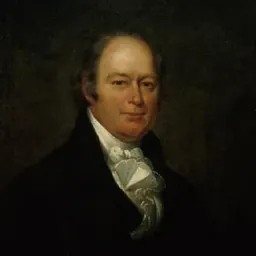
Russell Scott (1760–1834) was an English nonconformist minister, prominent in the 1790s as a supporter of the Political Martyrs group of radicals, and in later life as a leading Unitarian.
Early life The younger brother of Mary Scott, he was the son of the linen merchant John Scott of Milborne Port. He was educated at Daventry Academy and the Independent College, Homerton, and trained as a minister at Hoxton Academy. He then sought medical training, as useful for a minister in a place where medical help was hard to find. He studied medicine under William Hawes. In all, this student period was a decade, to 1785.
During his period in London, Scott met Theophilus Lindsey, who already knew his sister Mary.
Scott began as a dissenting minister informally at Milborne Port. He was at Wrington, also in Somerset, from 1783 to 1788, being ordained there in 1787.
The High Street Chapel in Portsmouth was associated with Sir John Carter and his son John Bonham-Carter MP. Scott was pastor there from 1788. By 1819 the congregation, some years after the Doctrine of the Trinity Act 1813 legalised Unitarian views, was self-described as Unitarian.
Associate of radicals In the period leading up to the Habeas Corpus Suspension Act 1794, Scott became associated with four of the five radical reformers often known as the "Scottish Martyrs" (a misnomer since three were English), who were sentenced to transportation to Australia. Their trials were high-profile confrontations of reformers with the authorities.
For three of them, it was a result of their involvement in the Edinburgh conventions held in 1792, and in 1793 after the start of the French Revolutionary Wars, run by the London Corresponding Society. Thomas Fyshe Palmer was a Unitarian minister in Dundee who saw a pamphlet by George Mealmaker through the press.
Theophilus Lindsey was concerned about the repression, particularly as it also affected Joseph Priestley, victim of the Priestley Riots of 1791, and younger Unitarians such as Jeremiah Joyce, and his numerous letters for 1794 document related events. Russell V. Holt, Principal of the Unitarian College, Manchester wrote of the period, its mobs and treason trials:
These outrages on justice and on liberty made a lasting impression on many minds which bore fruit later in life-long devotion to the cause of freedom. Such was the effect on the mind of the Rev. Russell Scott.
In early February 1794 Thomas Muir was a convict on the transport ship Surprize lying off Portsmouth, where he was joined by Palmer from the prison hulk Stanislaus moored on the River Thames off Woolwich. The pair had been in Newgate Gaol, London, where the Unitarian group of Lindsey, Priestley and William Russell had tried to visit them, but had been too late. Lindsey asked Scott to visit them on the Surprize, which he did, bringing money and books.
Scott similarly supported Joseph Gerrald in 1795, the fifth "Martyr", who was transported on the Sovereign.
Later life Scott contributed in 1795 to a major hymn book for rational dissenters, A Collection of Hymns and Psalms for Private and Public Worship, edited by Andrew Kippis and others, which went through many editions in the early 19th century. William Haslam Mills called his later standing among Unitarians as "a sort of bishop of his denomination".
Politically, Portsmouth was a "close borough", one with a narrowly restricted electorate. Under the Carter family, it was "the independent party in the corporation, most of them religious dissenters" who decided the Members of Parliament. A historian of Portsmouth wrote: "Portsmouth was a close borough but not a corrupt one; the Carter party were determined to keep control of it by the methods common to the day [...]". Scott himself became a burgess in 1817, so joining the controlling body. This election was ahead of the Sacramental Test Act 1828 that removed the "political disabilities" of dissenters; but in Portsmouth those were circumvented, even treated with disdain.
In 1822 Scott published a book, An Analytical Investigation of the Scriptural Claims of the Devil, based on a lecture series he had given in 1820–1 in Portsmouth. When William Johnson Fox moved to South Place Chapel in 1824, Scott gave the inaugural service.
Family Scott married in 1790 Sophia Hawes (1761–1828), eldest daughter of William Hawes. There were three children of the marriage, the first dying young. Taylor was the son of Mary Taylor née Scott, Russell's sister, and this was a first cousin marriage.
Don’t just read it —
keep it.
Full-length biographies made to live with: read them, listen on the way to work, watch them tonight.
- E-book
- Audio
- Video
Instant download · yours to keep · every purchase keeps this site free
Important facts
People in Russell Scott's life
Named in this biography and alive at the same time



Contemporaries
People whose lives overlapped Russell Scott's





Frequently asked questions
Who was Russell Scott?
Unitarian minister in Portsmouth, 1760-1834
When was Russell Scott born?
Russell Scott was born in 1760.
When did Russell Scott die?
Russell Scott died in 1834.
What nationality was Russell Scott?
Russell Scott was British.
Sources & further reading
· DBpedia: Russell Scott (minister)
Cite this page
APA: Biography.guide. (2026). Russell Scott. https://biography.guide/russell-scott-1760/
MLA: "Russell Scott." Biography.guide, https://biography.guide/russell-scott-1760/.
Chicago: "Russell Scott." Biography.guide. https://biography.guide/russell-scott-1760/.
Data last updated: 2026-09-20 · Spot an error? Report a correction.
Page generated 2026-09-27 05:25 UTC