
About William Hale White
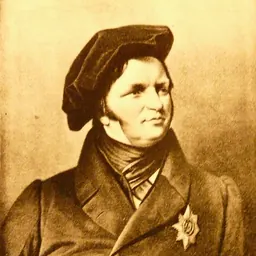
Lived 1831 – 1913 (aged 81). William Hale White was a British autobiographer, novelist and writer.
William Hale White (22 December 183114 March 1913), known by his pseudonym Mark Rutherford, was a British writer and civil servant. His obituary in The Times stated that the "employment of a pseudonym, and sometimes of two (for some of 'Mark Rutherford's' work was 'edited by his friend, Reuben Shapcott'), was sufficient to prove a retiring disposition, and Mr. Hale White was little before the world in person." A selection of his parliamentary sketches was published posthumously, in 1897, by Justin McCarthy, the Irish nationalist MP, as The Inner Life of the House of Commons.
White himself was educated in Bedford at Bedford Modern School, then known as the English School, until the family moved to London. In 1848 he entered the Countess of Huntingdon's College, Cheshunt to train for the Congregational Ministry. He developed increasingly unconventional views and in 1850 wrote to Thomas Carlyle who responded with a full reply encouraging him to stand by his convictions. White later entered New College, London, but the further development of his views prevented him taking up that career and he was expelled for questioning aspects of scripture. Hale White became known as a dissenter.
In 1852 he was employed by John Chapman to work as a personal assistant and subscription tout at The Westminster Review. Having worked alongside her for The Westminster Review, White was a friend of George Eliot and they both lodged at 142 Strand, London which was owned by John Chapman. White wrote an article about his friendship with George Eliot for The Bookman in August 1902 entitled "George Eliot as I knew her".
In 1854, White joined the civil service, first as a clerk at the Registrar General's Office at Somerset House and later as a clerk at the Admiralty. Over fourteen years he wrote parliamentary sketches for The Birmingham Post. George Orwell described Deliverance as "one of the best novels in English."
Under his own name White translated Spinoza's Ethics (1883). His later books include Miriam's Schooling, and Other Papers (1890), Catherine Furze (2 vols, 1893), Clara Hopgood (1896), Pages from a Journal, with Other Papers (1900), and John Bunyan (1905).
André Gide, in a letter dated 4 October 1915, thanked Arnold Bennett for recommending White's works. Gide so admired The Autobiography of Mark Rutherford and Mark Rutherford's Deliverance that he considered writing French translations.
Claire Tomalin, the biographer of Charles Dickens and Thomas Hardy, wrote that White's novels:
George Orwell refers to Mark Rutheford's Deliverance as "one of the best novels in English" in his column As I Please.
Mark Rutherford School in Bedford is named after him and he has a blue commemorative plaque at 19 Park Hill in Carshalton. There is also a plaque above his birthplace in Bedford that was unveiled by his son, Sir William Hale-White. When he retired from the Admiralty in 1892, he lived in Hastings for a number of years where a memorial plaque commemorates him. At the time of her marriage to White, Dorothy was forty-five years his junior. A third son became an engineer, and White's daughter Molly remained at home to care for her father. Spinoza's Ethics, translated from the Latin, Trubner and Co., London, 1883 Mark Rutherford's Deliverance, Trubner and Co., London, 1885 The Revolution in Tanner's Lane, Trubner and Co., London, 1887 Miriam's Schooling Kegan Paul, Trench, Trubner and Co., London, 1890 Catharine Furze, T. Fisher Unwin, London, 1893 Clara Hopgood, T. Fisher Unwin, London, 1896 An Examination of the Charge of Apostasy against Wordsworth, Longman, 1898 Pages from a Journal, with Other Papers, T. Fisher Unwin, London, 1900 More Pages From a Journal, Oxford University Press, 1910 The Early Life of Mark Rutherford (W. Hale White), Oxford University Press, 1913 The Last Pages from a Journal, Oxford University Press, 1915. Published posthumously and prefaced by his widow, Dorothy
Selected work as editor or note contributor A Description of the Wordsworth and Coleridge Manuscripts in the Possession of Mr. T. Norton Longman, Longman, 1897. Notes by W. Hale White Johnson, Samuel. Selections from Dr. Samuel Johnson's Rambler, Clarendon Press, Oxford, 1907. Edited with Preface and Notes by W. Hale White Carlyle, Thomas. The Life of John Sterling, Oxford University Press, 1907. With an introduction by W. Hale White
Quotes
Don’t just read it —
keep it.
Full-length biographies made to live with: read them, listen on the way to work, watch them tonight.
- E-book
- Audio
- Video
Instant download · yours to keep · every purchase keeps this site free
Important facts
People in William Hale White's life
Named in this biography and alive at the same time



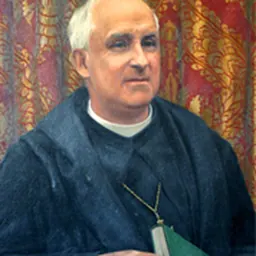
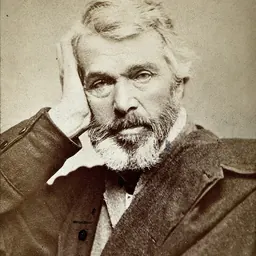


Related people
Same field, nearest in time
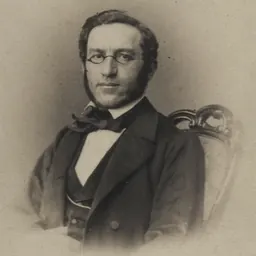




Contemporaries
People whose lives overlapped William Hale White's


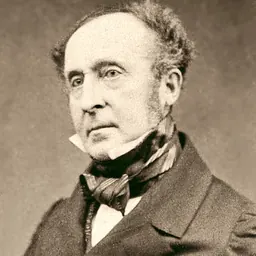
Frequently asked questions
Who was William Hale White?
British writer (1831–1913)
When was William Hale White born?
William Hale White was born on 22 December 1831 in Bedford.
When did William Hale White die?
William Hale White died on 14 March 1913 in Groombridge.
What was William Hale White's occupation?
William Hale White was an autobiographer, novelist and writer.
What nationality was William Hale White?
William Hale White was British.
Sources & further reading
· Wikipedia: William Hale White
Cite this page
APA: Biography.guide. (2026). William Hale White. https://biography.guide/william-hale-white/
MLA: "William Hale White." Biography.guide, https://biography.guide/william-hale-white/.
Chicago: "William Hale White." Biography.guide. https://biography.guide/william-hale-white/.
Data last updated: 2026-09-20 · Spot an error? Report a correction.
Page generated 2026-09-27 05:30 UTC