
About William Graham Sumner
Lived 1840 – 1910 (aged 69). William Graham Sumner was an American anthropologist, political scientist, historian, sociologist, philosopher and university teacher.
William Graham Sumner (October 30, 1840 – April 12, 1910) was an American Episcopal priest, social scientist, and neoclassical liberal. He taught social sciences at Yale University, where he held the nation's first professorship in sociology and became one of the most influential teachers at any major school.
Sumner wrote extensively on the social sciences, penning numerous books and essays on ethics, American history, economic history, political theory, sociology, and anthropology. He supported laissez-faire economics, free markets, and the gold standard, in addition to coining the term "ethnocentrism" to identify the roots of imperialism, which he strongly opposed. As a spokesman against elitism, he was in favor of the "forgotten man" of the middle class—a term he coined. He had a prolonged influence on American conservatism.
Biography Sumner wrote an autobiographical sketch for the fourth of the histories of the Class of 1863 Yale College. In 1925, the Rev. Harris E. Starr, class of 1910 Yale Department of Theology, published the first full-length biography of Sumner. A second full-length biography by Bruce Curtis was published in 1981.
Early life and education Sumner was born in Paterson, New Jersey, on October 30, 1840. His father, Thomas Sumner, was born in England and immigrated to the United States in 1836. His mother, Sarah Graham, was also born in England. She was brought to the United States in 1825 by her parents.
In 1841, Sumner's father went prospecting as far west as Ohio, but came back east to New England and settled in Hartford, Connecticut, in about 1845. Sumner wrote about his high regard for his father: "His principles and habits of life were the best possible." Earlier in his life, Sumner said, he accepted from others "views and opinions" different from his father's. However, "at the present time," Sumner wrote, "in regard to those matters, I hold with him and not with the others." Sumner did not name the "matters."
Sumner was educated in the Hartford public schools. After graduation, he worked for two years as a clerk in a store before going to Yale College, graduating in 1863.
Sumner avoided being drafted to fight in the American Civil War by paying a "substitute" $250, given to him by a friend, to enlist for three years. This and money given to him by his father and friends allowed Sumner to go to Europe for further studies. He spent his first year in the University of Geneva studying Latin and Hebrew and the following two years in the University of Göttingen studying ancient languages, history and Biblical science. All told, in his formal education Sumner learned Hebrew, Greek, Latin, French, and German. In addition, after middle age he taught himself Dutch, Spanish, Portuguese, Italian, Russian, Polish, Danish, and Swedish.
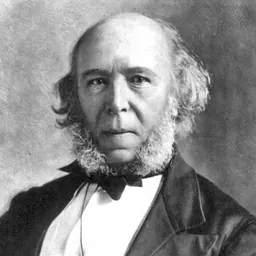
In May 1866, he went to Oxford University to study theology. At Oxford, Henry Thomas Buckle planted the sociology seed in Sumner's mind. However, Herbert Spencer was to have the "dominating influence upon Sumner's thought."
From September 1870 to September 1872, Sumner was rector of the Church of the Redeemer in Morristown, New Jersey.
Robert Bierstedt writes that Sumner preached two sermons every Sunday at the Church of the Redeemer. They "stressed without surcease the Puritan virtues of hard work, self-reliance, self-denial, frugality, prudence, and perseverance". Furthermore, writes Bierstedt, "it may be said that Sumner spent his entire life as a preacher of sermons". However, Sumner "preferred the classroom to the pulpit", so he left the ministry and returned to Yale in 1872 as "professor of political and social science" until he retired in 1909. Sumner taught the first course in North America called "sociology".
Other than what he said in the ordination service, there is no information about what motivated Sumner to be ordained. At his ordination, Sumner said that he thought that he was "truly called" to the ministry.
Sumner did not make known, at least publicly, his reasons for leaving the ministry. However, he and historians suggest that it might have been a loss of belief and/or a dim view of the church and its clergy.
Clarence J. Karier says, "Sumner found that his deity vanished with the years." "I have never discarded beliefs deliberately", Sumner said later in life, but "I left them in a drawer and, after a while, when I opened it there was nothing there at all." Harris E. Starr found that Sumner "never attacked religion" or "assumed a controversial attitude toward it." At the same time, Starr found that during Sumner's time as a professor he stopped attending Trinity Church, New Haven, where he had been ordained deacon. After that, Sumner attended church only occasionally. However, in the closing years of his life, he baptized a little grandson, and not long before his death he attended New Haven's St. John's Church to receive Holy Communion. Starr wrote that these two events "suggest that deep down in his nature a modicum of religion remained."
In his book What Social Classes Owe to Each Other (1883), Sumner argued that the "ecclesiastical prejudice in favor of the poor and against the rich" worked "to replunge Europe into barbarism." Furthermore, Sumner asserted, this prejudice still lives, nourished by the clergy. "It is not uncommon," he said, "to hear a clergyman utter from the pulpit all the old prejudice in favor of the poor and against the rich, while asking the rich to do something for the poor; and the rich comply."
The Yale University Library's guide to Sumner's papers ranks him as "Yale's most dynamic teacher of the late nineteenth and early twentieth centuries. Students clamored to enroll in his classes."
Sumner himself described his life as a professor as "simple and monotonous." "No other life could have been so well suited to my taste as this," he wrote in his autobiographical sketch. In 1909, the year of his retirement, Yale awarded Sumner an honorary degree. In spite of his efforts, his career ended with pessimism about the future. Sumner said, "I have lived through the best period of this country's history. The next generations are going to see wars and social calamities." Sumner was active in the intellectual promotion of free-trade classical liberalism. He heavily criticized state socialism/state communism. One adversary he mentioned by name was Edward Bellamy, whose national variant of socialism was set forth in Looking Backward, published in 1888, and the sequel Equality.
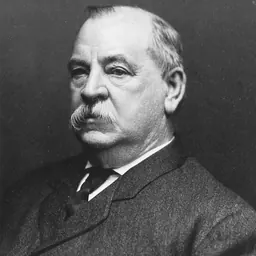
Anti-imperialism Like many classical liberals at the time, including Edward Atkinson, Moorfield Storey, and Grover Cleveland, Sumner opposed the Spanish–American War and the subsequent U.S. effort to quell the insurgency in the Philippines. He was a vice president of the Anti-Imperialist League which had been formed after the war to oppose the annexation of territories. In 1899 he delivered a speech titled "The Conquest of the United States by Spain" before the Phi Beta Kappa Society of Yale University. In what is considered by some to be "his most enduring work," He served as the second president of American Sociological Association from 1908 to 1909 and succeeded his longtime ideological opponent Lester F. Ward.
In 1880, Sumner was involved in one of the first cases of academic freedom. Sumner and the Yale president at the time, Noah Porter, did not agree on the use of Herbert Spencer's "Study of Sociology" as part of the curriculum. Spencer's application of supposed "Darwinist" ideas to the realm of humans may have been slightly too controversial at that time of curriculum reform. On the other hand, even if Spencer's ideas were not generally accepted, it is clear that his social ideas influenced Sumner in his written works.
Sumner and social Darwinism William Graham Sumner was influenced by many people and ideas. Comparison of his thought with that of Herbert Spencer (for example) has led many to associate Sumner with social Darwinism.
In 1881, Sumner wrote an essay titled "Sociology." In the essay, Sumner focused on the connection between sociology and biology. He explained that there are two sides to the struggle for survival of a human. The first side is a "struggle for existence," which is a relationship between man and nature. The second side would be the "competition for life," which can be identified as a relationship between man and man.
Historian Mike Hawkins argues that it is accurate to describe Sumner as a social Darwinist because Sumner draws directly upon evolutionary theory to explain society and dictate policy.
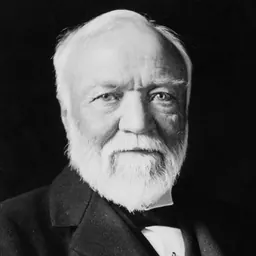
Nicolaus Mills compares later corporate Darwinism with the social Darwinism of Sumner, John D. Rockefeller and Andrew Carnegie.
Sumner was a critic of natural rights, arguing:
Warfare Another example of social Darwinist influence in Sumner's work was his analysis of warfare in one of his essays in the 1880s. Contrary to some beliefs, Sumner did not believe that warfare was a result of primitive societies; he suggested that "real warfare" came from more developed societies. Sumner argued that, in his day, politics was being subverted by those proposing a "measure of relief for the evils which have caught public attention." He wrote:
As soon as A observes something which seems to him to be wrong, from which X is suffering, A talks it over with B, and A and B then propose to get a law passed to remedy the evil and help X. Their law always proposes to determine what C shall do for X or, in the better case, what A, B and C shall do for X. ... hat I want to do is to look up C. ... I call him the Forgotten Man. Perhaps the appellation is not strictly correct. He is the man who never is thought of. He is the victim of the reformer, social speculator and philanthropist, and I hope to show you before I get through that he deserves your notice both for his character and for the many burdens which are laid upon him.
Legacy Sumner's popular essays gave him a wide audience for his laissez-faire advocacy of free markets, anti-imperialism, and the gold standard. Sumner had a long-term influence over modern American conservatism as a leading intellectual of the Gilded Age.
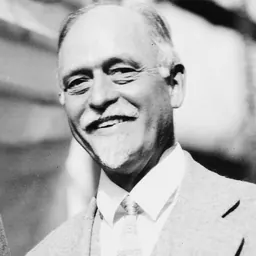
Thousands of Yale students took his courses, and many remarked on his influence. His essays were very widely read among intellectuals, and men of affairs. Among Sumner's students were the anthropologist Albert Galloway Keller, the economist Irving Fisher, and the champion of an anthropological approach to economics Thorstein Bunde Veblen.
The World War II Liberty Ship was named in his honor.
Yale University has maintained a professorship named in Sumner's honor. The following have been the William Graham Sumner Professor of Sociology at Yale University: 1909–1942: Albert Galloway Keller (1874–1956) 1942–1954: Maurice Rae Davie (1914–1975) 1963–1970: August Hollingshead (1907–1980) 1970–1993: Albert J. Reiss Jr. (1922–2006) 1999–2009: Iván Szelényi 2011–2015: Richard Breen
Works Sumner's works number "around 300 items" including books and articles on "economics, political science and sociology."
Books and pamphlets The Books of the Kings (Scribner, Armstrong & Co, 1872) Sumner wrote section on 2 Kings. A History of American Currency: with chapters on the English bank restriction and Austrian paper money: to which is appended "The bullion report" (New York: H. Holt and Co., 1874) What Social Classes Owe to Each Other (New York: Harper and Bros., 1883) Protection and revenue in 1877: a lecture delivered before the "New York Free Trade Club," April 18, 1878 (New York: G.P. Putnam's Sons, 1878) Our Revenue System and the Civil Service: Shall They Be Reformed? (New York: G.P. Putnam's Sons, 1878)] contains preface by Sumner. Bimetalism: from the Princeton Review, 1879 Andrew Jackson as a Public Man (Boston and New York: Houghton, Mifflin and Company, 1882) Lectures on the History of Protection in the United States: delivered before the International Free-Trade Alliance (New York: G.P. Putnam's Sons, 1883) Problems in Political Economy (New York: H. Holt and Company, 1883) Protectionism: the -ism Which Teaches that Waste Makes Wealth (New York: H. Holt and Company, 1885) Collected Essays in Political and Social Science (New York: Henry Holt and company, 1885) Alexander Hamilton (New York: Dodd, Mead and Co., 1890) The Financier & the Finances of the American Revolution, Vol 1 (New York: Dodd, Mead, and Co., 1891) The Financier & the Finances of the American Revolution, Vol 2 (New York: Dodd, Mead, and Co., 1891) Robert Morris (New York: Dodd, Mead, and Co., 1892). Morris' life adapted from The Financier & the Finances of the American Revolution A History of Banking in all the Leading Nations, Vol. 1, edited by the editor of the Journal of Commerce and Commercial Bulletin (New York: The Journal of Commerce, 1896). The Conquest of the United States by Spain: a lecture before the Phi Beta Kappa Society of Yale University, January 16, 1899 (Boston: Dana Estes, 1899). The Predominant Issue: Reprinted from The International Monthly, November 1900 (Burlington, VT, The International Monthly, 1901) Folkways: a study of the sociological importance of usages, manners, customs, mores, and morals (Boston: Ginn and Co., 1906) Address of William Graham Sumner (New York: Reform Club Committee on Tariff Reform, June 2, 1906) The Science of Society, with Albert G. Keller, Vol. 1 (New Haven: Yale University Press, 1927; London: H. Milford, Oxford University Press, 1927) The Science of Society, with Albert G. Keller, Vol. 2 (New Haven: Yale University Press, 1927; London: H. Milford, Oxford University Press, 1927) The Science of Society, with Albert G. Keller, Vol. 3 (New Haven: Yale University Press, 1927; London: H. Milford, Oxford University Press, 1927) The Science of Society, with Albert G. Keller and Maurice Rea Davie, Vol .4 (New Haven: Yale University Press, 1927; London: H. Milford, Oxford University Press, 1927)
Collected Essays War, and other essays, ed. Albert Galloway Keller (New Haven: Yale University Press, 1911). Keller's "Introduction" contains a verbal portrait of Sumner. Earth Hunger and Other Essays, ed. Albert Galloway Keller (New Haven, Yale University, 1913) The Challenge of Facts: and Other Essays, ed. Albert Galloway Keller (New Haven: Yale University Press, 1914) The Forgotten Man, and Other Essays ed. Albert Galloway Keller (New Haven, Yale University Press, 1918) Selected Essays of William Graham Sumner, eds. Albert Galloway Keller and Maurice R. Davie (New Haven: Yale University Press, 1934) Sumner Today: Selected Essays of William Graham Sumner, with Comments by American leaders, ed. Maurice R. Davie (New Haven: Yale University Press, 1940) The Forgotten Man's Almanac Rations of Common Sense from William Graham Sumner , ed. A.G. Keller (New Haven: Yale University Press London, H. Milford, Oxford University Press,1943) Social Darwinism: Selected Essays of William Graham Sumner, ed. Stow Persons (Englewood Cliff, N.J.: Prentice-Hall, 1963). The Conquest of the United States by Spain, and Other essays ed. Murray Polner (Chicago: Henry Regnery, 1965) On Liberty, Society, and Politics: The Essential Essays of William Graham Sumner, ed. Robert C. Bannister (Indianapolis: Liberty Fund, 1992)
Periodical Publications (not in collections) "The Crisis of the Protestant Episcopal Church", The Nation 13 (October 5, 1871): 22–23 "The Causes of the Farmer's Discontent", The Nation 16 (June 5, 1873): 381–382 "Monetary Development", 1875, Harper's 51:304. "Professor Walker on bi-Metallism", The Nation 26 (February 7, 1878): 94–96 "Socialism", Scribner's Monthly 16:6 (1878): 887–893. "Protective Taxes and Wages", North American Review 136 (1883): 270–276 "The Survival of the Fittest:" Index n.s. 4 (May 29, 1884): 567 (June 19, 1884), 603–604 "Evils of the Tariff System", North American Review 139 (1884): 293–299 "The Indians in 1887", Forum 3 (May 1887): 254–262 "The Proposed Dual Organization of Mankind", Popular Science Monthly 49 (1896): 433–439 "Suicidal Fanaticism in Russia", Popular Science Monthly 60 (1902): 442–447 "The Bequests of the Nineteenth Century to the Twentieth", Yale Review 22 (1933 [written 1901]), 732–754 "Modern Marriage", Yale Review 13 (1924): 249–275.
Don’t just read it —
keep it.
Full-length biographies made to live with: read them, listen on the way to work, watch them tonight.
- E-book
- Audio
- Video
Instant download · yours to keep · every purchase keeps this site free
Important facts
People in William Graham Sumner's life
Named in this biography and alive at the same time




Related people
Same field, nearest in time

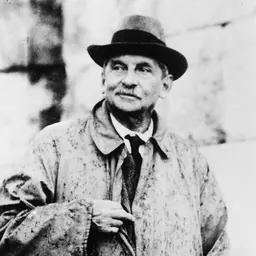
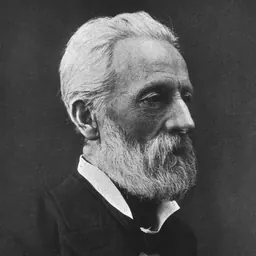

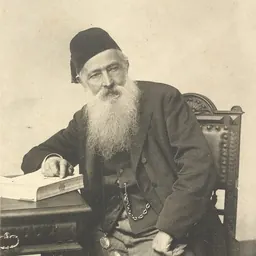

Contemporaries
People whose lives overlapped William Graham Sumner's
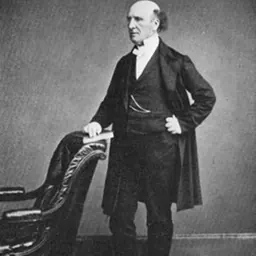

Frequently asked questions
Who was William Graham Sumner?
American sociologist (1840–1910)
When was William Graham Sumner born?
William Graham Sumner was born on 30 October 1840 in Paterson.
When did William Graham Sumner die?
William Graham Sumner died on 12 April 1910 in Englewood.
What was William Graham Sumner's occupation?
William Graham Sumner was an anthropologist, political scientist, historian, sociologist, philosopher and university teacher.
What nationality was William Graham Sumner?
William Graham Sumner was American.
Sources & further reading
· Wikipedia: William Graham Sumner
· DBpedia: William Graham Sumner
Cite this page
APA: Biography.guide. (2026). William Graham Sumner. https://biography.guide/william-graham-sumner/
MLA: "William Graham Sumner." Biography.guide, https://biography.guide/william-graham-sumner/.
Chicago: "William Graham Sumner." Biography.guide. https://biography.guide/william-graham-sumner/.
Data last updated: 2026-09-20 · Spot an error? Report a correction.
Page generated 2026-09-27 05:33 UTC