
About Moorfield Storey
Lived 1845 – 1929 (aged 84). Moorfield Storey was an American lawyer, biographer, politician and civil rights advocate.
Moorfield Storey (March 19, 1845 – October 24, 1929) was an American lawyer, anti-imperial activist, and civil rights leader based in Boston, Massachusetts. According to Storey's biographer, William B. Hixson Jr., he had a worldview that embodied "pacifism, anti-imperialism, and racial egalitarianism fully as much as it did laissez-faire and moral tone in government." Storey served as the founding president of the National Association for the Advancement of Colored People (NAACP), serving from 1909 to his death in 1929. He opposed United States expansionism beginning with the Spanish–American War.
Early life Moorfield Storey was born in 1845 in Roxbury, Massachusetts, then a suburb of Boston. His family was descended from the earliest Puritan settlers in New England and had close connections with the abolitionist movement. Storey's father was a Boston lawyer. The young Storey went to the Boston Latin School and graduated in 1862, during the beginning of the Civil War. He then continued onto Harvard University, where he was a member of the Glee Club, graduating in 1866, and then studied at Harvard Law School. In a speech almost thirty years later at Cambridge University, Storey discussed the mindset of the young men of his generation, stating that "a great movement for intellectual, religious, and political freedom was just culminating". He was elected president of the American Bar Association in 1896, He served as president of the Massachusetts Bar Association during 1913–14.
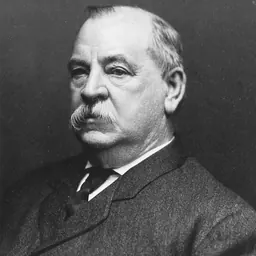
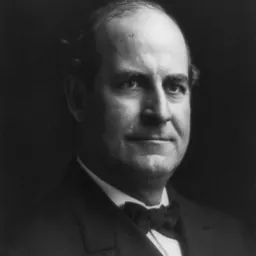
He was a well-known person in the "Mugwump" movement of 1884, and actively supported Grover Cleveland. As a strong believer in the gold standard, freedom of contract, and property rights, Storey opposed the candidacy of William Jennings Bryan and supported the National Democratic Party (Gold Democrats) third-party ticket in 1896. In 1887 he built a house on Great Cranberry Island.
An opponent of military intervention, Storey spoke at the first anti-imperialist mass meeting in Boston in June 1898, called because of the Spanish–American War. He was a vice president of the New England Anti-Imperialist League. In addition, he wrote a book brief for the Lodge Committee summarizing the war crimes of the Philippine–American War. From 1905 until its dissolution in 1921 Storey was the Anti-Imperialist League's president. He perceived that "national subjugation overseas and racial persecution at home were related," which drove his efforts at reform.
Storey consistently and aggressively championed civil rights, not only for blacks but also for American Indians and immigrants. He opposed immigration restrictions, and supported racial equality and self-determination.
"When the white man governs himself, that is self-government," he declared, "but when he governs himself and also governs another man, that is more than self-government–that is despotism." Storey was on the conservative side in the Sacco and Vanzetti case.
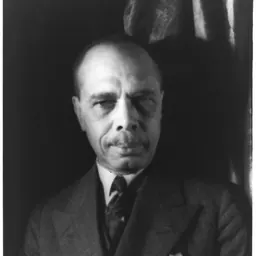
Storey was, with James Weldon Johnson, the organizer of the 1919 National Conference on Lynching.
In 1920 Storey led the NAACP to take on the defense of the Elaine Twelve in their appeals from convictions for murder and the death penalty. The NAACP raised $50,000 for their defense, hiring two attorneys to manage the appeals in Arkansas. The cases were broken into two tracks because of technical trial issues, and six men (Ware et al.) were retried beginning in May 1920 after their defense team won the first appeal at the state supreme court. Storey worked with the team as the cases of six other men (Moore et al.) later reached the United States Supreme Court. In its ruling in Moore v. Dempsey (1923), the Court set an important precedent for reviewing state criminal cases against the standard of the Due Process Clause of the Fourteenth Amendment to the United States Constitution and application of Bill of Rights to state actions.
Later life In the 1920s, Storey opposed the U.S. occupations of Haiti and of the Dominican Republic as the chairperson of the Haiti-Santo Domingo Independence Society. He was also on the advisory committee of the American Fund for Public Service Committee on American Imperialism.
He died in Lincoln, Massachusetts in 1929, survived by four of his five children with Gertrude Cutts, whom he had married in 1870. She had died in 1912.
Time with Charles Sumner
From 1867 to 1869, Storey was a clerk for the United States Senate Committee on Foreign Relations, and served as a private secretary to its chairman, Senator Charles Sumner. Storey was introduced to Sumner through his father, and moved to the Senator's house after his graduation from Harvard University. He accepted the position as it seemed the best route to continue his legal studies.
Don’t just read it —
keep it.
Full-length biographies made to live with: read them, listen on the way to work, watch them tonight.
- E-book
- Audio
- Video
Instant download · yours to keep · every purchase keeps this site free
Important facts
People in Moorfield Storey's life
Named in this biography and alive at the same time


Related people
Same field, nearest in time



Contemporaries
People whose lives overlapped Moorfield Storey's

Frequently asked questions
Who was Moorfield Storey?
American lawyer and civil rights leader
When was Moorfield Storey born?
Moorfield Storey was born on 19 March 1845 in Roxbury.
When did Moorfield Storey die?
Moorfield Storey died on 24 October 1929 in Lincoln.
What was Moorfield Storey's occupation?
Moorfield Storey was a lawyer, biographer, politician and civil rights advocate.
What nationality was Moorfield Storey?
Moorfield Storey was American.
Sources & further reading
Cite this page
APA: Biography.guide. (2026). Moorfield Storey. https://biography.guide/moorfield-storey/
MLA: "Moorfield Storey." Biography.guide, https://biography.guide/moorfield-storey/.
Chicago: "Moorfield Storey." Biography.guide. https://biography.guide/moorfield-storey/.
Data last updated: 2026-09-20 · Spot an error? Report a correction.
Page generated 2026-09-27 05:25 UTC