
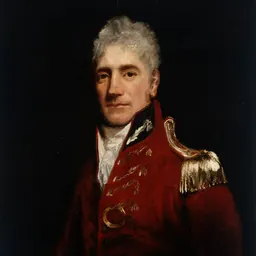
William Gore
(1765-1845) provost-marshal
About William Gore
Lived 1765 – 1845 (aged 79–80).
William Gore (1765 – 1845) was a provost marshal in the Colony of New South Wales during the early 1800s. During the Rum rebellion he was imprisoned for his support of Governor William Bligh. Gore was released after two years but later in his career was again incarcerated for unpaid debts and for wilfully shooting a soldier.
Gore was the first British settler of Artarmon, which is now a suburb in the Lower North Shore of Sydney. The suburb of Gore Hill, which was part of his original Artarmon land grant, is named after him.
Early life Gore was born into the reputable Anglo-Irish Gore family of County Sligo in Ireland. He was briefly imprisoned by Irish rebels during the 1798 Irish Rebellion.
Provost marshal of New South Wales In 1805 he was appointed to the position of Provost marshal in the colony of New South Wales. He travelled with Captain William Bligh who was to take up the position of Governor of New South Wales.
Gore was also taken prisoner for his involvement in arresting Macarthur and placed under trumped-up charges of perjury. In a show trial where Gore refused to plead due to the illegality of the court, Lieutenant Anthony Fenn Kemp found him guilty and sentenced him to seven years transportation to the convict settlement at Newcastle.
Re-appointment as provost marshal and imprisonment for debts Governor Lachlan Macquarie who took control of the colony in 1810, declared all trials held by the New South Wales Corps as invalid and re-appointed Gore to the position of provost marshal in 1812. A year later, Macquarie gave Gore a land grant of 150 acres on the northern side of Sydney Harbour. Gore named this property Artarmon which was derived from the Gore family's Ard tarmon estate in Sligo.
Death Gore was still heavily in debt in his old age and had mortgaged his property to several individuals. He was declared insolvent in 1843 and died in 1845. Richard Hayes Harnett, who purchased the Artarmon estate after Gore's death, found the coffins and remains of Gore and one of his daughters still unburied covered in palings in a bushy area of the property. His remains were later interred.
Legacy The Sydney suburb of Gore Hill and the associated Gore Hill Freeway are named after him and the adjoining suburb of Artarmon was named by him.
Don’t just read it —
keep it.
Full-length biographies made to live with: read them, listen on the way to work, watch them tonight.
- E-book
- Audio
- Video
Instant download · yours to keep · every purchase keeps this site free
Important facts
People in William Gore's life
Named in this biography and alive at the same time


Contemporaries
People whose lives overlapped William Gore's





Frequently asked questions
Who was William Gore?
(1765-1845) provost-marshal
When was William Gore born?
William Gore was born in 1765.
When did William Gore die?
William Gore died in 1845.
Sources & further reading
· DBpedia: William Gore (provost marshal)
Cite this page
APA: Biography.guide. (2026). William Gore. https://biography.guide/william-gore-1765/
MLA: "William Gore." Biography.guide, https://biography.guide/william-gore-1765/.
Chicago: "William Gore." Biography.guide. https://biography.guide/william-gore-1765/.
Data last updated: 2026-09-20 · Spot an error? Report a correction.
Page generated 2026-09-27 05:18 UTC