
William Bligh
Officer of the British Royal Navy and colonial administrator
About William Bligh
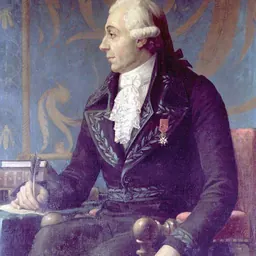
Lived 1754 – 1817 (aged 63). William Bligh was a British military officer, sailor, politician, governor and admiral.
Voyage of Bounty
The mutiny on the Royal Navy vessel HMAV Bounty occurred in the South Pacific Ocean on 28 April 1789. Led by Master's Mate / Acting Lieutenant Fletcher Christian, disaffected crewmen seized control of the ship, and set the then Lieutenant Bligh, who was the ship's captain, and 18 loyalists adrift in the ship's open launch.
First breadfruit voyage In 1787, Lieutenant Bligh, as he then was, took command of HMAV Bounty. In order to win a premium offered by the Royal Society, he first sailed to Tahiti to obtain breadfruit trees, then set course east across the South Pacific for South America and the Cape Horn and eventually to the Caribbean Sea, where breadfruit was wanted for experiments to see whether it would be a successful food crop for enslaved Africans on British colonial plantations in the West Indies islands. According to one modern researcher, the notion that breadfruit had to be collected from Tahiti was intentionally misleading. Tahiti was merely one of many places where the esteemed seedless breadfruit could be found. The real reason for choosing Tahiti has its roots in the territorial contention that existed then between France and Great Britain at the time. Bounty never reached the Caribbean, as mutiny broke out on board shortly after the ship left Tahiti.
The voyage to Tahiti was difficult. After trying unsuccessfully for a month to go west by rounding South America and Cape Horn, Bounty was finally defeated by the notoriously stormy weather and opposite winds and forced to take the longer way to the east around the southern tip of Africa (Cape of Good Hope and Cape Agulhas). That delay caused a further delay in Tahiti, as Bligh had to wait five months for the breadfruit plants to mature sufficiently to be potted in soil and transported. Bounty departed Tahiti heading west in April 1789.
Mutiny The mutineers turning Lt Bligh and some of the officers and crew adrift from His Majesty's Ship . By Robert Dodd Because the vessel was rated only as a cutter, Bounty had no commissioned officers other than Bligh (who was then only a lieutenant), a very small crew, and no Royal Marines to provide protection from hostile natives during stops or to enforce security on board ship. To allow longer uninterrupted sleep, Bligh divided his crew into three watches instead of two, placing his protégé Fletcher Christian—rated as a Master's Mate—in charge of one of the watches. The mutiny, which took place on 28 April 1789 during the return voyage, was led by Christian and supported by eighteen of the crew. They had seized firearms during Christian's night watch and surprised and bound Bligh in his cabin.
Account of arrival at Timor, 14 June 1789. Log of the Proceedings of His Majesty's Ship Bounty, 1789. Despite being in the majority, none of the loyalists put up a significant struggle once they saw Bligh bound, and the ship was taken over without bloodshed. The mutineers provided Bligh and eighteen loyal crewmen a launch (so heavily loaded that the gunwales were only a few inches above the water). They were allowed four cutlasses, food and water for perhaps a week, a quadrant and a compass, but no charts, or marine chronometer. The gunner, William Peckover, brought his pocket watch, which was used to regulate time. Fleeing from Tofua, Bligh did not dare to stop at the next islands to the west (the Fiji islands), as he had only a pair of cutlasses for defence and expected hostile receptions. He did however keep a log entitled "Log of the Proceedings of His Majesty's Ship Bounty Lieut. Wm Bligh Commander from Otaheite towards Jamaica" which he used to record events from 5 April 1789 to 13 March 1790. He also made use of a small notebook to sketch a rough map of his discoveries.
Original illustration by S. Drée from French author Jules Verne's story The Mutineers of the Bounty (Les Révoltés de la Bounty) (1879).Bligh had confidence in his navigational skills, which he had perfected under the instruction of Captain James Cook. His first responsibility was to bring his men to safety. Thus, he undertook the seemingly impossible voyage to Timor, the nearest European settlement. Bligh succeeded in reaching Timor after a 47-day voyage, the only casualty being the crewman killed on Tofua. From 4 May until 29 May, when they reached the Great Barrier Reef north of Australia, the 18 men lived on of bread per day. The weather was often stormy, and they were in constant fear of foundering due to the boat's heavily laden condition. On 29 May they landed on a small island off the coast of Australia, which they named Restoration Island, 29 May 1660 being the date of the restoration of the English monarchy after the English Civil War. Strains were showing within the party; following a heated disagreement with Purcell, Bligh grabbed a cutlass and challenged the carpenter to fight. Fryer told Cole to arrest their captain but backed down after Bligh threatened to kill him if he interfered. Fryer later said Bligh "was as tyrannical in his temper in the boat as in the ship." Over the next week or more they island-hopped north along the Great Barrier reef—while Bligh, cartographer as always, sketched maps of the coast. Early in June they passed through the Endeavour Strait and sailed again on the open sea until they reached Coupang, a settlement on Timor, on 14 June 1789. Three of the men who survived this arduous voyage with him were so weak that they soon died of sickness, possibly malaria, in the pestilential Dutch East Indies port of Batavia, the present-day Indonesian capital of Jakarta, as they waited for transport to Britain. Two others died on the way to England.
Possible causes of the mutiny The reasons behind the mutiny are still debated; some sources report that Bligh was a tyrant whose abuse of the crew led them to feel that they had no choice but to take over the ship. Other sources argue that Bligh was no worse (and in many cases gentler) than the average captain and naval officer of the era. They also argue that the crew—inexperienced and unused to the rigours of the sea—were corrupted by the freedom, idleness and sexual licence of their five months in Tahiti, finding themselves unwilling to return to the "Jack Tar's" life of an ordinary seaman. This view holds that most of the men supported Christian's prideful personal vendetta against Bligh out of a misguided hope that their new captain would return them to Tahiti to live their lives "hedonistically" and in peace, free from Bligh's acid tongue and strict discipline.
The mutiny is made more mysterious by the friendship of Christian and Bligh, which dates back to Bligh's days in the merchant service. Christian was well acquainted with the Bligh family. As Bligh was being set adrift, he appealed to this friendship, saying "you have dandled my children upon your knee". According to Bligh, Christian "appeared disturbed" and replied, "That,—Captain Bligh,—that is the thing;—I am in hell—I am in hell".
Bountys log shows that Bligh was relatively sparing in his punishments. He scolded when other captains would have whipped, and whipped when other captains would have hanged. He was an educated man, deeply interested in science, convinced that good diet and sanitation were necessary for the welfare of his crew. The modern historian John Beaglehole has described the major flaw in this otherwise enlightened naval officer: "[Bligh made] dogmatic judgements which he felt himself entitled to make; he saw fools about him too easily … thin-skinned vanity was his curse through life … [Bligh] never learnt that you do not make friends of men by insulting them." Bligh was also capable of holding intense grudges against those he thought had betrayed him, such as Midshipman Peter Heywood and ship's gunner William Peckover; in regard to Heywood, Bligh was convinced that the young man was as guilty as Christian. Bligh's first detailed comments on the mutiny are in a letter to his wife Betsy, in which he names Heywood (a mere boy not yet 16) as "one of the ringleaders", adding: "I have now reason to curse the day I ever knew a Christian or a Heywood or indeed a Manks man." Bligh's later official account to the Admiralty lists Heywood with Christian, Edward Young and George Stewart as the mutiny's leaders, describing Heywood as a young man of abilities for whom he had felt a particular regard. To the Heywood family, Bligh wrote: "His baseness is beyond all description." Peckover applied for a position as gunner on HMS Providence (the second breadfruit expedition to Tahiti) but was refused by Bligh. In a letter to Sir Joseph Banks, dated 17 July 1791 (two weeks before departure), Bligh wrote:
Should Peckover my late Gunner ever trouble you to render him further services I shall esteem it a favour if you will tell him I informed you he was a vicious and worthless fellow—He applied to me to render him service & wanted to be appointed Gunner of the Providence but as I had determined never to suffer an officer who was with me in the Bounty to sail with again, it was for the cause I did not apply for him.
Bligh's refusal to appoint Peckover was partly due to Edward Christian's polemic testimony against Bligh in an effort to clear his brother's name. Christian states in his appendix:
In the evidence of Mr. Peckover and Mr. Fryer, it is proved that Mr. Nelson the botanist said, upon hearing the commencement of the mutiny, "We know whose fault this is, or who is to blame, Mr. Fryer, what have we brought upon ourselves?" In addition to this, it ought to be known that Mr. Nelson, in conversation afterwards with an officer (Peckover) at Timor, who was speaking of returning with Captain Bligh if he got another ship, observed, "I am surprized that you should think of going a second time with [Bligh] (using a term of abuse) who has been the cause of all our losses."
Popular fiction often confuses Bligh with Edward Edwards of , who was sent on the Royal Navy's expedition to the South Pacific to find the mutineers and bring them to trial. Edwards is often made out to be the cruel man that Hollywood has portrayed. The 14 men from Bounty who were captured by Edwards's men were confined in a cramped 18′ × 11′ × 5′8″ wooden cell on Pandoras quarterdeck. Yet, when Pandora ran aground on the Great Barrier Reef, three prisoners were immediately let out of the prison cell to help at the pumps. Finally, Captain Edwards gave orders to release the other 11 prisoners, to which end Joseph Hodges, the armourer's mate, went into the cell to remove the prisoners' irons. Unfortunately, before he could finish the job, the ship sank. Four of the prisoners and 31 of the crew died during the sinking. More prisoners would likely have perished, had not William Moulter, a bosun's mate, unlocked their cages before jumping off the sinking vessel.
Aftermath In October 1790, Bligh was honourably acquitted at the court-martial inquiring into the loss of Bounty.
Comparative travels of Bounty and the small boat after mutiny
Travel up to the mutiny (red) 1. Tasmania, Adventure Bay (21 August 1788) 2. first arrival at Tahiti (26 October 1788) 3. departure for the Caribbean (4 April 1789) 4. Palmerston 5. Tofua 6. 28 April 1789: mutiny
Travel of the mutineers (yellow) 7. Tubuai (6 July 1789) 8. second arrival at Tahiti 9. Tubuai (16 July 1789) 10. third arrival at Tahiti (22 September 1789) 11. departure from Tahiti (23 September 1789) 12. Tongatapu (15 November 1789) 13. 15 January 1790: Pitcairn, burning of the Bounty
Travel of Bligh's boat (green) 14. Bligh's party set adrift (29 April 1789) 15. Tonga 16. Timor (14 June 1789)
Bligh's letter to his wife, Betsy The following is a letter to Bligh's wife, written from Coupang, Timor, Dutch East Indies (circa June 1791), in which the first reference to events on the Bounty is made.
My Dear, Dear Betsy,
I am now, for the most part, in a part of the world I never expected, it is however a place that has afforded me relief and saved my life, and I have the happiness to assure you that I am now in perfect health....
Know then my own Dear Betsy, that I have lost the Bounty ... on the 28 April at day light in the morning Christian having the morning watch. He with several others came into my Cabin while I was a Sleep, and seizing me, holding naked Bayonets at my Breast, tied my Hands behind my back, and threatened instant destruction if I uttered a word. I however call'd loudly for assistance, but the conspiracy was so well laid that the Officers Cabbin Doors were guarded by Centinels, so Nelson, Peckover, Samuels or the Master could not come to me. I was now dragged on Deck in my Shirt & closely guarded—I demanded of Christian the case of such a violent act, & severely degraded for his Villainy but he could only answer—"not a word sir or you are Dead." I dared him to the act & endeavoured to rally some one to a sense of their duty but to no effect....
The Secrisy of this Mutiny is beyond all conception so that I can not discover that any who are with me had the least knowledge of it. It is unbeknown to me why I must beguile such force. Even Mr. Tom Ellison took such a liking to Otaheite [Tahiti] that he also turned Pirate, so that I have been run down by my own Dogs...
My misfortune I trust will be properly considered by all the World—It was a circumstance I could not foresee—I had not sufficient Officers & had they granted me Marines most likely the affair would never have happened—I had not a Spirited & brave fellow about me & the Mutineers treated them as such. My conduct has been free of blame, & I showed everyone that, tied as I was, I defied every Villain to hurt me...
I know how shocked you will be at this affair but I request of you My Dear Betsy to think nothing of it all is now past & we will again looked forward to future happyness. Nothing but true consciousness as an Officer that I have done well could support me....Give my blessings to my Dear Harriet, my Dear Mary, my Dear Betsy & to my Dear little stranger & tell them I shall soon be home...To You my Love I give all that an affectionate Husband can give –
Love, Respect & all that is or ever will be in the power of your ever affectionate Friend and Husband Wm Bligh.
Strictly speaking, the crime of the mutineers (apart from the disciplinary crime of mutiny) was not piracy but barratry, the misappropriation by those entrusted with its care of a ship and its contents to the detriment of the owner (in this case the British Crown).
Second breadfruit voyage
After his exoneration by the court-martial inquiry into the loss of Bounty, Bligh remained in the Royal Navy. From 1791 to 1793, as master and commander of and in company with under the command of Nathaniel Portlock, he undertook again to transport breadfruit from Tahiti to the West Indies. He also transported plants provided by Hugh Ronalds, a nurseryman in Brentford. The operation was generally successful but its immediate objective, which was to provide a cheap and nutritious food for the African slaves in the West Indies islands around the Caribbean Sea was not met, as most slaves refused to eat the new food. During this voyage, Bligh also collected samples of the ackee fruit of Jamaica, introducing it to the Royal Society in Britain upon his return. The ackee's scientific name Blighia sapida in binomial nomenclature was given in honour of Bligh. In Adventure Bay, Tasmania, third lieutenant George Tobin made the first European drawing of an echidna.
Later life
In February 1797, while Bligh was captain of , he surveyed the Humber estuary, preparing a map of the stretch from Spurn to the west of Sunk Island. In April–May, Bligh was one of the captains whose crews mutinied over "issues of pay and involuntary service for common seamen" during the Spithead and Nore mutinies. The mutinies were not triggered by any specific actions by Bligh; the mutinies "were widespread, [and] involved a fair number of English ships". Whilst Directors role was relatively minor in this episode, she was the last to raise the white flag at its cessation. It was at this time that he learned "that his common nickname among men in the fleet was 'that Bounty bastard'."
As captain of Director at the Battle of Camperdown on 11 October, Bligh engaged three Batavian Navy vessels: Haarlem, Alkmaar and Vrijheid. While the Batavians suffered serious casualties, only seven seamen were wounded on Director. Director captured Vrijheid, the flagship of Batavian Vice-Admiral Jan Willem de Winter. For his actions during the battle, Bligh was awarded the Naval Gold Medal.
Bligh went on to serve under Admiral Nelson at the Battle of Copenhagen on 2 April 1801, in command of , a 56-gun ship of the line, which was experimentally fitted exclusively with carronades. After the battle, Nelson personally praised Bligh for his contribution to the victory. He arrived in Sydney on 6 August 1806, to become the fourth governor. As his wife Elizabeth had been unwilling to undertake a long sea voyage, Bligh was accompanied by his daughter, Mary Putland, who would be the Lady of Government House; Mary's husband John Putland was appointed as William Bligh's aide-de-camp. During his time in Sydney, his confrontational administrative style provoked the wrath of influential settlers and officials. They included the wealthy landowner and businessman John Macarthur, and prominent Crown representatives such as the colony's principal surgeon, Thomas Jamison, as well as senior officers of the New South Wales Corps. Jamison and his military associates were defying government regulations by engaging in private trading ventures for profit, a practice that Bligh was determined to end.
The conflict between Bligh and the entrenched colonists culminated in another mutiny, the Rum Rebellion, when, on 26 January 1808, 400 soldiers of the New South Wales Corps under the command of Major George Johnston marched on Government House in Sydney to arrest Bligh. A petition written by John Macarthur and addressed to George Johnston was written on the day of the arrest but most of the 151 signatures were gathered in the days after Bligh's overthrow. A rebel government was subsequently installed and Bligh, now deposed, made for Hobart in Tasmania aboard . Bligh failed to gain support from the authorities in Hobart to retake control of New South Wales, and remained effectively imprisoned on the Porpoise from 1808 until January 1810. Propaganda cartoon of Bligh's arrest in Sydney in 1808, portraying him as a coward. State Library of New South Wales, Sydney
Shortly after Bligh's arrest, a watercolour illustrating the arrest by an unknown artist was exhibited in Sydney at perhaps Australia's first public art exhibition. The watercolour depicts a soldier dragging Bligh from underneath one of the servants' beds in Government House, with two other figures standing by. The two soldiers in the watercolour are most likely John Sutherland and Michael Marlborough and the other figure on the far right is believed to represent Lieutenant William Minchin. The New South Wales Corps' officers regarded themselves as gentlemen, and in depicting Bligh as a coward, the cartoon declares that Bligh was not a gentleman and therefore not fit to govern. and James Bligh Johnston, who designed Ebenezer Chapel, Australia's oldest extant church and oldest extant school.
Aftermath of the Rum Rebellion
Bligh received a letter in January 1810, advising him that the rebellion had been declared illegal, and that the British Foreign Office had declared it to be a mutiny. Lachlan Macquarie had been appointed to replace him as governor. At this news Bligh sailed from Hobart. He arrived in Sydney on 17 January 1810, only two weeks into Macquarie's tenure. There he would collect evidence for the coming court martial in England of Major Johnston. He departed to attend the trial on 12 May 1810, arriving on 25 October 1810. In the days immediately prior to their departure, his daughter, Mary Putland (widowed in 1808), was hastily married to the new Lieutenant-Governor, Maurice Charles O'Connell, and remained in Sydney. The following year, the trial's presiding officers sentenced Johnston to be cashiered, a form of disgraceful dismissal that entailed surrendering his commission in the Royal Marines without compensation. (This was a comparatively mild punishment that enabled Johnston to return a free man to New South Wales, where he could continue to enjoy the benefits of his accumulated private wealth.) Bligh was court martialled twice again during his career, being acquitted both times. Soon after Johnston's trial had concluded, Bligh received a backdated promotion to rear admiral. In 1814, he was promoted again to vice-admiral of the blue.
Bligh's tomb, surmounted by an eternal flame, sits in the graveyard at St Mary-at-Lambeth church. Bligh died of cancer in Bond Street, London, on 7 December 1817 and was buried in a family plot at St. Mary's, Lambeth (this church is now the Garden Museum). His tomb was notable for its use of Coade stone (Lithodipyra), a compound of clay and other materials that was moulded in imitation of carved stonework and fired in a kiln. This stoneware was produced by Eleanor Coade at her factory in Lambeth. The tomb is topped by an eternal flame, not a breadfruit. A plaque marks Bligh's house, half a mile (700m) east of the Garden Museum at 100 Lambeth Road, opposite the Imperial War Museum.
He was related to Admiral Sir Richard Rodney Bligh and Captain George Miller Bligh, and his British and Australian descendants include Native Police Commandant John O'Connell Bligh and the former Premier of Queensland, Anna Bligh. He was also distantly related to the architect and psychical researcher Frederick Bligh Bond.
Legacy Bligh's reputation as the archetypal bad commander remains though several historians' attempts to portray Bligh more sympathetically are those of Richard Hough (1972) and Caroline Alexander (2003).
Bligh's logbooks documenting the mutiny were inscribed on the UNESCO Australian Memory of the World register on 26 February 2021.
He is the namesake of HMS Bligh, a Captain-class frigate of the Royal Navy during World War II.
Portrayals Bligh has been the subject of numerous print and film portrayals.
Film Bligh was portrayed by:
George Cross (1916) The Mutiny of the Bounty Mayne Lynton (1933) In the Wake of the Bounty Charles Laughton (1935) Mutiny on the Bounty Bugs Bunny (1948) Buccaneer Bunny, in imitation of Laughton's 1935 portrayal Trevor Howard (1962) Mutiny on the Bounty Anthony Hopkins (1984) The Bounty
The 1935 and 1962 films largely perpetuate the image of Bligh as a tyrant while the 1984 film attempts a non-judgmental portrayal of Bligh.
Literature Bligh is humorously portrayed in Sir Arthur Quiller-Couch's short story "Frenchman's Creek" as a competent but irascible and tactless surveyor sent to a small fishing village in Cornwall during the Napoleonic Wars. His accent and strong language being misunderstood by the locals as French, he is temporarily imprisoned as a spy.
Bligh features in Jules Verne's 1879 short story The Mutineers of the Bounty, as well as in the first two books of The Bounty Trilogy—Mutiny on the Bounty (1932) and Men Against the Sea (1934)—by Charles Nordhoff and James Norman Hall.
The situation in Sydney in 1810, with Bligh returning from Tasmania to be restored as governor, is the setting of Naomi Novik's fantasy novel Tongues of Serpents (Harper-Collins, 2011).
Television On 17 December 1964, the "Adobe Dick" episode of the cartoon The Flintstones (episode 128) paid a humorous homage to Captain Bligh and his ship. On the show, the characters Fred and Barney took a chartered fishing trip with the guys from the lodge on the U.S.S. Bountystone. The captain of the ship, Captain Blah, was a domineering man with a uniform resembling the historical figure William Bligh.
Mutiny, on Channel 4 in the UK, charts a recreation of Bligh's journey to Timor. It aired in 2017.
Don’t just read it —
keep it.
Full-length biographies made to live with: read them, listen on the way to work, watch them tonight.
- E-book
- Audio
- Video
Instant download · yours to keep · every purchase keeps this site free
Important facts
Family & relationships
People in William Bligh's life
Named in this biography and alive at the same time



Related people
Same field, nearest in time


Contemporaries
People whose lives overlapped William Bligh's




Frequently asked questions
Who was William Bligh?
officer of the British Royal Navy and colonial administrator (1754-1817)
When was William Bligh born?
William Bligh was born on 9 September 1754 in Plymouth.
When did William Bligh die?
William Bligh died on 7 December 1817 in London.
What was William Bligh's occupation?
William Bligh was a military officer, sailor, politician, governor and admiral.
What nationality was William Bligh?
William Bligh was British.
Sources & further reading
Cite this page
APA: Biography.guide. (2026). William Bligh. https://biography.guide/william-bligh/
MLA: "William Bligh." Biography.guide, https://biography.guide/william-bligh/.
Chicago: "William Bligh." Biography.guide. https://biography.guide/william-bligh/.
Data last updated: 2026-09-20 · Spot an error? Report a correction.
Page generated 2026-09-27 05:19 UTC