
About William G. Allen
Lived 1820 – 1888 (aged 67–68). William G. Allen was an American abolitionist, scholar and author.
William Gustavus Allen ( – 1 May 1888) was an African-American academic, intellectual, and lecturer. For a time he co-edited The National Watchman, an abolitionist newspaper. While studying law in Boston he lectured widely on abolition, equality, and integration. He was then appointed a professor of rhetoric and Greek at New-York Central College, the second African-American college professor in the United States.
Meeting and falling in love with a white student, Mary King, the couple married in secret in 1853. This was one of the first legal marriages between a "colored" man and a Caucasian woman to take place in the United States. They immediately left the country, never to return, because of the violent prejudice against their relationship. While for a time he continued to lecture in both England and Ireland, and wrote an autobiographical account including his marriage, which sold well, he and his family eventually fell into obscurity and near-poverty.
Biography Early life Allen was born free around 1820 in Urbana, Virginia, As he himself noted, he was a quadroon: his ancestry was 75% white and 25% black. He was light skinned, and he rejected the label of "negro"; nevertheless, under Virginia law he was black ("colored"). Allen was adopted by a free black couple who owned "a flourishing business" at Fort Monroe, Virginia.
Allen was raised by his birth parents in Norfolk, where he attended a school for African-American children for two years. The school was closed down due as part of the reaction to Nat Turner's slave rebellion of 1831. There was no school for colored children in Fort Monroe, but he received some informal education from Federal soldiers, including some French and German. He had access to libraries and was to some degree self-educated, but took advantage of the few educational opportunities available to a black boy.
College and career At Oneida, like most college students at the time, William received what in the 20th century would be called ministerial training: Hebrew, Biblical Greek, theology, and philosophy, with small amounts of science, algebra, and public speaking (declamation). During the summer of 1841 he "taught in a school for fugitive slaves in Canada" from which he graduated in 1844. He settled in Troy, New York, where he was active in a black suffrage organization. Together with Henry Highland Garnet, also an Oneida alumnus, he edited and published the abolitionist newspaper National Watchman, in which "the selections and editorials show that he [Allen] is a man of sense, education, and good temper". No surviving copies of the newspaper are known. Allen moved to Boston, studying under and working as a clerk for the abolitionist lawyer Ellis Gray Loring.
In Boston, Allen became well known as a lecturer (see below).
In 1850 Allen, who had begun to enjoy fame as a lecturer (see below), was appointed professor of Greek and Rhetoric at New-York Central College (NYCC) in McGraw, New York. (In 1853 he described himself as professor of "the Greek and German languages, and of Rhetoric and Belles-lettres". ) Since his predecessor Charles L. Reason had departed earlier in 1852, he was in 1852 and 1853 "the only acting colored Professor in any college in the United States", in Frederick Douglass' words.
Allen voted (for Franklin Pierce) in the 1852 United States presidential election, since poll workers thought he was white.
Marriage to Mary King Before the Civil War, sexual union between white male and black female, usually forced, was common. (See Children of the plantation, Sally Hemings, and Lydia Hamilton Smith.) Sexual contact between black male and white female existed but was much less common; in slave states it was considered to always be rape—the white woman could never have consented—and resulted in the black man's immediate execution. While less serious relations were tolerated in some parts, and Massachusetts (only) had repealed its ban on interracial marriage in 1843, actual marriage between black and white was so unusual it was reported in the newspaper. (African Americans were not U.S. citizens and were generally believed to be genetically inferior to whites.) Zephaniah Kingsley, married outside the U.S. to an African woman he had purchased as a slave in Cuba, had to leave Florida after it became a U.S. territory in 1821. It was not until Frederick Douglass's marriage to Helen Pitts in 1884 that a married white–black couple could live openly in Washington, D.C., without violence, although they received much vituperation.
While visiting Fulton, New York, for a series of lectures in the spring of 1851, Allen spent an evening at the home of the abolitionist Reverend Lyndon King, Here Allen met King's daughter Mary, who was beginning a term at New-York Central College. They quickly formed a relationship, which Allen described as "much more significant than that of teacher and pupil."
Porter lost his teaching job; He lost his next job "when it was discovered that he was 'the Phillipsville School-Master'". Central College hired him.
Exile in England and Ireland Allen found in England an "absence of prejudice against color. Here the colored man feels himself among friends, and not among enemies". He and his wife were "happy" there. They attended the great anti-slavery meeting in Exeter Hall, at which Harriet Beecher Stowe and her husband Calvin Stowe spoke. A clipping of 1854 shows him lecturing to an anti-slavery meeting in Manchester, with other lectures in the vicinity on "'The origin, past history, and literature of the African race' which proved not to be true as racism later came to plague Allen's professional life as a teacher. 'The probable destiny of the African race', &c. &c." A letter from Lord Shaftesbury said he "sympathises most heartily with Professor Allen, and sincerely wishes him success in his undertaking. It will give Lord Shaftesbury great pleasure to assist in any way that he can a gentleman of the coloured race, who is a hundred times wiser, and better, than his white oppressors."
They traveled across the United Kingdom, moving to Dublin in 1856, where they had four children. In 1860, they moved back to England. He attempted to make a living through his lectures, but the couple was often close to poverty. In 1863, Allen became director of the New Caledonian Trading School in Islington, a school for the poor, the first African-American to direct an English school. However, in five years, finances and the "racism of his competitors" forced him out. Mary started a small school for girls, which failed. He was well read, including Greek and Latin classics. He was capable of comparing Demosthenes and Cicero at length, as he does in "Orators and oratory". Allen taught Greek, at a time when knowledge of classical Greek was the pinnacle of a humanistic education. He also taught German, the leading scholarly language at the time, and he read French. As put by Wm. Lloyd Garrison, discussing his lectures, Allen had a "cultivated mind", as well as "true refinement of manners".
Allen as lecturer Allen's primary vehicle for presenting his views was lectures. Numerous newspaper articles concur that he was an eloquent speaker. The Syracuse Daily Standard called him "a colored gentleman, of brilliant talents, and education", and said that his lecture "was one of the best ever delivered in this city". In sum,
Characteristics of the African race
Available at the same url is an mp3 audio file.
According to Allen, nations are born of a combination of races.
"American Slavery, the present aspects of the anti-slavery cause, and our duty in relation thereto" Allen delivered many lectures across England and Ireland. The above title was one of two lectures he delivered in Belfast, Ireland, in 1855.
He "illustrated the condition of the nominally free colored American—his disabilities in the various states of the Union—also the prevalence and force of that vulgar prejudice which had been so truthfully delineated." In England and Ireland, he spoke about his barely escaping lynching, and having to exile himself, because his skin was the wrong color to marry a white young lady. "Prof. Allen, of New York, gave the audience account of the aristocracy of complexion as established by custom in America, and of the dangers he had incurred, because be had ventured to think and act for himself, without regard to such a regency."
Allen had printed in London and Dublin accounts of his near-lynching and exile, which were sold at his lectures to raise money.
America and the Americans A topic of his lectures in Ireland: "America and the Americans".
Orators and oratory "The following is an extract from an address delivered by Prof. Wm. G. Allen, of N.Y. Central College, before the Dialexian Society, of that Institution. We copy it because it is so beautifully written and truthful. The excellent oration from which we have made the extract, we shall lay in part, if not entire, before our readers. For the present, suffice it to say, Mr. Allen, though a colored man, sustains a high literary reputation, and by his learning and ability, is doing much to give character to the Institution with which he is connected."
Writings Books and pamphlets (sold by the author)
Reprinted in 1970 by Books for Libraries Press, Studies Phyllis Wheatley, Benjamin Banneker, and George Moses Horton.
Published correspondence
Comments on England. Reprinted in Frederick Douglass' Paper, August 5, 1853.
On Horace Mann. On Beriah Green. Reprinted from the Pennsylvania Freeman.
On Jews and on races. On the Anglo-Saxon and African "nationalities". Includes discussion of Uncle Tom's Cabin On Benjamin Banneker On the Hungarian hero Lajos Kossuth. Reprinted in The Liberator, January 9, 1852. Pledges $10 as support "for the establishing of a Semi-Weekly paper published by yourself". Forwards "some lines written by a young lady of this Institution, upon the death of Miss Anna E. Pierce and Joseph P. Purvis, students of New York Central College". Editorial note on Allen in same issue Manuscript "30 leaves, 20 of them with delicately mounted sea weed specimens with mss. descriptions, poetry, religious sentiments interspersed." Held by Cornell University Library.
Studies of Allen
Don’t just read it —
keep it.
Full-length biographies made to live with: read them, listen on the way to work, watch them tonight.
- E-book
- Audio
- Video
Instant download · yours to keep · every purchase keeps this site free
Important facts
People in William G. Allen's life
Named in this biography and alive at the same time


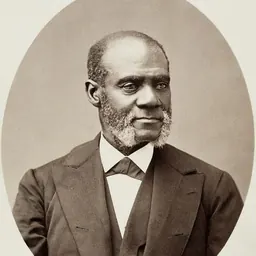
Related people
Same field, nearest in time
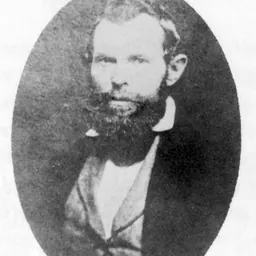


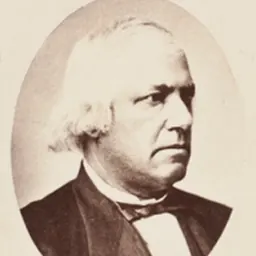

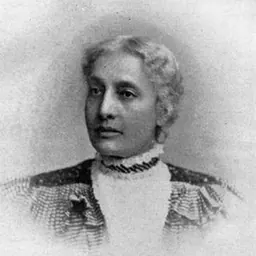
Contemporaries
People whose lives overlapped William G. Allen's



Frequently asked questions
Who was William G. Allen?
African American abolitionist (1820–1888)
When was William G. Allen born?
William G. Allen was born in 1820 in Fort Monroe.
When did William G. Allen die?
William G. Allen died on 1 May 1888 in St Mary's Hospital.
What was William G. Allen's occupation?
William G. Allen was an abolitionist, scholar and author.
What nationality was William G. Allen?
William G. Allen was American.
Sources & further reading
Cite this page
APA: Biography.guide. (2026). William G. Allen. https://biography.guide/william-g-allen/
MLA: "William G. Allen." Biography.guide, https://biography.guide/william-g-allen/.
Chicago: "William G. Allen." Biography.guide. https://biography.guide/william-g-allen/.
Data last updated: 2026-09-20 · Spot an error? Report a correction.
Page generated 2026-09-27 05:05 UTC