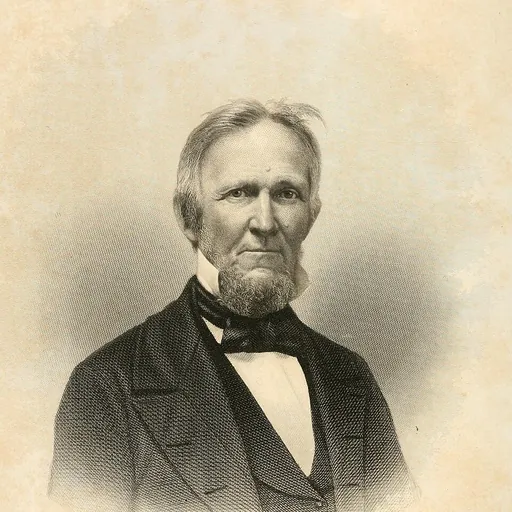
About Beriah Green
Lived 1795 – 1874 (aged 79). Beriah Green was an American historian, theologian and priest.
Beriah Green Jr. (March 24, 1795 – May 4, 1874) was an American reformer, abolitionist, temperance advocate, college professor, minister, and head of the Oneida Institute. He was "consumed totally by his abolitionist views". Former student Alexander Crummell described him as a "bluff, kind-hearted man," a "master-thinker". "obdurate," "caustic, belligerent, [and] suspicious". "He was so firmly convinced of his opinions and so uncompromising that he aroused hostility all about him." His father was a cabinet and chair maker. and he may have attended the Pawlet Academy. In 1826 his wife died, leaving him with two children, and the same year he married Daraxa Foote, also of Middlebury, who outlived Beriah. In 1829 he accepted a call to the distinctly "orthodox" (conservative) church of Kennebunk, Maine, but the next year left, to occupy a new position, His salary was $600 per year .
The buildings of this "Yale of the West" — Green calls it that — imitated those of Yale College. It had the same motto, "Lux et Veritas" (Light and Truth), the same entrance standards, and almost the same curriculum.
The topic of slavery In the Cleveland area (the "Connecticut Western Reserve") Beriah came in contact with more African Americans than he had in Vermont or Maine. The college first admitted an African-American student in 1832, John Sykes Fayette; he graduated in 1836. Three other African-American students — Richard W. Miller, Samuel Nelson, and Samuel Harrison — were also admitted during this time period. Fugitive slaves traveling to Canada on the Underground Railroad passed through northeast Ohio: John Brown, of the 1859 raid on Harpers Ferry, grew up in Hudson (1805–1825), running a tannery, then moved to a more isolated and safer (for fugitive slaves) site in northwest Pennsylvania, a major Underground Railroad stop. That the two met is possible but undocumented; there is no known correspondence between them. What is documented is his contact with Wm. Lloyd Garrison, who through his weekly newspaper The Liberator, launched in 1831, led the fight for immediate, uncompensated liberation of all slaves. Green wrote that "One copy of Mr. Garrison's 'Thoughts' has reached us [Thoughts on African Colonization, 1832] and we take a few copies of his admirable paper."
As fellow professor Elizur Wright wrote, Green was "pastor of our college church".
In his sermons, Green took the position, unusual in his day, that negroes were the equals of whites, and the victims of irrational prejudice based on no more than the color of their skin. These sermons created "a rumpus" on the campus. In the pamphlet was a brief message from College President Storrs and Elizur Wright, another professor, certifying that the published texts were the same as those delivered in the College chapel, and that "the sentiments embodied on these discourses, we believe to be scriptural. The exhibition of them in the college-chapel...we believe to have been not only warranted, but imperiously demanded, by a just regard to pastoral fidelity."
They were influential nationally, contributing to the foundation, the following year, of the American Anti-Slavery Society. Green presided over its founding meeting, and was chosen as its first President.
The Oneida Institute Expecting to be fired, Green resigned in 1833 and became the President of the Oneida Institute, a Presbyterian institution in Whitesboro, New York. Green accepted the presidency at Oneida on two conditions: that he be allowed to preach immediatism (the immediate abolition of slavery), and that he be allowed to accept African-American students.
As President, Green dramatically changed the college by accepting numerous African Americans, more than any other college during the 1830s and 1840s. Green did not believe that it was right to have separate schools for blacks and whites. This belief led him to attempt to get Gerrit Smith to merge his unsuccessful black manual labor school in Peterboro with the Oneida Institute, and it made Oneida a hotspot for abolitionist activity. Many future black leaders and abolitionists were students at Oneida while Green was president. These include William Forten, Alexander Crummell, Rev. Henry Highland Garnet, William G. Allen, Jermain Wesley Loguen, and Rev. Amos Noë Freeman.
In 1832, Green began to correspond with Gerrit Smith on the issue of black education. The two men became very close friends and much of what is known about Green is known from their letters. The two men worked together toward the goal of abolition. They continued correspondence until 1872, when they stopped writing because of long-held disagreements about civil government and political abolition.
Green was chosen as president of the organizational meeting of the American Anti-Slavery Society, formed in 1833 in Philadelphia. He was famous for refuting the arguments of men who used the Bible to defend slavery. In the late 1830s, Green focused most of his time contesting these arguments.
Green engaged in a series of public debates in Utica with Joseph H. Danforth of the American Colonization Society, about whether free Blacks should emigrate to Africa. The debates were followed by "riotous proceedings," and Green was hung in effigy.
In 1835, Green and his friend Alvan Stewart convinced Gerrit Smith to come to an organizational meeting for a New York Anti-Slavery Society, which they had called, in Utica. An anti-abolitionist mob, including Congressman Samuel Beardsley and other "principal citizens", "reviled the participants" and forced the convention to adjourn. At Smith's invitation they continued their meeting in his home, in nearby Peterboro, New York.
Decline and closure of the Oneida Institute The Panic of 1837 hit the Oneida Institute hard — its benefactors the Tappan brothers were ruined and unable to fulfill their pledges — and the college began to decline. Green also had begun to lose favor with conservative Presbyterians, which added to Oneida's troubles. Green led the secession of 59 church members from the Presbyterian church in Whitesboro because "the Oneida Presbytery was guilty of the crime of slave holding." The seceders formed the Congregational Church in Whitesboro in 1837. Green was pastor of that church from 1843 to 1867.
Charles Stuart, another contemporary, seeking to raise funds for the Institute: "The labors of President Green in the antislavery cause, in the way of lectures, and the use of the press, have been various, indefatiguable, abundant, in the face of evils and proscriptions of various kinds, and eminently successful. He has all alone shone himself a man for emergencies. On such occasions, whoever else may have done it, Beriah Green has never been known to flee or flinch. The result is that the Institute has always been in the midst of a hard struggle — in establishing and sustaining itself as a manual labor college, second in defense of its course of study, and last, not least, in its [abolitionist] vindication and defense of the rights of humanity.
According to Milton Sernett, author of Abolition's Axe: Beriah Green, Oneida Institute, and the Black Freedom Struggle, the only book on Green, "Green's erratic personality, acerbic tongue, and lack of political acumen were just as responsible for the closing of the institute as were problems with conservative trustees and the withdrawal of financial support from several key funding sources." "Although known during his lifetime as a 'fanatic' by many, Green has been more aptly described as a 'radical humanitarian'. Indeed, his life was a testimony to his beliefs. In the final analysis, he forfeited wealth, reputation, friends, and ultimately respectability for 'the cause'." Letter to Simeon Jocelyn, November 5, 1832
Don’t just read it —
keep it.
Full-length biographies made to live with: read them, listen on the way to work, watch them tonight.
- E-book
- Audio
- Video
Instant download · yours to keep · every purchase keeps this site free
Important facts
People in Beriah Green's life
Named in this biography and alive at the same time



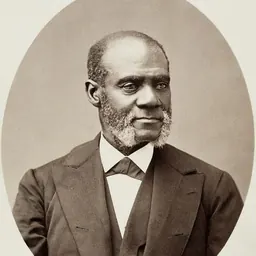
Related people
Same field, nearest in time

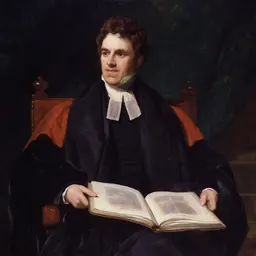


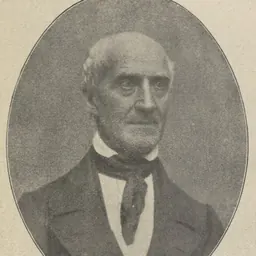

Contemporaries
People whose lives overlapped Beriah Green's
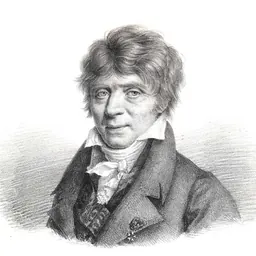





Frequently asked questions
Who was Beriah Green?
American abolitionist (1795–1874)
When was Beriah Green born?
Beriah Green was born on 24 March 1795.
When did Beriah Green die?
Beriah Green died on 4 May 1874.
What was Beriah Green's occupation?
Beriah Green was a historian, theologian and priest.
What nationality was Beriah Green?
Beriah Green was American.
Sources & further reading
Cite this page
APA: Biography.guide. (2026). Beriah Green. https://biography.guide/beriah-green/
MLA: "Beriah Green." Biography.guide, https://biography.guide/beriah-green/.
Chicago: "Beriah Green." Biography.guide. https://biography.guide/beriah-green/.
Data last updated: 2026-09-22 · Spot an error? Report a correction.
Portrait: Wikimedia Commons · author & licence
Page generated 2026-09-27 05:02 UTC