
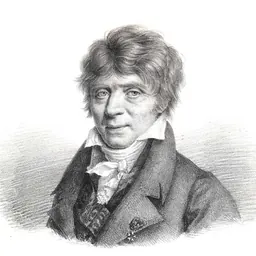
About Samuel Nelson
Lived 1792 – 1873 (aged 80). Samuel Nelson was an American lawyer and judge.
Samuel Nelson (November 10, 1792 – December 13, 1873) He concurred on the 1857 Dred Scott decision, although for reasons different from Chief Justice Taney's.
Early life Nelson was born in Hebron, New York, on November 10, 1792, the son of Scotch-Irish immigrants John Rodgers Nelson and his wife Jean McArthur. Nelson's family was upper middle class, with a prosperous family farm. Nelson was educated in the public schools of Hebron, with an additional three years in private schooling for college preparation. He entered Middlebury College in Vermont.
His initial intention was to pursue a career as a minister. Upon graduation in 1813, Nelson decided on a legal career. He read law as an apprentice at the firm of John Savage and David Woods in Salem, New York. Two years later, Savage and Woods dissolved their practice. Nelson moved to Madison County to enter into partnership with Woods. Nelson received his license to practice law in 1817, and entered private practice in Cortland. He developed a very successful practice, specializing in real estate and commercial law.
Career Nelson was a presidential elector in 1820, voting for James Monroe and Daniel D. Tompkins. Nelson served as US Postmaster of Cortland from 1820 to 1823.
In 1821, Nelson served as a delegate to the New York Constitutional Convention, as one of the "Bucktails" faction led by Martin van Buren. Nelson argued for expansion of suffrage and for restructuring the state judiciary. The revised constitution was adopted, and the state created eight new Circuit Courts.
New York State judge In 1823, Governor Joseph Yates appointed Nelson as a justice of the new Sixth Circuit Court of Appeals, beginning Nelson's judicial career. He became noted for his work in admiralty and maritime law, and his decisions were rarely appealed.
After eight years as a circuit court judge, Nelson was appointed in 1831 to the New York Supreme Court (then called the New York Supreme Court of Judicature) by Governor Enos Throop. In 1837, Governor William Marcy promoted him to the position of chief justice, succeeding John Savage.
In 1845, Nelson was an unsuccessful candidate for U.S. Senator in a special New York State Legislature election to fill the seat of Silas Wright. At that time the New York state Democrats were split between factions known as Barnburners and Hunkers, and Nelson was identified with the Hunkers. His Barnburner opponent, John Adams Dix, won the party's nomination and the Senate seat.
Supreme Court
On February 4, 1845, Nelson was nominated by President John Tyler as an associate justice of the Supreme Court of the United States, to fill the vacant seat of Smith Thompson. The unpopular Tyler had failed repeatedly to fill the Thompson vacancy, with the Whig-controlled Senate rejecting his earlier nominations of John C. Spencer, Reuben Walworth, Edward King, and John M. Read.
Tyler's nomination of Nelson was a surprise, but proved to be a popular choice. Nelson was a highly respected chief justice on the New York Supreme Court, and had a reputation of staying out of partisan conflict. The Whigs found Nelson acceptable because, although he was a Democrat, he had a reputation as a careful and uncontroversial jurist. The Senate confirmed Nelson's appointment on February 14, 1845, after just ten days. Samuel Nelson was the only Supreme Court Justice to be appointed by President Tyler.
A diligent but politically neutral member of the Supreme Court, Nelson became an authority on international, admiralty, maritime, and patent law and often addressed himself primarily to the technical aspects of the cases before the court.
Nelson served as a Justice for 27 years, until his retirement on November 28, 1872. Justice Nelson was a constitutionally conservative Democrat. He could also be described as a judicial minimalist, meaning he frequently took a moderate stance in cases offering a small, case-specific interpretation of the law, and placed a strong emphasis on precedent. While Nelson was a strong supporter of the Union, he often criticized President Lincoln's policies and did not believe that the Union could be saved in any worthwhile state through the use of force. While Justice Nelson remained relatively non-partisan, he did side frequently with Chief Justice Roger B. Taney and Justice John Archibald Campbell. Nelson also rather frequently disagreed with Justice Benjamin Robbins Curtis. Justice Nelson remained good friends with Chief Justice Taney throughout his lifetime.
Pennsylvania v. Wheeling One of Justice Nelson's most important opinions was in the case of Pennsylvania v. Wheeling and Belmont Bridge Company in 1855. The Commonwealth of Pennsylvania sued the builders of a suspension bridge over the Ohio River at Wheeling, Virginia (now West Virginia), chartered by Virginia. It said that the bridge obstructed the passage of steamboats, interfering with interstate commerce, and was therefore a public nuisance.
The suit was litigated for six years and came before the Supreme Court three different times before Justice Nelson's opinion ended it. The Court found that the bridge did qualify as a public nuisance. Congress enacted a law authorizing the bridge at its current height. In its final ruling, written by Nelson, the Court deferred to the legislative branch, overruling its previous decision. It declared that the bridge was not an obstruction to interstate commerce. Nelson drew this conclusion stating, "So far, therefore, as this bridge created an obstruction to the free navigation of the river, in view of the previous acts of Congress, they are to be regarded as modified by this subsequent legislation; and, although it still may be an obstruction in fact, is not so in the contemplation of law."
In 1863, the Court, by vote of 5 to 4, found that the blockade was constitutional. Justice Nelson wrote the dissenting opinion, joined by Chief Justice Taney and Justices Catron and Clifford. He asserted that blockading ports and confiscating enemy property were war powers, and under international law could be exercised only after a formal declaration of war. Nelson wrote that "war cannot lawfully be commenced on the part of the United States without an act of Congress, such act is, of course, a formal notice to all the world, and equivalent to the most solemn declaration."
Later career In 1871, President Ulysses S. Grant appointed Nelson to serve on the joint high commission to arbitrate the Alabama Claims. During this time he took a leave of absence from the bench. Soon thereafter, Nelson became ill. He resigned from the commission in 1872, shortly before his death. He was the last federal judge in active service appointed by President Tyler.
Personal life In 1819 Nelson married Pamela Woods, the daughter of David Woods and his wife. They had two children before her death.
In 1825, the widower married again, to Catharine Ann Russell, a daughter of U.S. Representative John Russell. He brought his two children to the marriage and had six children with Catharine. His fourth child with Catharine, son Rensselaer Russell Nelson, became an attorney. He was appointed as the first United States District Court Judge for the District of Minnesota. He was buried at Cooperstown's Lakewood Cemetery.
His law office was preserved as part of the Farmers' Museum in Cooperstown.
Don’t just read it —
keep it.
Full-length biographies made to live with: read them, listen on the way to work, watch them tonight.
- E-book
- Audio
- Video
Instant download · yours to keep · every purchase keeps this site free
Important facts
Family & relationships
People in Samuel Nelson's life
Named in this biography and alive at the same time
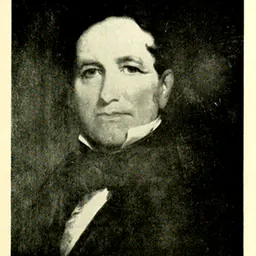
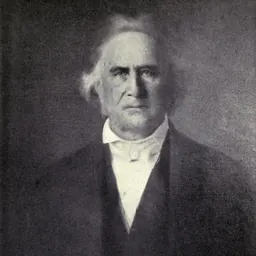
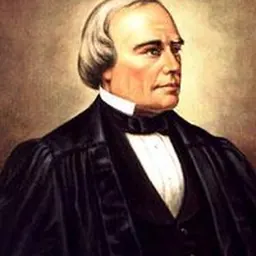
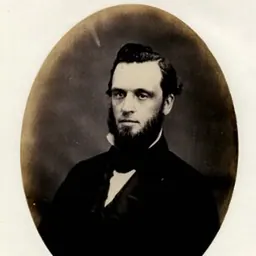

Related people
Same field, nearest in time




Contemporaries
People whose lives overlapped Samuel Nelson's


Frequently asked questions
Who was Samuel Nelson?
American judge (1792–1873)
When was Samuel Nelson born?
Samuel Nelson was born on 10 November 1792 in Hebron.
When did Samuel Nelson die?
Samuel Nelson died on 13 September 1873 in Cooperstown.
What was Samuel Nelson's occupation?
Samuel Nelson was a lawyer and judge.
What nationality was Samuel Nelson?
Samuel Nelson was American.
Sources & further reading
Cite this page
APA: Biography.guide. (2026). Samuel Nelson. https://biography.guide/samuel-nelson/
MLA: "Samuel Nelson." Biography.guide, https://biography.guide/samuel-nelson/.
Chicago: "Samuel Nelson." Biography.guide. https://biography.guide/samuel-nelson/.
Data last updated: 2026-09-20 · Spot an error? Report a correction.
Page generated 2026-09-27 05:17 UTC