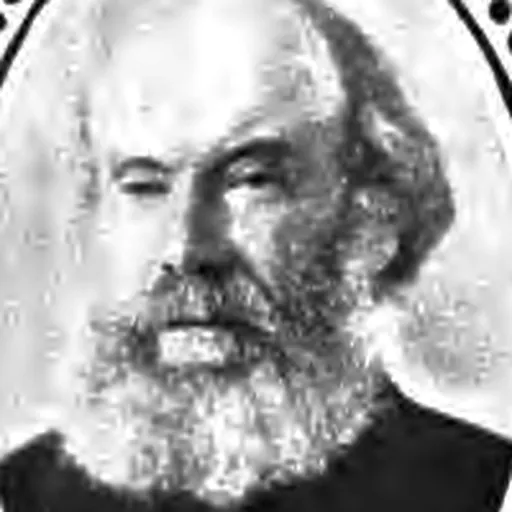
About William Fraser Tolmie
Lived 1812 – 1886 (aged 74). William Fraser Tolmie was a Canadian explorer, diarist, naturalist, botanist, fur trade and surgeon.
William Fraser Tolmie ( "Dr. Tolmie") (February 3, 1812 – December 8, 1886) was a surgeon, fur trader, scientist, and politician.
He was born in Inverness, Scotland, in 1812, and by 1833 moved to the Pacific Northwest in the service of the Hudson's Bay Company (HBC). He served for two years, 1832-33 at Fort McLoughlin. He served at Fort Nisqually, an HBC post at the southern end of Puget Sound, from 1843 to 1859. In 1859 he moved to Victoria, British Columbia, where he continued serving the HBC as well as becoming active in politics.
His written works include Comparative Vocabulary of the Indian Tribes of British Columbia (1884), and his journals, published in 1963 as The Journals of William Fraser Tolmie.
Early career At the age of 20, having spent 3 years attending medical classes at the University of Glasgow, Tolmie qualified as a Licentiate of the Faculty of Physicians and Surgeons of Glasgow, after which he joined the Hudson's Bay Company and soon sailed for the Pacific Northwest. In the spring of 1833 he arrived at Fort Vancouver. Soon after arriving he was sent to the proposed site for Fort Nisqually, at the southern end of Puget Sound near the Nisqually River delta. The route was via canoe up the Cowlitz River then overland by horse. Tolmie's journal provides the first detailed account of this route, today essentially that of Interstate 5.
Tolmie stayed at the newly built Fort Nisqually for seven months, until December 1833.
In June 1833 there was an earthquake at Fort Nisqually. Tolmie's journal entry about it is the first recorded eyewitness description of an earthquake in the Puget Sound region.
While at Nisqually he wrote in his journal about nearby Mount Rainier and his desire to see it more closely. In August 1833 he arranged a "botanizing excursion" to the mountain, with Lachalet, a Nisqually, and Nuckalkat, a Puyallup, as guides. Three other Native Americans joined the party. They traveled through the thick forests, following the general course of the Puyallup River to the Mowich River and into what is today the northwest part of Mount Rainier National Park. Wanting to reach the snow level, Tolmie chose the nearest snowy peak and climbed it with Lachalet and Nuckalkat. Tolmie Peak is named for this event, although it is not known exactly which peak was summited. During the expedition, Dr. Tolmie discovered a new species of plant which is now known as Tolmie's saxifrage (Micranthes tolmiei). Due to this trip, Dr. Tolmie was the first European to explore the Puyallup River valley and Mount Rainier.
Dr. Tolmie wanted to improve the area's relationship with the native Indians and couldn't agree with the prevailing point of view to convert the natives to Christianity. As a result of this crisis of conscience, he took a leave of absence to London and France, where he did postgraduate courses for two years. When he returned, he was appointed superintendent of the Puget Sound Agriculture Company's farm, a subsidiary of the Hudson Bay Company.
Fort McLoughlin Dr. Tolmie served at Fort McLoughlin, adjacent to Old Bella Bella during the early operation of the fort. Descriptions of his time at the fort include insights to Heiltsuk and other First Nations at the time, including attendance at a potlatch in Heiltsuk country. In 1835, Dr. Tolmie spent 10 days with area natives, and with their help, discovered high-quality coal which, before the opening of mines soon after, needed to be imported from Britain.
Commander of Fort Nisqually In 1843 Dr. Tolmie returned to Fort Nisqually (also called "Nisqually House" and "Nisqually Station"). When he returned in 1843 he decided to relocate the fort closer to the Edmond Marsh and Sequalitchew creek in order to have better access to fresh water. He served at Nisqually from 1843 to 1859. In 1847 he was promoted to Chief Trader, and in 1855 to Chief Factor. He worked to achieve good relationships with the region's Native Americans and the growing number of United States settlers.
Further Interactions with Native Americans In 1857, Dr. Tolmie supported Chief Leschi, who was being tried for murders related to the Puget Sound War of 1855-1856. Tolmie visited the sites where Leschi was alleged to have been, measured distances, and determined it was impossible for Leschi to have made the trip to the murder site in the time required. Nonetheless, Leschi was executed in 1858. Later, the trial was judged to have been unlawfully conducted, the execution wrong, and Leschi innocent.
Dr. Tolmie was credited with saving the American Puget Sound settlement from a war among the natives. In a testimonial letter, William W. Miller, superintendent of Indian affairs for Washington Territory, wrote: "We are indebted to him for saving life and property, and for his influence on the Indians of Puget Sound. In our Indian wars of 1855/56, he laboured successfully to divert the horrors." In 1885, Dr. Tolmie Published Utilization of the Indians of British Columbia. It stands as a work of advocacy towards the Native Americans of the Pacific Northwest. In it he condemned the national government for its neglect of an entire group of people.
Vancouver Island In 1859 the Hudson's Bay Company transferred Tolmie to Fort Victoria on Vancouver Island. He served on the HBC Board of Management from 1861 to 1870, retiring from the company in 1871.
In addition to working for the HBC, Tolmie became active in politics. He was a member of the Legislative Assembly of Vancouver Island from 1860 to 1866 and a member of the Legislative Assembly of British Columbia from 1874 to 1878.
He continued to study indigenous languages until his death on December 8, 1886. They lived first at Fort Nisqually, then at Victoria, where their farm home adjoined the Work family's Hillside Farm. The Work and Tolmie cousins grew up together.
Tolmie's son, Simon Fraser Tolmie, was the twenty-first Premier of British Columbia.
Legacy William Fraser Tolmie's name is associated with Tolmie Peak near Mount Rainier and Tolmie's saxifrage (Micranthes tolmiei), which he discovered there. Tolmie State Park in Washington is named for him, as are Mount Tolmie, Tolmie Channel, and Tolmie Point in British Columbia. Tolmie Street in Vancouver is also named for him. Other plants bearing his name include Tolmie's star-tulip (Calochortus tolmiei) and Tolmie's onion (Allium tolmiei). The scientific name of MacGillivray's warbler is also named for him: Oporornis tolmiei.
Don’t just read it —
keep it.
Full-length biographies made to live with: read them, listen on the way to work, watch them tonight.
- E-book
- Audio
- Video
Instant download · yours to keep · every purchase keeps this site free
Important facts
People in William Fraser Tolmie's life
Named in this biography and alive at the same time


Related people
Same field, nearest in time


Contemporaries
People whose lives overlapped William Fraser Tolmie's






Frequently asked questions
Who was William Fraser Tolmie?
Canadian politician (1812–1886)
When was William Fraser Tolmie born?
William Fraser Tolmie was born on 3 February 1812 in Inverness.
When did William Fraser Tolmie die?
William Fraser Tolmie died on 8 December 1886 in Victoria.
What was William Fraser Tolmie's occupation?
William Fraser Tolmie was an explorer, diarist, naturalist, botanist, fur trade and surgeon.
What nationality was William Fraser Tolmie?
William Fraser Tolmie was Canadian.
Sources & further reading
· Wikipedia: William Fraser Tolmie
· DBpedia: William Fraser Tolmie
Cite this page
APA: Biography.guide. (2026). William Fraser Tolmie. https://biography.guide/william-fraser-tolmie/
MLA: "William Fraser Tolmie." Biography.guide, https://biography.guide/william-fraser-tolmie/.
Chicago: "William Fraser Tolmie." Biography.guide. https://biography.guide/william-fraser-tolmie/.
Data last updated: 2026-09-23 · Spot an error? Report a correction.
Portrait: Wikimedia Commons · author & licence
Page generated 2026-09-27 05:07 UTC