
About Simon Fraser Tolmie
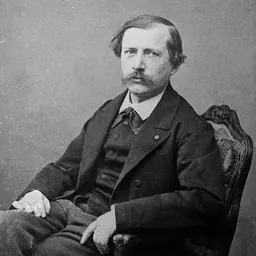
Lived 1867 – 1937 (aged 70). Simon Fraser Tolmie was a Canadian politician, veterinarian, farmer, civil servant and cattle rancher.
Simon Fraser Tolmie, (25 January 1867 – 13 October 1937) was a veterinarian, farmer, politician, and the 21st premier of British Columbia, Canada. He was the final premier from the BC Conservative party.
Early life
Tolmie had a pioneer/Indigenous lineage, which aided him in his political aspirations. He was the son of Dr. William Fraser Tolmie, a prominent figure in the Hudson's Bay Company and a member of both the colonial assembly of Colony of Vancouver Island and the Legislative Assembly of British Columbia. William Fraser was early supporter of Scottish industrialist reformer Robert Owen, and was a strong supporter of women's suffrage in British Columbia. His mixed Indigenous-settler maternal ancestry was representative of the marriages of First Nations women and men who worked in the fur trade. Tolmie's mother, Jane Work, was the daughter of John Work, a prominent Victoria resident, Hudson's Bay Company Chief Factor, and member of the former colony's assembly. Jane's mother was Josette Legace, a daughter of a First Nations woman from the Spokane area and Pierre Legace, a French-Canadian trapper father. Born in Victoria, Tolmie spent his early life on his family's vast farm, Cloverdale (the Victoria neighbourhood bears its name). He graduated from the Ontario Veterinary College in 1891 and later became the Dominion Inspector of Livestock.
Early political career
Tolmie entered federal politics in the election of 1917, becoming Unionist MP for Victoria City. He was returned in the subsequent four elections as a Conservative (the riding changed its name to Victoria in 1924). Tolmie served as Minister of Agriculture in the governments of Sir Robert Borden and Arthur Meighen from 1919–1921, and in 1926.
Tolmie was part of a general anti-drug panic in 1922 with severe racist overtones. He supported amendments to drug laws calling for the deportation of all Asians convicted of trafficking and for the use of the 'lash'.
Premier of British Columbia
Tolmie was elected leader of the British Columbia Conservative Party in 1926 but continued to sit as a Member of Parliament until the 1928 provincial election, in which he ran and was elected MLA for Saanich. The Conservatives were victorious that year, taking 32 of the legislature's 48 seats, including every seat in Vancouver and Victoria. Tolmie thus became Premier of the province, also serving as Minister of Railways. Between 1 June and 15 November 1933, he further served as the province's Minister of Agriculture and President of the Council.
Like their federal counterparts, who returned to power in 1930, Tolmie's Tories' commitment to applying "business principles to the business of government," rebounded to their disadvantage when the Great Depression hit. By 1931, unemployment reached 28% - the highest in Canada - and Tolmie was finally forced to act, setting up remote relief camps. Tolmie acceded to the request from the business community that a royal commission be established to propose solutions to the province's increasingly dire financial situation. The Kidd Report, issued in 1932, recommended such sharp cuts to social services that mainstream British Columbians were enraged. They had come to expect more from their provincial government than its traditional functions of maintaining law and order, providing physical infrastructure and encouraging private enterprise.
The strained situation took its toll on the provincial party, which became so wracked by internal discord that the executive decided to run no candidates in the 1933 election. Rather, each local riding association acted on its own. Some candidates ran as independents, some as Independent Conservatives. Those supporting Tolmie, ran as Unionists, and those grouped around William John Bowser, a former premier, ran as Non-Partisans. The result was easily foreseen. The Liberals captured 42% of the vote and 34 of the 47 seats, the new social democratic Co-operative Commonwealth Federation became the official opposition, and the Conservatives who had run under various banners picked up just five seats. Tolmie lost his own seat.
Later life
Tolmie returned to politics three years later, returning to his old federal seat of Victoria in a 1936 by-election. He died in Victoria a little over a year later.
Tolmie led the last Conservative provincial government in British Columbia.
Don’t just read it —
keep it.
Full-length biographies made to live with: read them, listen on the way to work, watch them tonight.
- E-book
- Audio
- Video
Instant download · yours to keep · every purchase keeps this site free
Important facts
People in Simon Fraser Tolmie's life
Named in this biography and alive at the same time


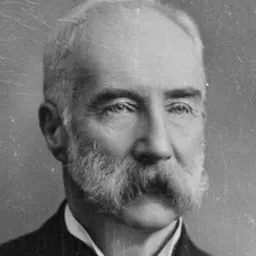
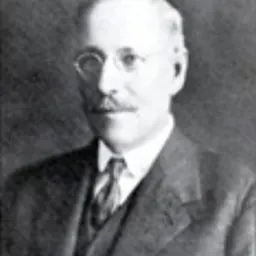

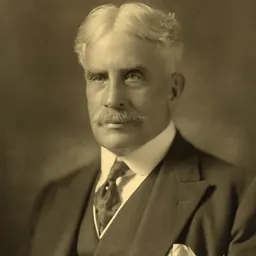

Related people
Same field, nearest in time




Contemporaries
People whose lives overlapped Simon Fraser Tolmie's




Frequently asked questions
Who was Simon Fraser Tolmie?
Canadian politician (1867–1937)
When was Simon Fraser Tolmie born?
Simon Fraser Tolmie was born on 25 January 1867 in Victoria.
When did Simon Fraser Tolmie die?
Simon Fraser Tolmie died on 13 October 1937 in Victoria.
What was Simon Fraser Tolmie's occupation?
Simon Fraser Tolmie was a politician, veterinarian, farmer, civil servant and cattle rancher.
What nationality was Simon Fraser Tolmie?
Simon Fraser Tolmie was Canadian.
Sources & further reading
· Wikipedia: Simon Fraser Tolmie
· DBpedia: Simon Fraser Tolmie
Cite this page
APA: Biography.guide. (2026). Simon Fraser Tolmie. https://biography.guide/simon-fraser-tolmie/
MLA: "Simon Fraser Tolmie." Biography.guide, https://biography.guide/simon-fraser-tolmie/.
Chicago: "Simon Fraser Tolmie." Biography.guide. https://biography.guide/simon-fraser-tolmie/.
Data last updated: 2026-09-20 · Spot an error? Report a correction.
Page generated 2026-09-27 05:23 UTC