
About William Field
Lived 1843 – 1935 (aged 91–92). William Field was a British and Irish politician.
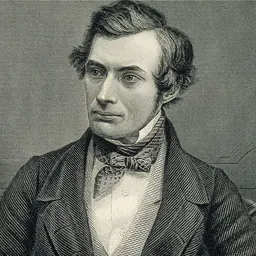
William Field (June 1843 – 29 April 1935) was an Irish butcher from Dublin, and a nationalist politician. From 1892 to 1918 he was Member of Parliament (MP) for Dublin St Patrick's, taking his seat in the House of Commons of the United Kingdom of Great Britain and Ireland.
His father was a supporter of Young Ireland. Born at Blackrock, County Dublin, he was educated at Harcourt Street School, Dublin, and at the Catholic University, Dublin. He ran one of the biggest butchers' businesses in Dublin and was president of the National Meat Traders' Federation. He was also a member of Blackrock Urban District Council and Dublin Port and Docks Board. J. J. Horgan described him in 1905 as "a venerable figure with a wide-brimmed hat and picturesque appearance reminiscent of Buffalo Bill". D.P. Moran's weekly paper The Leader often published caricatures of him in the 1912–18 period.
Field was politically active from the 1870s and had extensive connections in the labour movement and in 'Irish Ireland' organizations such as the Gaelic Athletic Association and Gaelic League. In the 1892 general election, standing for the Parnellite Irish National League, he took the St Patrick's seat in the Parnellite stronghold of Dublin from the sitting anti-Parnellite Irish National Federation MP William Martin Murphy by the wide margin of 3,991 votes to 1,110. Thereafter he retained this seat unopposed through five successive general elections, joining the United Irish League (sitting in the Irish Parliamentary Party) when the two factions reunited in 1900. At the 1918 general election he was defeated by Constance Markievicz of Sinn Féin by more than two to one.
He presented himself as a labour representative, though he denounced socialism; he attended early Irish trade union congresses as representative of the "Knights of the Plough" a farm laborers' body founded by Benjamin Pelin at Narraghmore, County Kildare in June 1892. Field then formed a break-away branch of the Irish Land and Labour Association, called the Land and Labour League designating himself as its president. He was essentially a "Labor nationalist" believing Irish workers and employers shared a common interest in developing Irish industry. The 1911 Census shows him living, unmarried, at 6 Main Street, Blackrock. The Nestor and Cyclops episodes of James Joyce's novel Ulysses contain passing references to a cattle traders' meeting addressed by Field, who expresses criticism of the quarantine imposed on Irish districts where cattle are suffering from foot and mouth disease.
Don’t just read it —
keep it.
Full-length biographies made to live with: read them, listen on the way to work, watch them tonight.
- E-book
- Audio
- Video
Instant download · yours to keep · every purchase keeps this site free
Important facts
People in William Field's life
Named in this biography and alive at the same time


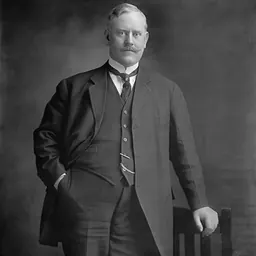
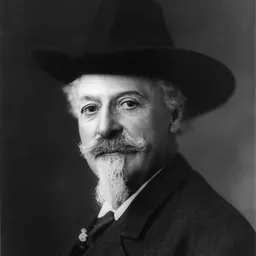

Related people
Same field, nearest in time




Contemporaries
People whose lives overlapped William Field's
Frequently asked questions
Who was William Field?
Irish politician (1843-1935)
When was William Field born?
William Field was born in 1843 in Blackrock.
When did William Field die?
William Field died on 29 April 1935.
What was William Field's occupation?
William Field was a politician.
What nationality was William Field?
William Field was British and Irish.
Sources & further reading
· DBpedia: William Field (Irish politician)
Cite this page
APA: Biography.guide. (2026). William Field. https://biography.guide/william-field-politician/
MLA: "William Field." Biography.guide, https://biography.guide/william-field-politician/.
Chicago: "William Field." Biography.guide. https://biography.guide/william-field-politician/.
Data last updated: 2026-09-20 · Spot an error? Report a correction.
Page generated 2026-09-27 05:21 UTC