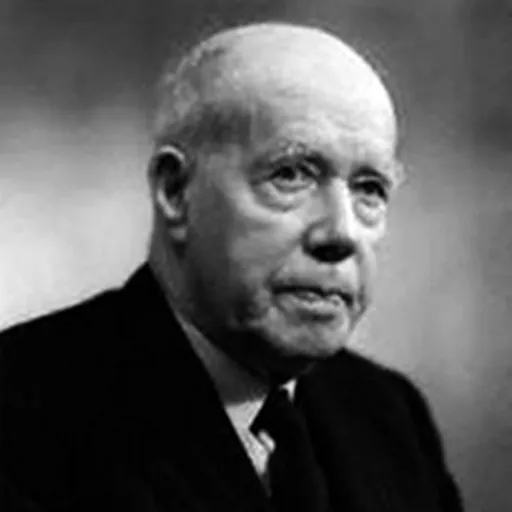
About William David Ross
Lived 1877 – 1971 (aged 94). William David Ross was a British philosopher and translator.
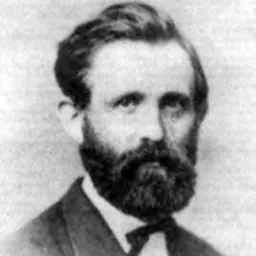
Sir William David Ross (15 April 18775 May 1971), known as David Ross but usually cited as W. D. Ross, was a Scottish Aristotelian philosopher, translator, WWI veteran, civil servant, and university administrator. His best-known work is The Right and the Good, in which he developed a pluralist, deontological form of intuitionist ethics in response to G. E. Moore's consequentialist form of intuitionism. Ross also critically edited and translated a number of Aristotle's works, such as his 12-volume translation of Aristotle together with John Alexander Smith, and wrote on other Greek philosophy.
Life William David Ross was born in Thurso, Caithness in the north of Scotland the son of John Ross (1835–1905).
He spent most of his first six years as a child in southern India. He was educated at the Royal High School, Edinburgh, and the University of Edinburgh. In 1895, he gained a first class MA honours degree in classics. He completed his studies at Balliol College, Oxford, with a First in Classical Moderations in 1898 and a First in Literae Humaniores ('Greats', a combination of philosophy and ancient history) in 1900. He was made a Fellow of Merton College in 1900, a position he held until 1945; he was elected to a tutorial fellowship at Oriel College in October 1902.
With the outbreak of World War I, Ross joined the army in 1915 with a commission on the special list. Of the many governmental committees on which he served one was the Civil Service Tribunal, of which he was chairman. One of his two colleagues was Leonard Woolf, who thought that the whole system of fixing governmental remuneration should be on the same basis as the US model, dividing the civil service into a relatively small number of pay grades. Ross did not agree with this radical proposal. In 1947 he was appointed chairman of the first Royal Commission on the Press, United Kingdom, elected an honorary fellow of Trinity College Dublin, and elected an International Member of the American Philosophical Society. He was elected to the American Academy of Arts and Sciences in 1950.
He died in Oxford on 5 May 1971. He is memorialised on his parents' grave in the Grange Cemetery in Edinburgh.
Family His younger brother was Presbyterian minister Donald George Ross (1879–1943).
He married Edith Ogden in 1906 and they had four daughters, Margaret (who married Robin Harrison), Eleanor, Rosalind (who married John Miller Martin), and Katharine. Edith died in 1953.
He was a cousin of Berriedale Keith.
Ethical theory Ross was a moral realist, a non-naturalist, and an intuitionist. He argued that there are moral truths. He wrote:
Thus, according to Ross, the claim that something is good is true if that thing really is good. Ross also agreed with G. E. Moore's claim that any attempt to define ethical statements solely in terms of statements about the natural world commits the naturalistic fallacy. Furthermore, the terms right and good are "indefinable". This means not only that they cannot be defined in terms of natural properties but also that it is not possible to define one in terms of the other.
Ross rejected Moore's consequentialist ethics. According to consequentialist theories, what people ought to do is determined only by whether their actions will bring about the best. By contrast, Ross argues that maximising the good is only one of several prima facie duties (prima facie obligations) which play a role in determining what a person ought to do in any given case.
Duties In The Right and the Good, Ross lists seven prima facie duties, without claiming his list to be exhaustive: fidelity; reparation; gratitude; justice; beneficence; non-maleficence; and self-improvement. In any given situation, any number of these prima facie duties may apply. In the case of ethical dilemmas, they may even contradict one another. Someone could have a prima facie duty of reparation, say, a duty to help people who helped you move house, move house themselves, and a prima facie duty of fidelity, such as taking one's children on a promised trip to the park, and these could conflict. Nonetheless, there can never be a true ethical dilemma, Ross argued, because one of the prima facie duties in a given situation is always the weightiest, and over-rules all the others. This is thus the absolute obligation or absolute duty, the action that the person ought to perform.
It is frequently argued, however, that Ross should have used the term pro tanto rather than prima facie. Shelly Kagan, for example, wrote:
Explaining the difference between pro tanto and prima facie, Kagan wrote: "A pro tanto reason has genuine weight, but nonetheless may be outweighed by other considerations. Thus, calling a reason a pro tanto reason is to be distinguished from calling it a prima facie reason, which I take to involve an epistemological qualification: a prima facie reason appears to be a reason, but may actually not be a reason at all." Virtue refers to actions or dispositions to act from the appropriate motives, for example, from the desire to do one's duty. He goes so far as to suggest that "no amount of pleasure is equal to any amount of virtue, that in fact virtue belongs to a higher order of value". This ability is not inborn but has to be developed on the way to reaching mental maturity. But in its fully developed form, we can know moral truths just as well as we can know mathematical truths like the axioms of geometry or arithmetic. This self-evident knowledge is limited to general principles: we can come to know the prima facie duties this way but not our absolute duty in a particular situation: what we should do all things considered. Additionally there is no consideration of the consequence of the action undertaken, as with all deontological approaches.
Ross's deontological pluralism was a true innovation and provided a plausible alternative to Kantian deontology. His ethical intuitionism found few followers among his contemporaries but has seen a revival by the end of the 20th and the beginning of the 21st century. Among the philosophers influenced by The Right and the Good are Philip Stratton-Lake, Robert Audi, Michael Huemer, and C. D. Broad.
Selected works 1908: Nicomachean Ethics. Translated by W. D. Ross. Oxford: Clarendon Press. 1923: Aristotle 1924: Aristotle's Metaphysics 1927: 'The Basis of Objective Judgments in Ethics'. International Journal of Ethics, 37:113–127. 1930: The Right and the Good 1936: Aristotle's Physics 1939: Foundations of Ethics 1949: Aristotle's Prior and Posterior Analytics 1951: Plato's Theory of Ideas 1954: Kant's Ethical Theory: A Commentary on the Grundlegung zur Metaphysik der Sitten, Oxford: Oxford University Press.
Don’t just read it —
keep it.
Full-length biographies made to live with: read them, listen on the way to work, watch them tonight.
- E-book
- Audio
- Video
Instant download · yours to keep · every purchase keeps this site free
Important facts
People in William David Ross's life
Named in this biography and alive at the same time





Related people
Same field, nearest in time



Contemporaries
People whose lives overlapped William David Ross's



Frequently asked questions
Who was William David Ross?
Scottish philosopher and translator (1877–1971)
When was William David Ross born?
William David Ross was born on 15 April 1877 in Thurso.
When did William David Ross die?
William David Ross died on 5 May 1971 in Oxford.
What was William David Ross's occupation?
William David Ross was a philosopher and translator.
What nationality was William David Ross?
William David Ross was British.
Sources & further reading
· Wikipedia: William David Ross
Cite this page
APA: Biography.guide. (2026). William David Ross. https://biography.guide/william-david-ross/
MLA: "William David Ross." Biography.guide, https://biography.guide/william-david-ross/.
Chicago: "William David Ross." Biography.guide. https://biography.guide/william-david-ross/.
Data last updated: 2026-09-22 · Spot an error? Report a correction.
Portrait: Wikimedia Commons · author & licence
Page generated 2026-09-27 05:01 UTC