
About Shelly Kagan
Born 1956. Shelly Kagan is an American philosopher, university teacher and ethicist.
Shelly Ian Kagan (; born 1954) is the Clark Professor of Philosophy at Yale University, where he has taught since 1995. He is best known for his writings about animal ethics, moral philosophy, normative ethics, and philosophy of death. In 2007, Kagan's course about death was offered for free online, and was very popular. This led him to publish a book on the subject in 2012. Kagan was elected to the American Academy of Arts and Sciences in 2016.
Education and career Born in Skokie, Illinois, Kagan received his BA from Wesleyan University in 1976 and his PhD from Princeton University in 1982. He taught at the University of Pittsburgh from 1981 until 1986, and at the University of Illinois at Chicago from 1986 until 1995, before taking a position at Yale.
Kagan has served as a member of the editorial board of the journal Ethics.
Philosophical work
In his 1984 book Reasons and Persons, Derek Parfit credited Kagan as the "person from whom I have learnt the most", noting that Kagan's comments on his draft were half the length of the draft itself.
In 1989, Kagan's first book, The Limits of Morality, was published. It is an extended critique of two key assumptions underlying what Kagan calls "ordinary morality": the "common‐sense moral view that most of us accept". Specifically, the book questions the assumption that morality rules out certain actions (such as harming innocent people) even in situations where doing so might create greater good, and the assumption that we are "not required to make our greatest possible contribution to the overall good". According to Kagan, these two assumptions are indefensible, despite their widespread appeal.
In 1997, Kagan published a textbook, Normative Ethics, designed to provide a thorough introduction to the subject for upper-level undergraduate or graduate students. In 2007, his Yale course "Death" was recorded for Open Yale Courses, and his book Death is based on these lectures. In 2010, Yale University reported that Kagan's "Death" course had made him one of the most popular foreign teachers in China.
Kagan also explored desert, the concept of what people deserve, in his 2012 book The Geometry of Desert.
Animal ethics Kagan published How to Count Animals, More or Less in 2019. Against a utilitarian viewpoint, Kagan argues for a hierarchical position of animal ethics where people count more than animals, and some animals count more than others. On modal personism, a being's potential to become a person can be a source of moral status. Persons possess a higher moral status than nonhuman animals or beings that could never become persons.
In 2023, Kagan said, "It turns out fish are far more intelligent than I've ever given them credit for. So when I combined that with my moral views on why you should not eat beef, pork, chicken—suddenly, I had to give up fish. So I gave up fish".
Don’t just read it —
keep it.
Full-length biographies made to live with: read them, listen on the way to work, watch them tonight.
- E-book
- Audio
- Video
Instant download · yours to keep · every purchase keeps this site free
Important facts
People in Shelly Kagan's life
Named in this biography and alive at the same time

Related people
Same field, nearest in time

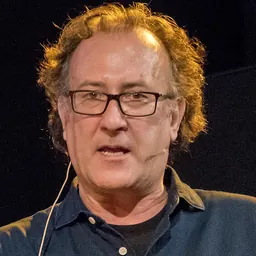
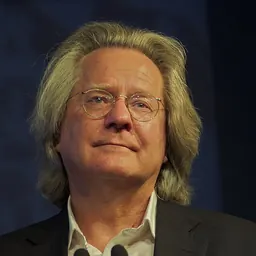

Contemporaries
People whose lives overlapped Shelly Kagan's
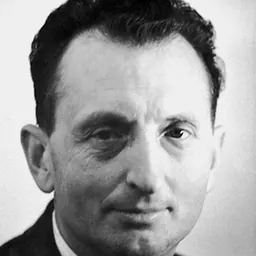

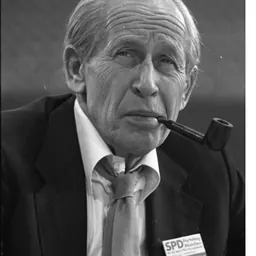
Frequently asked questions
Who is Shelly Kagan?
American philosopher
When was Shelly Kagan born?
Shelly Kagan was born in 1956.
What is Shelly Kagan's occupation?
Shelly Kagan is a philosopher, university teacher and ethicist.
What nationality is Shelly Kagan?
Shelly Kagan is American.
Sources & further reading
Cite this page
APA: Biography.guide. (2026). Shelly Kagan. https://biography.guide/shelly-kagan/
MLA: "Shelly Kagan." Biography.guide, https://biography.guide/shelly-kagan/.
Chicago: "Shelly Kagan." Biography.guide. https://biography.guide/shelly-kagan/.
Data last updated: 2026-09-20 · Spot an error? Report a correction.
Page generated 2026-09-27 05:17 UTC