
About William Caldwell Harrop
Lived 1929 – 2025 (aged 96). William Caldwell Harrop was an American diplomat.
William Caldwell Harrop (February 19, 1929 – June 6, 2025) was an American diplomat. Harrop served for 39 years as a Foreign Service Officer, with postings as United States ambassador to Guinea, Kenya and the Seychelles, the Congo (Kinshasa), and Israel.
Early life and education Harrop was born in Baltimore, Maryland, on February 19, 1929. At age ten, he moved with his family to New Brunswick, New Jersey, where his father, a research physician, worked for E. R. Squibb & Sons. Harrop attended Deerfield Academy in Deerfield, Massachusetts. He received his A.B. from Harvard College in 1950.
After graduating from Harvard, Harrop unsuccessfully looked for editorial work with various newspapers. At the invitation of Frank Boyden, the headmaster of Deerfield Academy, Harrop spent about five months teaching at the school before entering the Marine Corps, in which he served during the Korean War.
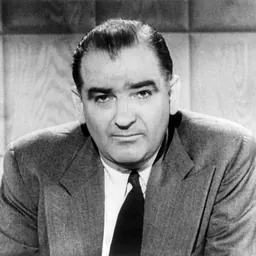
After returning to the United States, Harrop took and passed the Foreign Service exam in 1952. At the time, Harrop was still interested in journalism, and used the G.I. Bill to earn a master's degree in journalism from the University of Missouri School of Journalism in Columbia, Missouri. Harrop then accepted an appointment to the United States Foreign Service; according to an oral history given by Harrop, he "was one of a considerable group of people who were delayed in entering the Foreign Service for a couple of years by Senator Joseph McCarthy." According to Harrop, "Accepting the appointment was a difficult decision for me. I had heard nothing from the Department for months, and was suddenly told over the phone that if I would appear within nine days in Washington I would receive an appointment and would go to Palermo."
Foreign Service career Harrop entered the Foreign Service in a year when the new class of diplomats did not attend the standard A-100 orientation and training course at the Foreign Service Institute. One of Harrop's sons was born the day before he left for Italy for his first assignment, at the U.S. consulate general in Palermo, Sicily in 1953. This consulate would have ordinarily had only twelve staffers, but because of the Refugee Relief Act had exploded to at least eighty staffers. Harrop was one of several vice consuls there. He helped administer the Refugee Relief Program on the island, where at the time the Mafia held great sway. As ambassador in Conakry, Guinea, Harrop faced hostility from President Ahmed Sékou Touré, leader of a radical, pan-Africanist movement. Harrop's twelve-member mission was also dramatically outnumbered by the Soviet mission, which had 1200 people, and the Chinese mission, which had 700 people. Key issues handled during Harrop's tenure in Conakry were Soviet overflights and bases in the country and U.S. humanitarian aid in Guinea. In 1977, Harrop left Guinea and returned to the Bureau of African Affairs to become principal deputy to Assistant Secretary of State for African Affairs Richard M. Moose. At the Bureau of African Affairs, Harrop spent most time of issues relating to Zaire and the Horn of Africa (particularly the Ogaden War between Ethiopia and Somalia), while Moose handled most matters relating to southern Africa (South Africa, Rhodesia, Namibia, and Angola). On June 16, 2004, the Diplomats and Military Commanders for Change issued a statement against the Iraq War.
Harrop was a member of the Washington Institute of Foreign Affairs and a director of the American Academy of Diplomacy, the Senior Living Foundation of the American Foreign Service, American Diplomacy Publishers, the Henry L. Stimson Center, and the Washington Humane Society. For a time, Harrop was chair of the Board of Directors of the Diplomacy Center Foundation (formerly known as the Foreign Affairs Museum Council), which aims to establish a museum of U.S. diplomacy. He continued to serve on the board until his death.
Harrop was one of five former U.S. ambassadors to Israel from administrations of both parties (and two additional former Under Secretaries of State) to sign a letter in July 2015 calling upon Congress to approve the Joint Comprehensive Plan of Action, a comprehensive nuclear agreement, with Iran.
Personal life and death Harrop was married to Ann Harrop (née Delavan); they had four sons and nine grandchildren. Ann died in 2022. He spoke French and Italian.
Harrop died on June 6, 2025, at the age of 96.
Don’t just read it —
keep it.
Full-length biographies made to live with: read them, listen on the way to work, watch them tonight.
- E-book
- Audio
- Video
Instant download · yours to keep · every purchase keeps this site free
Important facts
People in William Caldwell Harrop's life
Named in this biography and alive at the same time





Related people
Same field, nearest in time
Contemporaries
People whose lives overlapped William Caldwell Harrop's
Frequently asked questions
Who was William Caldwell Harrop?
American diplomat
When was William Caldwell Harrop born?
William Caldwell Harrop was born on 19 February 1929 in Baltimore.
When did William Caldwell Harrop die?
William Caldwell Harrop died on 6 June 2025.
What was William Caldwell Harrop's occupation?
William Caldwell Harrop was a diplomat.
What nationality was William Caldwell Harrop?
William Caldwell Harrop was American.
Sources & further reading
· Wikipedia: William Caldwell Harrop
Cite this page
APA: Biography.guide. (2026). William Caldwell Harrop. https://biography.guide/william-caldwell-harrop/
MLA: "William Caldwell Harrop." Biography.guide, https://biography.guide/william-caldwell-harrop/.
Chicago: "William Caldwell Harrop." Biography.guide. https://biography.guide/william-caldwell-harrop/.
Data last updated: 2026-09-26 · Spot an error? Report a correction.
Page generated 2026-09-27 05:13 UTC