
William C. Clayton
American educator, lawyer, politician, and businessperson in the U.S. state of West Virginia
About William C. Clayton
Lived 1831 – 1915 (aged 84). William C. Clayton was an American politician and teacher.
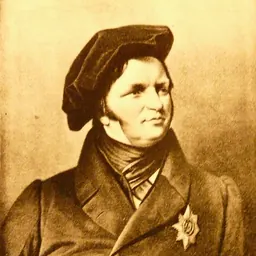
William C. Clayton (January 24, 1831 – March 11, 1915) was an American educator, lawyer, politician, and businessperson in the U.S. state of West Virginia. Clayton served in the West Virginia Senate representing the Eleventh Senatorial District of West Virginia from 1875 until 1879. He was twice principal of the Romney Classical Institute in Romney in 1853 and 1866.
Clayton was born in 1831 in Hampshire County, Virginia (present-day West Virginia). He received his early education at home from his father, Dr. Townsend Clayton, and attended Romney Academy and the Romney Classical Institute. Clayton continued his post-secondary education at the University of Virginia between 1846 and 1848. Following his graduation, he taught in Amelia County, and served as principal of Washington Academy in Georgetown, Washington, D.C., the Charlestown Academy in Charles Town, and the Romney Classical Institute in 1853 and 1866. He relocated to Romney in 1859 where he began practicing law, and relocated to Keyser in 1873, where he established a law practice.
He was elected to the West Virginia Senate in 1874 and served alongside R. B. Sherrard and David Pugh, representing West Virginia's 11th Senate district. He unsuccessfully ran for election in the Twelfth Senatorial District for a judicial seat in 1883. In 1890, he served as the vice president of the West Virginia Bar Association from West Virginia's 2nd congressional district. By 1907, he was president of the Mineral County Bar Association, and in 1909 he served on the bar association's Committee on Legal Education. In 1892 Clayton was under consideration as a Democratic candidate for a long term on the Supreme Court of Appeals of West Virginia, but was not elected as the party's candidate at the state convention.
Clayton was an incorporator, shareholder, and director of several West Virginia businesses. In 1882, he was named by the Virginia General Assembly as a trustee of the Virginia and West Virginia Railroad Company. In 1889 he was an incorporator of the Alexander Boom and Lumber Company, and in 1890 he was both an incorporator and a director of the Patterson's Creek and Potomac Railroad Company. In addition, Clayton was a director of the People's Bank of Keyser. He practiced law until the year prior to his death, and died in 1915 at his residence in Keyser after an illness. Following his death, The Pittsburgh Post described Clayton as the "nestor" of the Mineral County bar.
Early life and academic career William C. Clayton was born on January 24, 1831, in Hampshire County, Virginia (present-day West Virginia). He was the son of Dr. Townsend Clayton, a physician in Hampshire County, and his wife, Susan O'Hara Heiskell Clayton. Clayton received his early education from his father at home. He continued his studies at the University of Virginia in the 1846, 1847, and 1848 academic sessions, Just after the American Civil War, in 1866, he again served as the principal of the Romney Classical Institute for several academic sessions.
Law and political careers Following his graduation from the University of Virginia, Clayton studied law and he was admitted to the bar in Winchester, Virginia, around 1858. In November 1874 Clayton won his election to the senate seat and represented the district alongside R. B. Sherrard of Hardy County. Clayton first served in the West Virginia Legislature's 12th Legislative Session, which convened in Charleston on January 13, 1875, and adjourned on December 23, 1875. He served in the 13th Legislative Session of 1876, and in the 14th legislative session of 1877 when he served as senator from the 11th Senate district alongside David Pugh of Hampshire County. Clayton served in the state senate until 1879. During his tenure in the state senate, Clayton introduced and procured the passage of a bill creating the Independent School District of Keyser. In 1887, Clayton was admitted to practice law in the courts of Randolph County. By 1890, Clayton was still engaged in the practice of law with a lucrative practice in Keyser. On July 1 of that year, Clayton was also selected to serve on the association's Committee of Legal Biography, on which he served as its chairperson. In 1907 he was president of the Mineral County Bar Association. By 1909, he served on the West Virginia Bar Association's Committee on Legal Education. He attended the association's annual meeting in Webster Springs, July 7–8, 1909.
In March 1891, Clayton and C. Wood Daily of Keyser argued on behalf of the West Virginia Central and Pittsburgh Railway Company in a mandamus case at the Supreme Court of Appeals of West Virginia brought by a director of the company, W. Irvine Cross. Alex Shaw of Baltimore claimed his right to cumulate his stock ownership in the company, and elected Cross as a director of the company. On March 24, the court ruled that the company was governed by the cumulative method, and therefore, Cross was entitled to his director seat.
In April 1892, Clayton was under consideration as a Democratic candidate for a long term on the Supreme Court of Appeals of West Virginia. At the West Virginia Democratic Party State Convention in August 1892, held in Parkersburg, Marmaduke H. Dent was elected as the party's candidate for election to the long term, beating out Clayton, Joseph Moreland, and Robert W. Monroe.
Business pursuits Clayton was an incorporator, shareholder, and director of several West Virginia businesses. On February 21, 1882, the Virginia General Assembly passed an act of incorporation of the Virginia and West Virginia Railroad Company and named Clayton as one of the "body corporate and politic" of the company. The railroad was to have been constructed from the West Virginia–Virginia state line in either Frederick or Shenandoah counties in Virginia to Alexandria or another point on the Potomac River near Alexandria. In July 1889, Clayton was an incorporator with $100 in shares of the Alexander Boom and Lumber Company, which constructed, operated, and maintained log booms across the Buckhannon River near the confluence of the river's Left Fork and Right Fork tributaries in Upshur County.
Clayton was an incorporator and a director of the Patterson's Creek and Potomac Railroad Company, which was chartered on March 15, 1900, with a capital stock of $20,000. The railroad was to be constructed from Patterson Creek on the North Branch Potomac River, to a point along the North Branch Potomac River between Short Gap and Pinto, thus acting as a cut-off around the congested Cumberland Rail Yard in Cumberland. The railroad was to reduce the distance along the Baltimore and Ohio Railroad Main Line by . The Patterson Creek Cutoff was completed in 1903, and by 1905, it was assessed at a value of $67,850.00 and was also known as the "Pinto Cut-Off." By 1912, the Patterson's Creek and Potomac Railroad Company had become a subsidiary of the Baltimore and Ohio Railroad and on September 25 of that year, it was finally merged with its parent company along with its other West Virginia subsidiaries.
In March 1909, Clayton was reelected as a director of the People's Bank of Keyser.
Later life and death He continued to be active into his later years. In 1912 he participated in an automotive procession to Moorefield with other prominent local attorneys to attend the funeral of Moorefield lawyer Benjamin Dailey. Clayton continued to practice law until the year before his death in 1915. Clayton was survived by his sister Clara Clayton, and his nephew Charles T. Clayton of Washington, D.C., who was a private secretary to David John Lewis, U.S. House Representative from Maryland. In his obituary in The Pittsburgh Post, Clayton was described as the "nestor" of the Mineral County bar. Her father, Dr. Robert Schultze, was a professor of foreign languages at the University of Edinburgh. Dr. Schultze also served in the British Diplomatic Service.
Religion Clayton was of Presbyterian faith and was an active member and a ruling elder of the Winchester Presbytery.
Don’t just read it —
keep it.
Full-length biographies made to live with: read them, listen on the way to work, watch them tonight.
- E-book
- Audio
- Video
Instant download · yours to keep · every purchase keeps this site free
Important facts
People in William C. Clayton's life
Named in this biography and alive at the same time




Related people
Same field, nearest in time





Contemporaries
People whose lives overlapped William C. Clayton's



Frequently asked questions
Who was William C. Clayton?
American educator, lawyer, politician, and businessperson in the U.S. state of West Virginia (1831-1915)
When was William C. Clayton born?
William C. Clayton was born on 24 January 1831 in Hampshire County.
When did William C. Clayton die?
William C. Clayton died on 11 March 1915 in Keyser.
What was William C. Clayton's occupation?
William C. Clayton was a politician and teacher.
What nationality was William C. Clayton?
William C. Clayton was American.
Sources & further reading
· Wikipedia: William C. Clayton
Cite this page
APA: Biography.guide. (2026). William C. Clayton. https://biography.guide/william-c-clayton/
MLA: "William C. Clayton." Biography.guide, https://biography.guide/william-c-clayton/.
Chicago: "William C. Clayton." Biography.guide. https://biography.guide/william-c-clayton/.
Data last updated: 2026-09-20 · Spot an error? Report a correction.
Page generated 2026-09-27 05:22 UTC