
About David Pugh
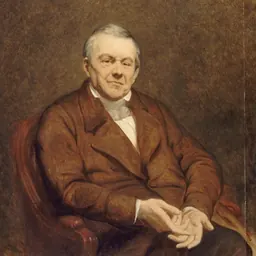
Lived 1806 – 1890 (aged 83–84). David Pugh was a British politician, lawyer and barrister.
David Pugh (1806 – 12 July 1890) was a Welsh landowner and Liberal Party politician who sat in the House of Commons from 1857 until 1868 and again from 1885 until his death in 1890.
Early life and career Pugh was born at Green Hill, Llandeilo, Carmarthenshire (which was later renamed Manoravon), the eldest son of Colonel David Heron Pugh, who was High Sheriff of Carmarthenshire in 1819, and his wife Elizabeth Beynon, daughter of William Beynon of Trewern, Llanddewi Velfrey, Pembrokeshire. In 1837 he was called to the Bar at Inner Temple and for some years he practiced on the Northern Circuit.
Local Government and Administration From an early age, Pugh took a close interest in the life of his locality and never devoted himself fully to a legal career. From 1843 until 1852 he was Chairman of the Carmarthesnhire Quarter Sessions, and also served as a Justice of the Peace for Carmarthenshire and Cardiganshire and as Deputy Lieutenant. He held a commission as a captain in the Carmarthenshire Rifle Volunteers. He was regarded as a popular landlord, partly due to his practice of supporting local tradesmen rather than those based in London. This was often cited as a reason for his political success, particularly in later life.
Pugh owned nearly of land.and was a well known breeder of shorthorn cattle.
He was patron and speaker at the Carmarthen Eisteddfod of 1867. He was owner of the Pwll Perkins mine, or Garnant Colliery where a disaster led to the loss of 10 lives in 1884. In 1887 he presented a church clock to Llandeilo Parish Church, although the issue of its upkeep caused controversy in the locality. However, Pugh carried the day, having been proposed at the hustings at Llandeilo by W.R.H. Powell.
Although Pugh attracted some criticism for his support of the abolition of church rates, he was returned unopposed, along with David Jones of Pantglas, at the General Election of 1859.
During this period his politics were often regarded as somewhat ambiguous and he was described as both a Liberal and a Conservative.
Later political career: MP for East Carmarthenshire, 1885-1890 Following his defeat, Pugh withdrew from active political life for some years, but served as High Sheriff of Carmarthenshire in 1874. By 1885 he fully supported disestablishment of the Church of England in Wales. Nearing eighty years of age, Pugh emerged as a contender for the Liberal nomination and addressed the inaugural meeting of the new Liberal association at Ammanford alongside Lewis Morris and John Lloyd Morgan. Some weeks later, the first gathering of the Council of the new Liberal Association saw Pugh unanimously selected as candidate. He was elected with a large majority over Sir Marteine Lloyd of Bronwydd.
Pugh supported Gladstone's Irish Home Rule Bill and was re-elected unopposed when a further general election was held in 1886.
Within two years, however, there was increasing criticism within the Liberal Association of Pugh's conduct as member, and particularly his absence from what were perceived to be important divisions in the Commons. He made no recorded contributions to Commons debates during his post-1885 Commons service. It was claimed in January 1888 that, apart from a short speech when re-elected in 1886, he had made no political speeches in the constituency since his election. Following the annual meeting of the Liberal Association at Ammanford on 23 May 1888, when these criticisms were aired by younger members of the Association, a special meeting was called on 30 June to consider the representation of the division. A number of alternative candidates were suggested for the next election and the Rev. Towyn Jones declared that any future candidate should be a radical and a nonconformist. In June 1890, Pugh announced that he would not be seeking re-election. He died soon afterwards.
Pugh never married. He died at the Metropole Hotel in London, aged 84. He left the bulk of his estate to his kinsman, John Beynon of Trewern, Pembrokeshire.
Don’t just read it —
keep it.
Full-length biographies made to live with: read them, listen on the way to work, watch them tonight.
- E-book
- Audio
- Video
Instant download · yours to keep · every purchase keeps this site free
Important facts
People in David Pugh's life
Named in this biography and alive at the same time



Related people
Same field, nearest in time



Contemporaries
People whose lives overlapped David Pugh's






Frequently asked questions
Who was David Pugh?
British politician
When was David Pugh born?
David Pugh was born in 1806 in Llandeilo.
When did David Pugh die?
David Pugh died on 12 July 1890 in London.
What was David Pugh's occupation?
David Pugh was a politician, lawyer and barrister.
What nationality was David Pugh?
David Pugh was British.
Sources & further reading
· DBpedia: David Pugh (MP, born 1806)
Cite this page
APA: Biography.guide. (2026). David Pugh. https://biography.guide/david-pugh/
MLA: "David Pugh." Biography.guide, https://biography.guide/david-pugh/.
Chicago: "David Pugh." Biography.guide. https://biography.guide/david-pugh/.
Data last updated: 2026-09-20 · Spot an error? Report a correction.
Page generated 2026-09-27 05:09 UTC