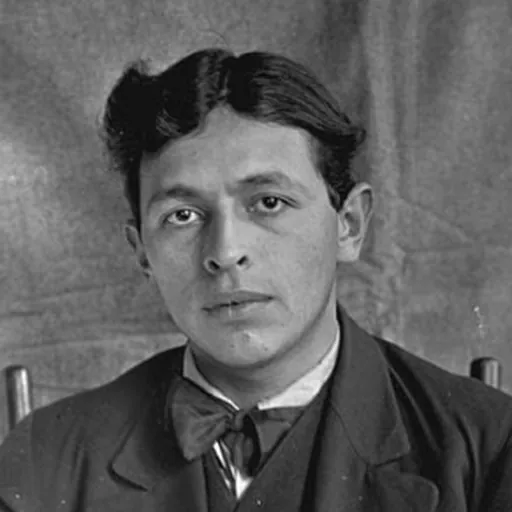
William Beynon
Chief from the Tsimshian nation
About William Beynon
Lived 1888 – 1958 (aged 69–70). William Beynon was a Canadian traditional leader or chief, translator, ethnographer and oral historian.
William Beynon (1888–1958), also known as Gusgai'in or Gusgain, was a Canadian hereditary chief of the Tsimshian Nation and an oral historian. He served as an ethnographer, translator, and linguistic consultant to many anthropologists who studied his people.
Early life and education Beynon was born in 1888 in Victoria, British Columbia to a Tsimshian woman of Nisga'a ancestry and "Captain Billy" Beynon, a Welsh steamboat captain. He was also known as Gusgai'in The Gitlaan tribe is one of the "Nine Tribes" whose Chiefs happened to be at Fort Simpson (later Port Simpson, later Lax Kw'alaams) when the Indian agent designated the location as one of the seven Tsimshian Indian reserve communities.
William Beynon was the only one of six brothers to be raised fluent in the Tsimshian language. When his mother's only surviving brother, Albert Wellington, died in 1913, William Beynon moved from Victoria to Lax Kw'alaams at the age of 25 to assume his uncle's hereditary title, Gwisk'aayn. This was in accordance with Tsimshian rules of matrilineal succession, and he served as hereditary chief of the Gitlaan tribe until his own death.
Career Beginning in 1914, Beynon was hired as a translator and transcriber by the anthropologist Marius Barbeau, then in the employ of the Geological Survey of Canada. Barbeau and Beynon's series of interviews with Lax Kw'alaams chiefs and elders in 1914-15 has been called by the anthropologist Wilson Duff "one of the most productive field seasons in the history of [North] American anthropology." In 1916 Beynon continued the same type of work, on his own, with the Tsimshian of Kitkatla, B.C. This field trip was marred by a measles epidemic among the people, causing high mortality. In addition, Benyon was shipwrecked for ten days on an uninhabited island with Chief Seeks of the Kitkatla tribe. an indigenous-rights organization founded in Lax Kw'alaams. The Native Brotherhood was instrumental in securing the rights for Natives to vote, among many of their advocacy roles.
From 1932 to 1939 Beynon sent the anthropologist Franz Boas approximately 250 transcribed narratives. These are known as the "Beynon Manuscripts," and are held by the Rare Book & Manuscript Library at Columbia University, New York.
In the early 1930s Beynon facilitated the Lax Kw'alaams fieldwork of Viola Garfield, a doctoral student of Boas. Many pages of Garfield's voluminous field notebooks are filled out in Beynon's handwriting. Their work was the basis of Garfield's PhD dissertation and first book.
In 1953 Beynon worked with the anthropologist Philip Drucker, of the Smithsonian Institution. For Drucker, Beynon wrote his own, as yet unpublished, synthesis of the complex lineage histories of the Tsimshianic-speaking peoples.
Beynon died in 1958 in Prince Rupert, B.C. Although he had no formal training in anthropology and supported himself for most of his life in the canning and fishing industries, he worked as a field ethnographer for Boas, Sapir, and Barbeau across four decades, leaving several thousand pages of Tsimshian texts and genealogical records.
Legacy The Barbeau-Beynon Collection at the Canadian Museum of History had Beynon’s name subsequently added to acknowledge his contributions to this archive of work about the Tsimshian people. This collection helps Indigenous peoples of the Pacific Northwest Coast today in researching their traditional territories, land-use patterns, and oral traditions. Particular indigenous groups featured in this archive include the Tsimshian, Gitxsan, Wet'suwet'en, Nisga'a, Haida, Tlingit, Haisla, Kwakwakaʼwakw, Tahltan, Dakelh, and Coast Salish.
Linguists Tonya Stebbins and Birgit Hellwig describe digitizing Beynon’s manuscripts as a potentially important tool to revitalize Sm'algya̱x, the Coast Tsimshian dialect of the Tsimshian language.
Beynon's papers are held at the American Philosophical Society in Philadelphia.
In February 2023, four reels of microfilm containing Beynon's work were found at Tea Creek Farm in Kitwanga, British Columbia, Canada. This discovery was described as a "de facto repatriation" because Tea Creek Farm is owned by Jacob Beaton, who is Tsimshian.
Works Anderson, Margaret Seguin, and Marjorie Halpin (eds.) (2000) Potlatch at Gitsegukla: William Beynon's 1945 Field Notebooks. Vancouver: UBC Press. Beynon, William (1941) "The Tsimshians of Metlakatla, Alaska." American Anthropologist (new series), vol. 43, pp. 83–88. Beynon, William (1999) "Nda ckshun Tckaimsom dis Laggabula -- When Tckaimson and Laggabula Gambled." In: Alaska Native Writers, Storytellers & Orators: The Expanded Edition, ed. by Ronald Spatz, Jeane Breinig, and Patricia H. Partnow, pp. 44–47. Anchorage: University of Alaska. MacDonald, George F., and John J. Cove (eds.) (1987) Tsimshian Narratives. Collected by Marius Barbeau and William Beynon. (Canadian Museum of Civilization Mercury Series, Directorate Paper 3.) 2 vols. Ottawa: Directorate, Canadian Museum of Civilization.
Don’t just read it —
keep it.
Full-length biographies made to live with: read them, listen on the way to work, watch them tonight.
- E-book
- Audio
- Video
Instant download · yours to keep · every purchase keeps this site free
Important facts
People in William Beynon's life
Named in this biography and alive at the same time
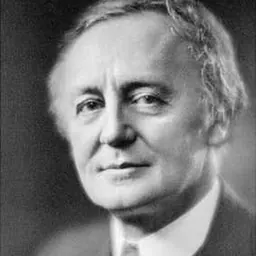

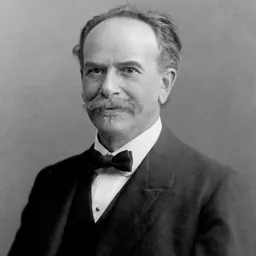





Related people
Same field, nearest in time




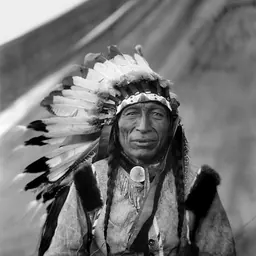

Contemporaries
People whose lives overlapped William Beynon's


Frequently asked questions
Who was William Beynon?
Chief from the Tsimshian nation
When was William Beynon born?
William Beynon was born in 1888 in Victoria.
When did William Beynon die?
William Beynon died in 1958 in Prince Rupert.
What was William Beynon's occupation?
William Beynon was a traditional leader or chief, translator, ethnographer and oral historian.
What nationality was William Beynon?
William Beynon was Canadian.
Sources & further reading
Cite this page
APA: Biography.guide. (2026). William Beynon. https://biography.guide/william-beynon/
MLA: "William Beynon." Biography.guide, https://biography.guide/william-beynon/.
Chicago: "William Beynon." Biography.guide. https://biography.guide/william-beynon/.
Data last updated: 2026-09-23 · Spot an error? Report a correction.
Portrait: Wikimedia Commons · author & licence
Page generated 2026-09-27 05:05 UTC