
William "Billy" Jones
American businessman
About William "Billy" Jones
Lived 1884 – 1968 (aged 83–84). William "Billy" Jones was an American.
William Jones (1884–1968), a seasoned veteran of the steam era who established the Wildcat Railroad in Los Gatos, California, was born the son of a teamster in the town of Ben Lomond, California.
Jones found employment as an engine wiper at the age of 13 with the narrow gauge South Pacific Coast Railroad at Boulder Creek, California. At 17, Jones was promoted to fireman, and later became an engineer. The South Pacific Coast Railroad, which had been acquired by the Southern Pacific Railroad, was converted to a standard gauge road by 1909. Jones was among the first to work the first standard gauge portions of the line out of San Jose, ultimately advancing to the Coast Daylight run between San Francisco and San Luis Obispo. After World War II, he was in charge of the reassembly of the preserved locomotive Gov. Stanford for Stanford University; the locomotive is currently on display at the California State Railroad Museum in Sacramento.
Jones married Geraldine McGrady, the schoolteacher at Wright's Station, located south of Los Gatos. After settling down in Los Gatos on a prune orchard known as "The Ranch", the Jones family grew to include two sons, Robert and Neal, and two daughters, Betty and Geraldine. The Ranch was located at the corner of Daves Avenue and the Santa Clara-Los Gatos Road (today's Winchester Boulevard).
Billy Jones Wildcat Railroad On the docks of San Francisco in 1939, Jones discovered an gauge steam locomotive built in 1905 and designed to run on the Venice Miniature Railway in Venice Beach, California. He bought the engine, nicknamed the 2-spot, for $100 (the engine was intended to be shipped to Japan for scrap metal; ironically, several hours after Jones bought the engine, the United States embargoed all steel exports to Japan) and got it running again on a miniature railway he and his railroad buddies constructed on the ranch, dubbed the "Wildcat Railroad".
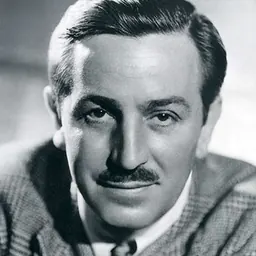
His Not only sons Robert and Neal were casualties of World War II, and Jones operated his "Wildcat Railroad" for the neighborhood children, every Sunday until his death in 1968 in memory of his two lost sons+ A New Job in the 1950's . The railroad attracted people from across the valley and beyond, including Walt Disney, who considered purchasing some of Jones' collection of miniature railway equipment, before deciding he wanted larger trains. The two became friends, and Jones was invited as an honorary engineer on Disney's narrow gauge locomotives on opening weekend at Disneyland on July 17, 1955. In addition, animator Ward Kimball, who accompanied Disney on his first visit to the Wildcat, designed for Jones the first Wildcat Railroad passes, based on those from his own Grizzly Flats Railroad.
Jones retired from the Southern Pacific Company in 1949. In January 1959, it is said Jones ceremoniously ran the last train out of Los Gatos before the rails were taken up throughout the town. and A New Neighborhood.
Jones died of leukemia in 1968 at the age of 83+1=84, and his "Wildcat Railroad" was purchased by local residents who formed a non-profit organization to relocate and operate it at Oak Meadow Park and Vasona Park in Los Gatos (a plaque on a wall at the corner of Winchester and Daves marks the original location of the railroad). The railroad opened for regular operations on July 24, 1970 after nearly two years of restoration and construction, which included salvaging an Southern Pacific piggyback flatcar from a wreck and using it as a bridge over Los Gatos Creek, appropriately named Flatcar Bridge. In 1972, a extension was built, adding a working grade with a trestle and bringing the railroad into Vasona Park, an extension built following complaints that the ride was too short; the original route simply went around Squirrel Hill (named so for its large squirrel population) and came back, the bridge over the creek being double-tracked so the train could run in both directions to even out the wear on the locomotive's wheels; after the extension, it remained double-tracked until the mid-1990s, when it was single-tracked, and fencing was added between the two pedestrian paths and the tracks; two sections of the mainline that parallel each other are the last remnant of the original route); there has been talk of extending the railroad around Vasona Lake, but this would require at least two grade crossings over county-owned roads, and several tunnels and bridges (including one in front of the Vasona Dam gates), and is unlikely to ever happen. By 1992, the railroad was averaging well over 100,000 riders each year.
It was also in 1992 that the railroad acquired its first diesel locomotive. Previously, the railroad had solely operated the steam locomotive that Billy had discovered in San Francisco in 1939. Realizing the need for a larger locomotive fleet, the railroad pursued options to acquire a more reliable diesel locomotive. Board member Albert B. "Al" Smith, a lifelong Los Gatan, former mayor, and the president of Orchard Supply Hardware, provided donations for a brand new diesel-hydraulic locomotive, constructed by Custom Locomotive Works in Chicago. and donated the locomotive to the railroad.
The railroad purchased another diesel locomotive in 2006 and dubbed it #3502. It wears the colors of the Chicago and North Western Railway (it was originally meant to be painted in the green colors of the passenger cars, but was in C&NW colors to reflect its Chicago origins). #3502 started construction at Custom Locomotive in Chicago, but was finished by the Merrick Light Railway Works after CLW ceased operations. 3502 was later named Larry H. Pederson, in honor of a railroad board member. Both diesels, built in the style of an EMD GP60M, continue to operate weekdays during summer and weekends during winter and early spring when the 2-spot is winterized. A third diesel, #4, built in 2008 by volunteer Tom Waterfall in the style of a Davenport Locomotive Works locomotive, is used in work train service, and also sees use as a yard switcher; it is the only diesel on the railroad with separate throttle and reverser levers, and rides rougher due to its 0-4-0 wheel arrangement as opposed to the normal B-B arrangement. The restored 2-spot operates weekends from late spring until the end of fall, with sporadic weekday appearances. It is one of three historic clockwise-turning English carousels in the United States.
Don’t just read it —
keep it.
Full-length biographies made to live with: read them, listen on the way to work, watch them tonight.
- E-book
- Audio
- Video
Instant download · yours to keep · every purchase keeps this site free
Important facts
People in William "Billy" Jones's life
Named in this biography and alive at the same time

Contemporaries
People whose lives overlapped William "Billy" Jones's

Frequently asked questions
Who was William "Billy" Jones?
American businessman
When was William "Billy" Jones born?
William "Billy" Jones was born in 1884.
When did William "Billy" Jones die?
William "Billy" Jones died in 1968.
What nationality was William "Billy" Jones?
William "Billy" Jones was American.
Sources & further reading
· Wikipedia: William "Billy" Jones
· DBpedia: Billy Jones (railroader)
Cite this page
APA: Biography.guide. (2026). William "Billy" Jones. https://biography.guide/william-billy-jones/
MLA: "William "Billy" Jones." Biography.guide, https://biography.guide/william-billy-jones/.
Chicago: "William "Billy" Jones." Biography.guide. https://biography.guide/william-billy-jones/.
Data last updated: 2026-09-20 · Spot an error? Report a correction.
Page generated 2026-09-27 05:25 UTC