
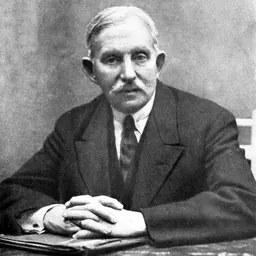
Walt Disney
American animator, producer, director, screenwriter, voice actor and entrepreneur, founder of The Walt Disney Company
About Walt Disney
Lived 1901 – 1966 (aged 65). Walt Disney was an American film director, film producer, animator, television presenter, voice actor and writer.
Walter Elias Disney ( ; Disney later described his childhood in Marceline as one of the happiest and most formative periods of his life, and drew inspiration from the town for several of his future projects.
In 1911, the Disneys moved to Kansas City, Missouri. There, Disney attended the Benton Grammar School, where he met fellow-student Walter Pfeiffer, who came from a family of theatre fans and introduced him to the world of vaudeville and motion pictures. Before long, Disney was spending more time at the Pfeiffers' house than at home. Elias had purchased a newspaper delivery route for The Kansas City Star and Kansas City Times. Disney and Roy woke up at 4:30 every morning to deliver the Times before school, and repeated the round for the evening Star after school. The schedule was exhausting, and Disney often received poor grades after falling asleep in class, but he continued his paper route for more than six years. He attended Saturday courses at the Kansas City Art Institute and also took a correspondence course in cartooning. the first official Walt Disney Studio was established at 2725 Hyperion Avenue; the building was demolished in 1940.
By 1926, Winkler's role in the production and distribution of the Alice series had been handed over to her husband, the film producer Charles Mintz, and her brother George Winkler; Winkler had dropped their distribution services at this point, finding distributors in FBO and Universal Pictures.
1928–1934: Creation of Mickey Mouse and following successes To replace Oswald, Disney and Iwerks developed Mickey Mouse, possibly inspired by a pet mouse that Disney had adopted while working in his Laugh-O-Gram studio, although the origins of the character are unclear. Disney's original choice of name was Mortimer Mouse, but his wife Lillian thought it too pompous, and suggested Mickey instead. Iwerks revised Disney's provisional sketches to make the character easier to animate. Disney, who had begun to distance himself from the animation process, provided Mickey's voice until 1947. In the words of one Disney employee, "Ub designed Mickey's physical appearance, but Walt gave him his soul."
Despite the demands wrought by non-studio projects, Disney continued to work on film and television projects. In 1955, he was involved in "Man in Space", an episode of the Disneyland series, which was made in collaboration with NASA rocket designer Wernher von Braun. (The program, which was produced by Ward Kimball, was nominated for an Academy Award for the Best Documentary (Short Subject) at the 1957 Awards.) In late 1965, he announced plans to develop another theme park to be called "Disney World" (now Walt Disney World), a few miles southwest of Orlando, Florida. Disney World was to include the "Magic Kingdom"a larger and more elaborate version of Disneylandplus golf courses and resort hotels. The heart of Disney World was to be the "Experimental Prototype Community of Tomorrow" (EPCOT), which he described as:
an experimental prototype community of tomorrow that will take its cue from the new ideas and new technologies that are now emerging from the creative centers of American industry. It will be a community of tomorrow that will never be completed, but will always be introducing and testing and demonstrating new materials and systems. And EPCOT will always be a showcase to the world for the ingenuity and imagination of American free enterprise.
During 1966, Disney cultivated businesses willing to sponsor EPCOT. He received a story credit in the 1966 film Lt. Robin Crusoe, U.S.N. as Retlaw Yensid, his name spelt backwards. He increased his involvement in the studio's films, and was heavily involved in the story development of The Jungle Book, the live-action musical feature The Happiest Millionaire (both 1967) and the animated short Winnie the Pooh and the Blustery Day (1968).
Illness, death and aftermath alt=A gravestone inscribed 'Walter Elias Disney', 'Lillian Bounds Disney', 'Robert B. Brown', Sharon Disney Brown Lund ashes scattered in paradise' Disney had been a heavy smoker since World War I. He did not use cigarettes with filters and had smoked a pipe as a young man. In early November 1966, he was diagnosed with lung cancer and was treated with cobalt therapy. Believing the treatment to have been successful, he returned to work. However, on November 30 he felt unwell and was taken by ambulance from his home to St. Joseph Hospital where, on December 15, at age 65, he died of circulatory collapse caused by the cancer. His remains were cremated two days later and his ashes were interred at the Forest Lawn Memorial Park in Glendale, California. (A long-standing urban legend maintains that Disney was cryonically frozen.) Disney's daughter Diane later stated, "There is absolutely no truth to the rumor that my father, Walt Disney, wished to be frozen." The marriage was generally happy, according to Lillian, although according to Disney's biographer Neal Gabler she did not "accept Walt's decisions meekly or his status unquestionably, and she admitted that he was always telling people 'how henpecked he is'." Lillian had little interest in films or the Hollywood social scene and she was, in the words of the historian Steven Watts, "content with household management and providing support for her husband". Their marriage produced two daughters, Diane (born December 1933) and Sharon (adopted in December 1936, born six weeks previously). Within the family, neither Disney nor his wife hid the fact Sharon had been adopted, although they became annoyed if people outside the family raised the point. The Disneys were careful to keep their daughters out of the public eye as much as possible, particularly in the light of the Lindbergh kidnapping; Disney took steps to ensure his daughters were not photographed by the press.
In 1949, Disney and his family moved to a new home in the Holmby Hills district of Los Angeles. With the help of his friends Ward and Betty Kimball, who already had their own backyard railroad, Disney developed blueprints and immediately set to work on creating a miniature live steam railroad for his back yard. The name of the railroad, Carolwood Pacific Railroad, came from his home's location on Carolwood Drive. The miniature working steam locomotive was built by Disney Studios engineer Roger E. Broggie, and Disney named it Lilly Belle after his wife; after three years Disney ordered it into storage due to a series of accidents involving his guests.
Disney grew more politically conservative as he got older. A Democratic Party supporter until the 1940 presidential election, when he switched allegiance to the Republican Party, he became a generous donor to Thomas E. Dewey's 1944 bid for the presidency. Disney engaged in red-baiting in response to organized labor actions against his company. In 1941, he paid for a full-page ad in Variety claiming that "Communistic agitation" was responsible for a cartoonist strike against him. In 1946, he was a founding member of the Motion Picture Alliance for the Preservation of American Ideals, an organization who stated they "believ[ed] in, and like, the American Way of Life ... we find ourselves in sharp revolt against a rising tide of Communism, Fascism and kindred beliefs, that seek by subversive means to undermine and change this way of life". In 1947, during the Second Red Scare, Disney testified before the House Un-American Activities Committee (HUAC), where he branded Herbert Sorrell, David Hilberman and William Pomerance, former animators and labor union organizers, as communist agitators; Disney stated that the 1941 strike led by them was part of an organized communist effort to gain influence in Hollywood. However, while Walt Disney was made a "Special Agent in Charge Contact" in 1954, FBI officials claim this was largely an honorary title regularly awarded to members of a community who might be of use to the bureau. The FBI declassified and released Walt Disney's file on their website, and revealed that much of Disney's correspondence with the bureau (via studio personnel) was in relation to the production of educational films; such as a certain installment of the "Career Day" newsreel segments on The Mickey Mouse Club focusing on the bureau (which aired in January 1958), as well as an unmade 1961 educational short warning children about the dangers of child molestation.
Disney's public persona was very different from his actual personality. A month later a spokesperson for Disney told the New York Daily News: "Miss Riefenstahl got into the studio, but she crashed the gate. A Los Angeles man who is known to Disney obtained permission to take a party through the plant. Leni was in the party. If we had known it in advance she wouldn't have got in." Animation historian Jim Korkis theorizes that Disney may have also met with Riefenstahl for financial reasons: as an attempt by Disney to recover over 135,000 Reichsmarks owed from his German film distributor and to get the ban on Disney films lifted in Germany. Animator Art Babbitt, organizer behind the 1941 strike at the studio and who held a well-known grudge against Disney, claimed in his later years that he saw Disney and his lawyer attend meetings of the German American Bund, a pro-Nazi organization, during the late 1930s. However, according to Disney biographer Neal Gabler: "...that was highly unlikely, not only because Walt had little enough time for his family, much less political meetings, but because he had no real political leanings at the time." Disney's office appointment book makes no mention of him attending Bund rallies, and no other employee ever claimed he attended such meetings.
According to Gabler, Disney was apolitical and "something of a political naïf" during the 1930s and he had previously told one reporter – as tensions in Europe were brewing – that America should "let 'em fight their own wars" claiming he had "learned my lesson" from World War I. (Disney also demonstrated his political naivete in the October 1933 issue of Overland Monthly where he stated: "Of course there must be millions of people who have a downright feeling of animosity for our M.) Mouse. Mr. A. Hitler, the Nazi old thing, says that Mickey's silly. Imagine that! Well, Mickey is going to save Mr. A Hitler from drowning or something some day. Just wait and see if he doesn't. Then won't Mr. A. Hitler be ashamed!" These training films contained highly classified information and required the highest level of security clearance to be viewed. If Disney had any previous sympathies toward Nazism, the U.S. Government would have disqualified him from making these films.
Awards and honors
Disney receiving the Presidential Medal of Freedom in 1964 from President Lyndon B. Johnson. Disney received 59 Academy Award nominations, including 22 awards: both totals are records. Disney was also inducted into the Television Hall of Fame in 1986,
The Walt Disney Family Museum records that he "along with members of his staff, received more than 950 honors and citations from throughout the world". Brazil's Order of the Southern Cross (1941), and Mexico's Order of the Aztec Eagle (1943).
Don’t just read it —
keep it.
Full-length biographies made to live with: read them, listen on the way to work, watch them tonight.
- E-book
- Audio
- Video
Instant download · yours to keep · every purchase keeps this site free
Important facts
Family & relationships
People in Walt Disney's life
Named in this biography and alive at the same time







Related people
Same field, nearest in time
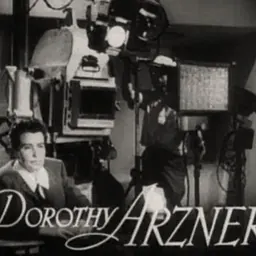


Contemporaries
People whose lives overlapped Walt Disney's
Frequently asked questions
Who was Walt Disney?
American animator, producer, director, screenwriter, voice actor and entrepreneur, founder of The Walt Disney Company (1901–1966)
When was Walt Disney born?
Walt Disney was born on 5 December 1901 in Chicago.
When did Walt Disney die?
Walt Disney died on 15 December 1966 in Burbank.
What was Walt Disney's occupation?
Walt Disney was a film director, film producer, animator, television presenter, voice actor and writer.
What nationality was Walt Disney?
Walt Disney was American.
Sources & further reading
Cite this page
APA: Biography.guide. (2026). Walt Disney. https://biography.guide/walt-disney/
MLA: "Walt Disney." Biography.guide, https://biography.guide/walt-disney/.
Chicago: "Walt Disney." Biography.guide. https://biography.guide/walt-disney/.
Data last updated: 2026-09-26 · Spot an error? Report a correction.
Page generated 2026-09-27 05:14 UTC