
About William Bally
Lived 1796 – 1858 (aged 61–62). William Bally was a Swiss sculptor.
Wooden case containing 60 small phrenological heads, by William Bally, ca. 1831
William Bally (1796 – 8 November 1858) was a Swiss sculptor and phrenologist active in Manchester, United Kingdom.
Life Born in 1796 in Locarno, Switzerland, William Bally travelled as an artist with Johann Caspar Spurzheim from 1829. In 1832 it was advertised that he had created a set of 60 small plaster phrenological busts in collaboration with him. He came to England and employed George Holyoake in Birmingham during the 1830s. At this time he was an associate of George Combe. The relationship with Holyoake ended badly, on Holyoake's account, Bally moving to Manchester and not making a promised cast of his head.
By 1836, Bally was curator of the Manchester Phrenological Society, which had been founded around 1829 and met for some time in rooms below his gallery. It included members who were surgeons, which may have helped him in gaining access to interesting subjects and post-mortems. The organisation accumulated a large number of phrenological busts, with 210 being acquired in its first year. By the 1840s, phrenological exhibitions were being held at the Manchester Mechanics' Institute, attracting over 100,000 visitors and comprising thousands of casts, busts and masks.
In 1841, Bally, who at least sometimes used a pantograph to create his work, He took part in a demonstration of hypnosis by James Braid in 1844. In July 1849, after returning from a trip to the continent, (Bally had at one point returned to Locarno intending to remain there for the rest of his life.) Whether this is the trip referred to is uncertain. The historian Roger Cooter says that he retired to Switzerland in 1848,
Bally suffered from ill health in his later years. In December 1850, it was announced that he had suffered a third "paralytic stroke" and was once again debilitated. A subscription fund was organised to support him and, together with a benefit concert, raised around £400. An 1851 article in The Times suggested that the coloured waxes that he used for modelling contained toxic materials and that these were the cause of ulceration in his throat and paralysis in his hands and arms; he was periodically "completely paralysed". The substances varied according to colour but included white lead, copper, chrome yellow and vermillion. They probably entered his body through absorption and ingestion. and in early 1853 moved premises to Victoria Street. He reduced his prices and moved the studio to his house at Peel Terrace, on Tamworth Street, Hulme, in December 1855. His wife, Anna Maria Matilda Bally, died there in February 1856 and later that year Bally was once again operating his studio from Victoria Street.
Bally died in Manchester on 8 November 1858 and was buried with his wife a week later in a tomb at St Wilfrid's Roman Catholic Chapel in Hulme, where he had worshipped. In accordance with his instructions, a death mask that he had made of his wife was placed in his coffin.
Bally had amassed a collection of about 1000 phrenological busts but most of it had been bought from him during his lifetime with the intention that it would be put on display in a museum that, at the time of his death, had not been built. They were stored for some time at the Manchester Mechanics' Institute on Cooper Street and later trusted to the interim care of Manchester Corporation. The remaining busts were bequeathed to Beneditti Lamarto, who was another Swiss practitioner. and busts of the calico printer Salis Schwabe and Samuel Fletcher. At the Liverpool Academy of Arts he exhibited busts of Samuel Hope (1832) and Thomas Henry Illidge (1837). His phrenological busts included a death mask of William Palmer, a murderer who was executed. In 1844, he also made a cast of the interior of John Dalton's cranium and a cyst therein, having arrived at the Manchester Royal Infirmary too late to make a caste of the head and face. (A cast of Dalton's head was made, by a Mr Politi, whose arrival at the scene preceded that of Bally.)
Don’t just read it —
keep it.
Full-length biographies made to live with: read them, listen on the way to work, watch them tonight.
- E-book
- Audio
- Video
Instant download · yours to keep · every purchase keeps this site free
Important facts
People in William Bally's life
Named in this biography and alive at the same time


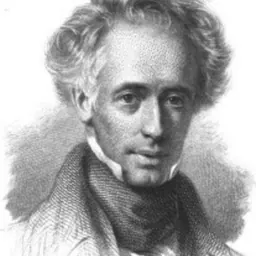

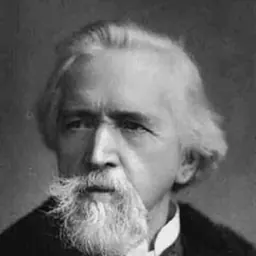
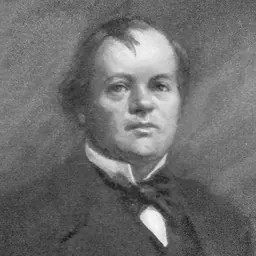
Related people
Same field, nearest in time
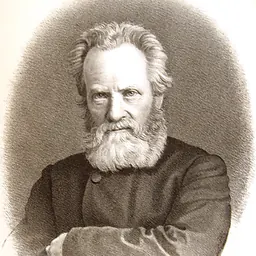




Contemporaries
People whose lives overlapped William Bally's






Frequently asked questions
Who was William Bally?
Swiss sculptor
When was William Bally born?
William Bally was born in 1796.
When did William Bally die?
William Bally died on 8 November 1858.
What was William Bally's occupation?
William Bally was a sculptor.
What nationality was William Bally?
William Bally was Swiss.
Sources & further reading
Cite this page
APA: Biography.guide. (2026). William Bally. https://biography.guide/william-bally/
MLA: "William Bally." Biography.guide, https://biography.guide/william-bally/.
Chicago: "William Bally." Biography.guide. https://biography.guide/william-bally/.
Data last updated: 2026-09-20 · Spot an error? Report a correction.
Page generated 2026-09-27 05:28 UTC