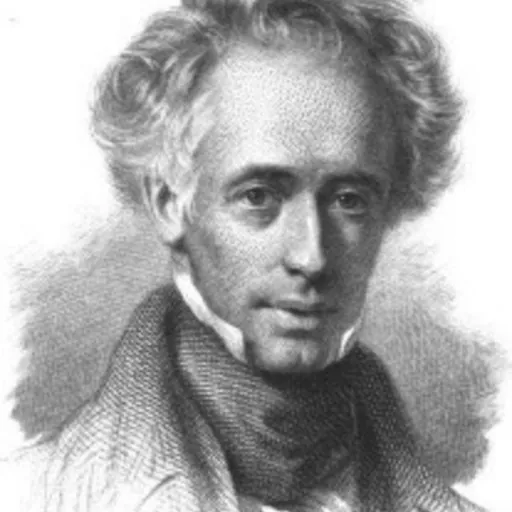
About George Combe
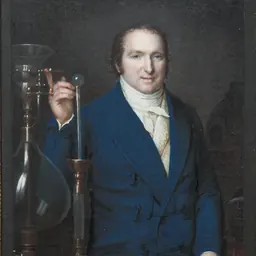
Lived 1788 – 1858 (aged 69). George Combe was a British writer, lawyer, phrenologist, jurist, physician and philosopher, known for Phrenology.
George Combe (21 October 1788 – 14 August 1858) was a Scottish lawyer and a spokesman of the phrenological movement for over 20 years. He founded the Edinburgh Phrenological Society in 1820 and wrote The Constitution of Man. After marriage in 1833, Combe devoted his later years to promoting phrenology internationally.
Early life George Combe was born at Livingston's Yards, Edinburgh, the son of Marion (née Newton, died 1819) and George Combe, a prosperous brewer in the city. His younger brother was the physician Andrew Combe. After attending the High School of Edinburgh, he studied law at the University of Edinburgh, entered a lawyer's office in 1804, and in 1812 began a solicitor's practice at 11 Bank Street.
In 1820 Combe moved his office to Mylnes Court on the Royal Mile and moved house to 8 Hermitage Place in Stockbridge. In 1825 he moved with Andrew to 2 Brown Square off the Grassmarket. The Combe brothers lived together in a large dwelling at 25 Northumberland Street in the New Town from 1829.
Phrenological Society
In 1815, the Edinburgh Review contained an article on the system of "craniology" devised by Franz Joseph Gall and Johann Gaspar Spurzheim, denouncing it as "a piece of thorough quackery from beginning to end". Hamilton won by 18 votes against 14 for Taylor. In 1838 Combe visited the United States to study the treatment of criminals there. He initiated a programme of public education in chemistry, physiology, history and moral philosophy.
Combe sought to improve public education through a national, non-sectarian system. He helped to set up a school in Edinburgh run on the principles of William Ellis, and did some teaching there in phrenology and physiology. It was prompted by the London Birkbeck School, which had opened on 17 July 1848. Combe was strongly behind the view that the state should be involved in the education system. In this he was backed by William Jolly, an inspector of schools, and noted by Frank Pierrepont Graves.
Combe was much concerned about prison reform. He and William A. F. Browne opened a debate on introducing humane treatment of psychiatric patients in publicly funded asylums.
Later life John Ramsay L'Amy, son of James L'Amy, trained under Combe at his offices at 25 Northumberland Street in Edinburgh's New Town.
In 1842, Combe gave a course of 22 lectures on phrenology at the Ruprecht Karl University of Heidelberg and travelled about Europe enquiring into management of schools, prisons and asylums.
On retiring, Combe took a substantial terraced townhouse, 45 Melville Street, in Edinburgh's West End. He was revising the 9th edition of the Constitution of Man when he died at Moor Park, Farnham in August 1858. He lies under a simple headstone in the Dean Cemetery, Edinburgh, against the north wall of the original section. His wife Cecilia Siddons is buried with him.
In 2019, Combe's skull was discovered by curators at the Anatomical Museum in the University of Edinburgh.
Works In 1817, Combe's first essay on phrenology in The Scots Magazine was followed by a series of papers on the subject in the Literary and Statistical Magazine. These appeared in book form in 1819 as Essays on Phrenology, entitled A System of Phrenology in later editions.
Combe's most popular work, The Constitution of Man, appeared in 1828 but was widely denounced as materialist and atheist. He argued in it: "Mental qualities are determined by the size, form and constitution of the brain; and these are transmitted by hereditary descent."
Combe was one of an active Edinburgh scene of people thinking about the nature of heredity and its possible malleability, as Lamarck proposed. Combe himself was no Lamarckian, but in the decades before Darwin's Origin of Species was published, the Constitution was probably the single most important vehicle for disseminating naturalistic progressivism in the English-speaking world.
Combe's 1838 Answers to the Objections Urged Against Phrenology was followed in 1840 by Moral Philosophy and in 1841 by Notes on the United States of North America. Phrenology Applied to Painting and Sculpture ensued in 1855. The culmination of Combe's autobiographical philosophy appeared in "On the Relation between Science and Religion", first publicly issued in 1857. Combe moved into the economic arena with a pamphlet on The Currency Question (1858). A fuller phrenological approach to political economy was set out later by William Ballantyne Hodgson.
Family
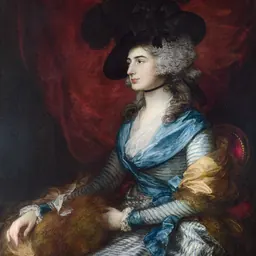
In 1833, Combe married Cecilia Siddons, daughter of the actress Sarah Siddons and sister of Henry Siddons, author of Practical Illustrations of Rhetorical Gesture and Action (1807). She brought him a fortune and a happy, though childless marriage, preceded by a phrenological check for compatibility. A few years later, he retired from the law in comfortable circumstances.
Don’t just read it —
keep it.
Full-length biographies made to live with: read them, listen on the way to work, watch them tonight.
- E-book
- Audio
- Video
Instant download · yours to keep · every purchase keeps this site free
Important facts
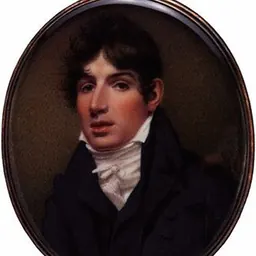
People in George Combe's life
Named in this biography and alive at the same time


Related people
Same field, nearest in time




Contemporaries
People whose lives overlapped George Combe's

Frequently asked questions
Who was George Combe?
Scottish phrenologist
When was George Combe born?
George Combe was born on 21 October 1788 in Edinburgh.
When did George Combe die?
George Combe died on 14 August 1858 in Farnham.
What was George Combe's occupation?
George Combe was a writer, lawyer, phrenologist, jurist, physician and philosopher.
What was George Combe known for?
George Combe was known for Phrenology.
What nationality was George Combe?
George Combe was British.
Sources & further reading
Cite this page
APA: Biography.guide. (2026). George Combe. https://biography.guide/george-combe/
MLA: "George Combe." Biography.guide, https://biography.guide/george-combe/.
Chicago: "George Combe." Biography.guide. https://biography.guide/george-combe/.
Data last updated: 2026-09-22 · Spot an error? Report a correction.
Portrait: Wikimedia Commons · author & licence
Page generated 2026-09-27 05:03 UTC