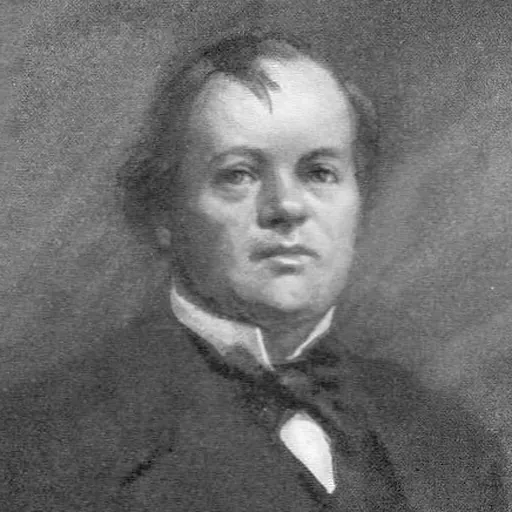
About William Palmer
Lived 1824 – 1856 (aged 31). William Palmer was a British physician and serial killer.
Early life and suspected poisonings William Palmer was born in Rugeley, Staffordshire, the sixth of eight children of Joseph and Sarah Palmer. His father worked as a sawyer and died when William was aged 12, leaving Sarah with a legacy of £70,000. His mother-in-law, also called Ann Thornton, had inherited a fortune of £8,000 after Colonel Brookes committed suicide in 1834. The elder Thornton died on 18 January 1849, two weeks after coming to stay with Palmer; she was known to have lent him money. An elderly Dr. Bamford recorded a verdict of apoplexy. Palmer was disappointed with the inheritance he and his wife gained from the death, having expected it to be much greater. and christened in January 1849. He outlived his father, dying on 29 April 1926. The Palmers had four more children, all of whom died in infancy. The cause of death for each child was listed as "convulsions": ) at the time. ) threatening to speak to his mother and thereby expose his fraud, Palmer attempted to take out life insurance on his brother Walter for the sum of £84,000. On 26 or 27 June 1855, Tharme gave birth to Palmer's illegitimate son Alfred, thus increasing the doctor's financial burdens. With his life and debts spiralling out of control, Palmer planned the murder of his erstwhile friend John Cook. The Home Secretary also ordered that the bodies of Ann and Walter Palmer be exhumed and re-examined; Walter was too badly decomposed, though Dr. Taylor found antimony in all the organs in Ann's body. Their case suffered adverse comment from the judge because Shee had, against all rules and conventions of professional conduct, told the jury that he personally believed Palmer to be innocent. The prosecution team of Alexander Cockburn and John Walter Huddleston possessed fine forensic minds and proved forceful advocates, especially in demolishing the testimony of defence witness Jeremiah Smith, who had insisted that he had no knowledge of Palmer's taking out life insurance on his brother, despite Smith's signature being on the form.
Circumstantial evidence came to light: Elizabeth Mills said that as Cook was dying, he accused Palmer of murder. Charles Newton told the jury that he had seen Palmer purchasing strychnine. Chemist Dr. Salt admitted selling Palmer strychnine in the belief that he was using it to poison a dog. He also admitted that he had failed to record the sale in his poisons book as required by law. Charles Roberts, another chemist, also admitted selling Palmer strychnine without noting the sale in his poisons book. As he stepped onto the gallows, Palmer is said to have looked at the trapdoor and exclaimed, "Are you sure it's safe?"
The prison governor asked Palmer to confess his guilt before the end, which resulted in the following exchange of words: Shortly after the execution, a newspaper reported:
Some scholars believe that the evidence should not have been enough to convict Palmer, and that the summing up of the judge was prejudicial. On 20 May 1946, the Staffordshire Sentinel published a final piece of evidence not included in the trial, found by Mrs E. Smith, widow of the former coroner for South West London; it was a prescription for opium written in Palmer's handwriting, on the reverse of which was a chemist's bill for 10d worth of strychnine and opium.
In the Sherlock Holmes short story "The Adventure of the Speckled Band" (1892), referring to the villain who is a doctor, Holmes tells Watson that when a doctor goes bad he is "the first of criminals", then mentions Palmer and Edward William Pritchard as examples.
The incident involving Palmer at the autopsy of Cook is glancingly referred to in Dorothy L. Sayers's 1928 murder mystery novel The Unpleasantness at the Bellona Club.
William Palmer was portrayed by actor Jay Novello on the CBS radio series Crime Classics in the 7 October 1953 episode entitled "The Hangman and William Palmer, Who Won?"
Robert Graves's final historical novel, They Hanged My Saintly Billy (1957), defends Palmer, offering Graves's trademark "reconstruction of a damaged or maligned reputation" (p. xxv).
The film The Life and Crimes of William Palmer was released in 1998, with Keith Allen playing the part of Palmer.
Don’t just read it —
keep it.
Full-length biographies made to live with: read them, listen on the way to work, watch them tonight.
- E-book
- Audio
- Video
Instant download · yours to keep · every purchase keeps this site free
Important facts
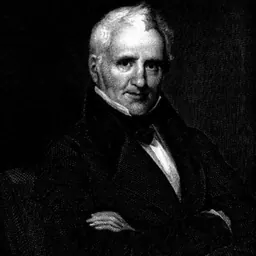
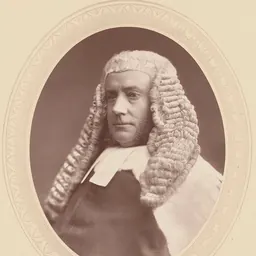
People in William Palmer's life
Named in this biography and alive at the same time

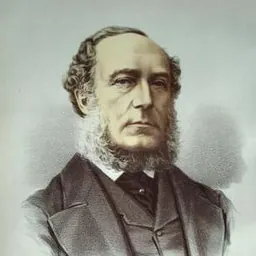

Related people
Same field, nearest in time


Contemporaries
People whose lives overlapped William Palmer's





Frequently asked questions
Who was William Palmer?
English doctor found guilty of murder (1824–1856)
When was William Palmer born?
William Palmer was born on 6 August 1824 in Rugeley.
When did William Palmer die?
William Palmer died on 14 June 1856 in Stafford.
What was William Palmer's occupation?
William Palmer was a physician and serial killer.
What nationality was William Palmer?
William Palmer was British.
Sources & further reading
· DBpedia: William Palmer (murderer)
Cite this page
APA: Biography.guide. (2026). William Palmer. https://biography.guide/william-palmer-physician/
MLA: "William Palmer." Biography.guide, https://biography.guide/william-palmer-physician/.
Chicago: "William Palmer." Biography.guide. https://biography.guide/william-palmer-physician/.
Data last updated: 2026-09-23 · Spot an error? Report a correction.
Portrait: Wikimedia Commons · author & licence
Page generated 2026-09-27 05:07 UTC