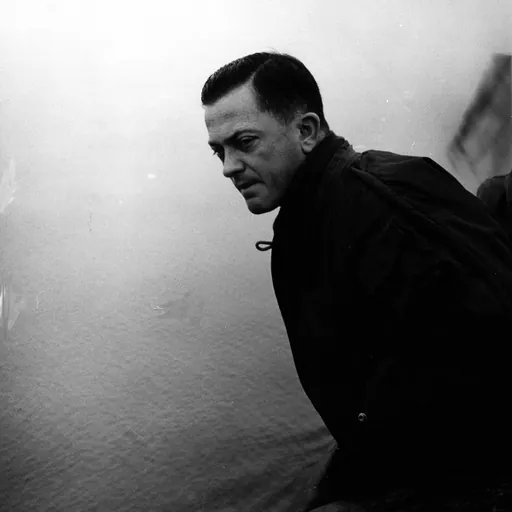
About William Anderson
Lived 1921 – 2007 (aged 85). William Anderson was an American politician, military officer, submariner, commandant and soldier.
William Robert Anderson (June 17, 1921 – February 25, 2007) was an officer in the United States Navy, and a U.S. Representative from Tennessee from 1965 to 1973.
Early life and naval career Anderson was born in Humphreys County, Tennessee in the rural community of Bakerville, south of Waverly. He attended primary school in Waynesboro, Tennessee where his father ran a sawmill. He graduated from the former Columbia Military Academy in Columbia, Tennessee An updated and more complete book about the North Pole transit, The Ice Diaries, with co-author Don Keith, was completed just before Anderson's death. The book features previously classified information and many details that were not available for the first book.
He was awarded, in 1959, the Founder's Medal of the Royal Geographical Society of London "for his services to Arctic exploration". After touring South Vietnam June 1970, Anderson and fellow Democratic Representative Augustus F. Hawkins drafted a House Resolution urging Congress to "condemn the cruel and inhumane treatment" of prisoners in South Vietnam. Anderson and Hawkins had visited South Vietnam with nine other representatives, but they were the only two to visit a civilian South Vietnamese prison on Con Son Island, which they described as being akin to "tiger cages". The two representatives also pressured President Nixon to send an independent task force to investigate the prison and "prevent further degradation and death".
Anderson was well regarded in some Democratic circles and was sometimes mentioned as potentially having a bright future, some even suggesting him as a potential vice presidential nominee in 1972 based largely upon his military record. However, Anderson's independent gubernatorial race and his progressive tendencies had not been forgotten by many of his fellow Democrats, particularly in the General Assembly. Tennessee was slated to lose a district as a result of reapportionment following the 1970 census, and Anderson's district was considerably reconfigured prior to the 1972 elections. Anderson's district received a large area around Memphis, where Republican influence was strong and growing and simultaneously lost some solidly Democratic areas.
Observers felt that if there was a vulnerable Democratic incumbent in the Tennessee congressional delegation in 1972, it was probably Anderson. That came to pass in the Republican landslide of 1972, in which President Nixon carried 49 of 50 states and 90 of Tennessee's 95 counties, and Anderson lost to Republican state personnel commissioner Robin Beard by 12 percent. Since then, the district, renumbered the Seventh District in 1983, has become the state's most Republican region outside of East Tennessee, and Democrats have made only three subsequent serious bids for the seat as of 2016.
Anderson retired from public life. He served as an officer with the Public Office Corporation, and lived in Alexandria, Virginia. He died from kidney failure after living in Leesburg, Virginia during the final years of his life.
After leaving office, Anderson had played a key role in automating the administrative procedures in the constituent offices of the House of Representatives. His son, William, was the classic "early adopter" of mini-computer technology, the DEC PDP-11/70 specifically, and the two of them helped establish a timesharing company that offered members of Congress an opportunity to improve constituent services. The firm's offerings not only improved efficiency but also allowed members to deal efficiently with the tsunami of "interest group" postcards, then flooding the Hill.
He was survived by his wife, Patricia, and his four children, Michael, William, Jane and Thomas Anderson, also known as "Mac".
Awards
William Anderson received the following medals and decorations:
Don’t just read it —
keep it.
Full-length biographies made to live with: read them, listen on the way to work, watch them tonight.
- E-book
- Audio
- Video
Instant download · yours to keep · every purchase keeps this site free
Important facts
People in William Anderson's life
Named in this biography and alive at the same time




Related people
Same field, nearest in time






Contemporaries
People whose lives overlapped William Anderson's



Frequently asked questions
Who was William Anderson?
United States naval officer (1921–2007)
When was William Anderson born?
William Anderson was born on 17 June 1921 in Bakerville.
When did William Anderson die?
William Anderson died on 25 February 2007 in Leesburg.
What was William Anderson's occupation?
William Anderson was a politician, military officer, submariner, commandant and soldier.
What nationality was William Anderson?
William Anderson was American.
Sources & further reading
· DBpedia: William Anderson (naval officer)
Cite this page
APA: Biography.guide. (2026). William Anderson. https://biography.guide/william-anderson-politician-1921/
MLA: "William Anderson." Biography.guide, https://biography.guide/william-anderson-politician-1921/.
Chicago: "William Anderson." Biography.guide. https://biography.guide/william-anderson-politician-1921/.
Data last updated: 2026-09-20 · Spot an error? Report a correction.
Portrait: Wikimedia Commons · author & licence
Page generated 2026-09-27 04:58 UTC