
William Aaron Woods
Researcher of natural language processing
About William Aaron Woods
Born 1942. William Aaron Woods is a university teacher and computer scientist, known for KL-ONE, Knowledge representation and reasoning and Semantic network.
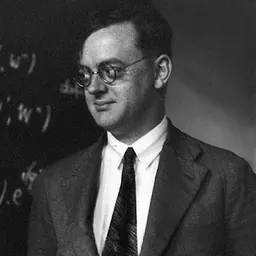
William Aaron Woods (born June 17, 1942), generally known as Bill Woods, is a researcher in natural language processing, continuous speech understanding, knowledge representation, and knowledge-based search technology. He is currently a Software Engineer at Google.
Education Woods received a bachelor's degree from Ohio Wesleyan University (1964) and a Master's (1965) and Ph.D. (1968) in applied mathematics from Harvard University, where he then served as an assistant professor and later as a Gordon McKay Professor of the Practice of Computer Science.
Research Woods built one of the first natural language question answering systems (LUNAR) to answer questions about the Apollo 11 Moon rocks for the NASA Manned Spacecraft Center while he was at Bolt Beranek and Newman (BBN) is a widely cited critical review of early work in semantic networks. This paper has been cited in the context of querying and natural language processing approaches that make use of Semantic Networks and general knowledge modeling. The paper attempts to clarify notions of meaning and semantics in computational systems. Woods further elaborated on the issues and how they relate to contemporary systems in "Meaning and Links" (2007).
Awards Woods has received many honors: 1978, Fulbright Fellowship 1990, Fellow of the American Association for Artificial Intelligence 1992, Fellow of the American Association for the Advancement of Science 2010, Association for Computational Linguistics Lifetime Achievement Award
Selected works
"The Lunar Sciences Natural Language Information System: Final Report" (with R. M. Kaplan and B.L. Nash-Webber), BBN Report No. 2378, Bolt Beranek and Newman Inc., Cambridge, MA 02138, June, 1972. (Available from the National Technical Reports Library of NTIS as N72-28984. ) Speech-Understanding Systems: Final Report of a Study Group, (with A. Newell, chairman, et al. .), North-Holland/American Elsevier, 1973. "An Experimental parsing System for Transition Network Grammars", in R. Rustin (ed.), Natural Language Processing, New York: Algorithmics Press, 1973. "Progress in Natural Language Understanding: An Application to Lunar Geology," AFIPS Conference Proceedings 42 (1973 National Computer Conference and Exposition). "What's in a Link: Foundations for Semantic Networks" in D. Bobrow and A. Collins (eds.), Representation and Understanding: Studies in Cognitive Science, New York: Academic Press, 1975. Reprinted in R. Brachman and H. Levesque (eds.), Readings in Knowledge Representation, San Mateo: Morgan Kaufmann, 1985. Also reprinted in Allan Collins and Edward E. Smith (eds.), Readings in Cognitive Science, San Mateo: Morgan Kaufmann, 1988. "Procedural Semantics as a Theory of Meaning" in A. Joshi, B. L. Webber and I. Sag (eds.), Elements of Discourse Understanding, Cambridge University Press, 1981. "Optimal Search Strategies for Speech Understanding Control", Artificial Intelligence 18:3:295-326, May 1982. "What's Important About Knowledge Representation?," IEEE Computer 16:10, October 1983. "Artificial Intelligence", in Lisa Taylor (ed.), The Phenomenon of Change, New York: Rizzoli, 1984. Computer Speech Processing, (ed. with Frank Fallside), Prentice-Hall International (UK) Ltd., 1985. "Understanding Subsumption and Taxonomy: A Framework for Progress," in John Sowa (ed.), Principles of Semantic Networks: Explorations in the Representation of Knowledge, San Mateo:Morgan Kaufmann, 1991, pp 45–94. "Conceptual Indexing: A Better Way to Organize Knowledge," Technical Report SMLI TR-97-61, Sun Microsystems Laboratories, Mountain View, CA, April, 1997. "Linguistic Knowledge can Improve Information Retrieval," with Lawrence A. Bookman, Ann Houston, Robert J. Kuhns, Paul Martin, and Stephen Green, Proceedings of ANLP-2000, Seattle, WA, May 1–3, 2000, (Final version with author's introduction is reprinted in Sun Labs' anniversary volume, Sun Microsystems Laboratories: The First Ten Years, 1991-2001.) "Meaning and Links: a Semantic Odyssey," AI Magazine 28:4 (Winter 2007). full text
Don’t just read it —
keep it.
Full-length biographies made to live with: read them, listen on the way to work, watch them tonight.
- E-book
- Audio
- Video
Instant download · yours to keep · every purchase keeps this site free
Important facts
People in William Aaron Woods's life
Named in this biography and alive at the same time







Related people
Same field, nearest in time


Contemporaries
People whose lives overlapped William Aaron Woods's



Frequently asked questions
Who is William Aaron Woods?
researcher of natural language processing
When was William Aaron Woods born?
William Aaron Woods was born on 17 June 1942.
What is William Aaron Woods's occupation?
William Aaron Woods is a university teacher and computer scientist.
What is William Aaron Woods known for?
William Aaron Woods is known for KL-ONE, Knowledge representation and reasoning and Semantic network.
Sources & further reading
· Wikipedia: William Aaron Woods
· DBpedia: William Aaron Woods
Cite this page
APA: Biography.guide. (2026). William Aaron Woods. https://biography.guide/william-aaron-woods/
MLA: "William Aaron Woods." Biography.guide, https://biography.guide/william-aaron-woods/.
Chicago: "William Aaron Woods." Biography.guide. https://biography.guide/william-aaron-woods/.
Data last updated: 2026-09-20 · Spot an error? Report a correction.
Page generated 2026-09-27 05:29 UTC