
About Willey Reveley
Lived 1760 – 1799 (aged 38–39). Willey Reveley was an English architect.
Willey Reveley (1760–1799) was an 18th-century English architect, born at Newton Underwood near Morpeth, Northumberland. He was a pupil of Sir William Chambers, and was trained at the Royal Academy Schools. In 1781-2 he was employed (under Chambers) as assistant clerk of works at Somerset House.
Around 1788, Reveley travelled in Greece to make sketches for Sir Richard Worsley. That year, he married Maria James, better known under her later married name of Gisborne as a friend of Mary and Percy Bysshe Shelley. Maria's father opposed the marriage and refused to help the couple financially. They returned to England, where they lived on an income of £140 a year. Their son, Henry Willey Reveley (1788–1875), became a civil engineer and architect in Cape Town and Western Australia. Their other son's name is unknown.
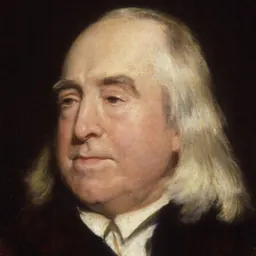
Reveley was a strong liberal and became a friend of William Godwin and Thomas Holcroft. About 1791 he received his first professional fee as an architect, £10, for assisting philosopher Jeremy Bentham in preparing architectural drawings for Bentham's scheme for a Panopticon prison. Reveley continued to work on the project with Bentham for the rest of the 1790s.
Reveley contributed some views of the Levant to the Museum Worsleyanum (1794), the catalogue of Worsley's collections; and, also in 1794, edited the third volume of James Stuart's Antiquities of Athens.
In 1796, Reveley made four proposals to straighten the River Thames between Wapping and Woolwich Reach in east London. A new channel across the Rotherhithe, Isle of Dogs and Greenwich peninsulas would reduce the river's length, improve flow to remove pollution, and simplify navigation. Three large horseshoe bends of the river would have been left as huge wet docks, connected to the new channel through locks. Parliament rejected all four proposals. His completed projects were All Saints' Church, Southampton (constructed 1792–1795, destroyed in 1940); and Windmill Hill, Sussex, a country house built for W. H. Pigou and completed in 1798.
He died on 6 July 1799 "fter a few hours illness".
Don’t just read it —
keep it.
Full-length biographies made to live with: read them, listen on the way to work, watch them tonight.
- E-book
- Audio
- Video
Instant download · yours to keep · every purchase keeps this site free
Important facts
People in Willey Reveley's life
Named in this biography and alive at the same time




Related people
Same field, nearest in time



Contemporaries
People whose lives overlapped Willey Reveley's




Frequently asked questions
Who was Willey Reveley?
British architect (1760–1799)
When was Willey Reveley born?
Willey Reveley was born in 1760.
When did Willey Reveley die?
Willey Reveley died in 1799 in London.
What was Willey Reveley's occupation?
Willey Reveley was an architect.
What nationality was Willey Reveley?
Willey Reveley was English.
Sources & further reading
Cite this page
APA: Biography.guide. (2026). Willey Reveley. https://biography.guide/willey-reveley/
MLA: "Willey Reveley." Biography.guide, https://biography.guide/willey-reveley/.
Chicago: "Willey Reveley." Biography.guide. https://biography.guide/willey-reveley/.
Data last updated: 2026-09-20 · Spot an error? Report a correction.
Page generated 2026-09-27 05:19 UTC