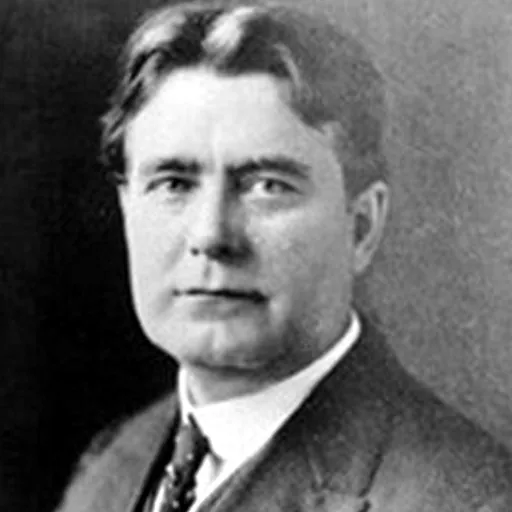
About Willard C. Brinton
Lived 1880 – 1957 (aged 76). Willard C. Brinton was an American engineer and scientific illustrator.
Willard Cope Brinton (December 22, 1880 – November 29, 1957 ) was an American consulting engineer, president of Brinton Associates, and information visualisation pioneer, particularly known for publication of the 1914 textbook on graphic methods, entitled Graphic methods for presenting facts.
Biography Brinton was born in West Chester, Pennsylvania, to Samuel Lewis and Elizabeth (Smith) Brinton. He received his BS in Mechanical engineering from Harvard University in 1907.
Brinton started his career as mechanical engineer working for various companies, and travelled through the United States, and to Europe, Japan and China. Back in New York he started his own consulting company. One of his notable works in the early 1920s was the proposal to initiate a bi-state New York harbor agency, which resulted in the creation of the Port of New York Authority. Brinton also designed production-control equipment for which he received several patents, He was director of the American Statistical Association in 1917 under the presidency of Allyn Abbott Young, and was elected as a Fellow of the American Statistical Association in 1922. He was president of the Harvard Engineering Society in 1932, and member of the Newcomen Society of the United States.
More in detail Brinton continued: A definite effort has been made to produce a work which can serve as a hand book for anyone who may have occasional charts to prepare for reports, for magazine illustration, or for advertising. Unfortunately, there are extremely few draftsmen who know how to plot a curve or prepare any kind of a chart from data presented to them in the form of tabulated figures. Most draftsmen can plot a curve if they are given the data and an example showing the general type of chart desired. The executive who desires a chart is usually too busy to stand by a draftsman and explain in detail just how the chart should be prepared as concerns those all important details of proportion, scale, width of line, etc. It is believed that the owner of this book will find it feasible to run through the various chapters and pages until he finds a chart most nearly like that which he desires to have made from his own data. A sample chart placed before any draftsman of average ability should give the draftsman practically all the instruction needed for the preparation of a similar chart from other data. According to Brinton ineffective presentation can lead to fallacious conclusions: It is often with impotent exasperation that a person having the knowledge sees some fallacious conclusion accepted, or some wrong policy adopted, just because known facts cannot be marshalled and presented in such manner as to be effective. And furthermore: Ordinarily, facts do not speak for themselves. When they do speak for themselves, the wrong conclusions are often drawn from them. Unless the facts are presented in a clear and interesting manner, they are about as effective as a phonograph record with the phonograph missing.
Joint Committee on Standards for Graphic Presentation
On the initiative of Willard C. Brinton and the American Society of Mechanical Engineers in 1913 a Joint Committee on Standards for Graphic Presentation was initiated. In this commission participated 15 scientific societies with a national scope, and 2 bureaus of the US federal government. The commission was chaired by Willard C. Brinton, and Leonard Porter Ayres of the American Statistical Association was its secretary. The initial meeting of the committee was held in December 1914.
In 1915 the committee published their first report, described as preliminary. It consisted of a first set of suggestions, which the committee had thus far considered as representing the more generally applicable principles of elementary graphic presentation in several magazines of the participating scientific societies.
Calvin F. Schmid (1978) summarized: "The report was relatively brief, consisting of 17 simply stated basic rules, each illustrated with one to three diagrams. Fourteen of the rules, including the accompanying diagrams, were devoted exclusively to the portrayal of time series in the form of arithmetic line charts. Of the three remaining rules, one emphasized the preference of linear magnitudes over areas or volumes, another represented a simple procedure pertaining to semi-logarithmetic charts, and the last, the desirability of emphasizing the 100 percent or other base line in the delineation of an arithmetic grid."
Since this first publication of standards in graphic presentation other committees in the US published revised and extended standards of graphic presentation, according to Schmid (1978), in 1936, 1938, and 1960.
Selected publications Brinton authored two books on graphic presentation methods, and numerous magazine articles. Books: Brinton, Willard Cope. Graphic methods for presenting facts. The Engineering magazine company, 1914. Brinton, Willard Cope. Graphic presentation. New York city, Brinton associates, 1939.
Articles, a selection: American Statistical Association. "Joint committee on standards for graphic presentation." Publications of ASA 14 (1916): 790-797.
Patents Patent US1496366 - Siphon Patent US1524473 - Freight-handling apparatus Patent US1566521 - Freight shed Patent US1720204 - Object-holding rig for trucks Patent US1725750 - Guards and curtain closure
Don’t just read it —
keep it.
Full-length biographies made to live with: read them, listen on the way to work, watch them tonight.
- E-book
- Audio
- Video
Instant download · yours to keep · every purchase keeps this site free
Important facts
People in Willard C. Brinton's life
Named in this biography and alive at the same time

Related people
Same field, nearest in time

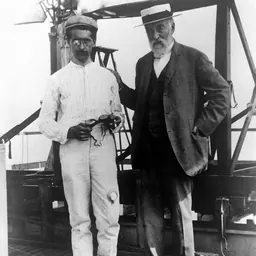
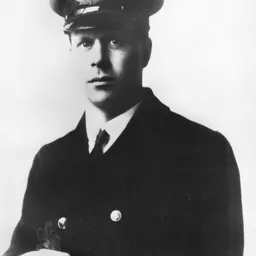


Contemporaries
People whose lives overlapped Willard C. Brinton's
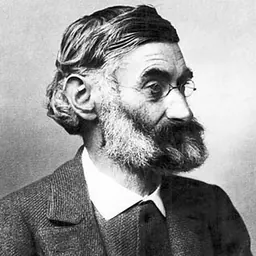
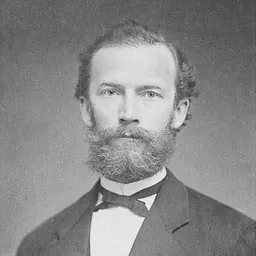

Frequently asked questions
Who was Willard C. Brinton?
American construction engineer
When was Willard C. Brinton born?
Willard C. Brinton was born on 22 December 1880.
When did Willard C. Brinton die?
Willard C. Brinton died on 29 November 1957.
What was Willard C. Brinton's occupation?
Willard C. Brinton was an engineer and scientific illustrator.
What nationality was Willard C. Brinton?
Willard C. Brinton was American.
Sources & further reading
· Wikipedia: Willard C. Brinton
Cite this page
APA: Biography.guide. (2026). Willard C. Brinton. https://biography.guide/willard-c-brinton/
MLA: "Willard C. Brinton." Biography.guide, https://biography.guide/willard-c-brinton/.
Chicago: "Willard C. Brinton." Biography.guide. https://biography.guide/willard-c-brinton/.
Data last updated: 2026-09-22 · Spot an error? Report a correction.
Portrait: Wikimedia Commons · author & licence
Page generated 2026-09-27 05:04 UTC