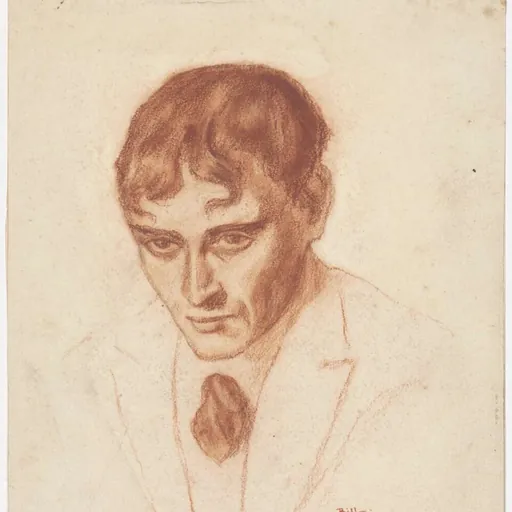
About Will Dyson
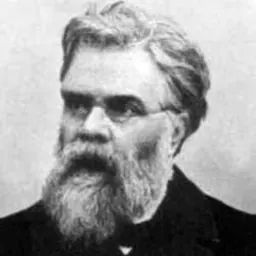
Lived 1880 – 1938 (aged 57). Will Dyson was an Australian cartoonist.
Freelance artist
Dyson began submitting illustrations to The Bulletin magazine in 1897, aged seventeen, at a stage when he was still striving to develop his drawing style. He had cartoons accepted for publication in the Adelaide weekly The Critic during 1897. In about 1898 Dyson met Norman Lindsay and the two aspiring artists formed a close friendship. Both young men had grown up in the goldfields region of Victoria. They would often go about the streets of Melbourne in search of subjects to draw, both young men at that time in the process of refining their respective illustrative techniques. His friend Norman Lindsay also shared Dyson's interest in boxing. Dyson joined the Cannibal Club, a coterie of young artists in Melbourne whose members included Lindsay and his brothers Lionel and Percy, Tom Durkin, Max Meldrum, Hugh McCrae and Alex Sass. The Dyson and Lindsay families, the members of which shared common artistic and literary talents and interests, began to develop close bonds. In 1903 Lionel Lindsay (Norman's older brother) married Jean Dyson (Will's older sister) at the Sydney suburb of Woollahra.
Caricature of Billy Hughes, published in The Bulletin, 28 December 1905.
Dyson's first illustration accepted by The Bulletin was purchased for three guineas. From early 1900 Dyson's illustrations and cartoons began to be published in the Sydney-based Bulletin magazine, his early contributions appearing under the pseudonym 'Asa Dane'.
Ambrose Dyson had been employed as an artist by The Critic, the weekly journal based in Adelaide. In about June 1903 he left to take up the position of art representative in Melbourne for the Sydney-based Bulletin magazine. After his brother's departure, Will Dyson was employed as a staff artist and writer at The Critic, for which his contributions included coloured caricatures.
Dyson remained in Adelaide for only a short period, after which he moved between Melbourne and Sydney depending on where he could find work. In Sydney he stayed with his sister Jean and brother-in-law Lionel Lindsay. He contributed to the Native Companion and The Lone Hand in 1907.
On 30 September 1909 Will Dyson and Ruby Lindsay were married at Creswick, in central Victoria. Ruby was the sister of Norman and Lionel Lindsay and a talented black-and-white artist in her own right.
London
'For what you are about to receive...', the front page of The Daily Herald, 24 May 1913, featuring Dyson's depiction of the Home Secretary, Reginald McKenna, force-feeding a jailed suffragette.
In London Dyson's drawings were initially published in the socialist weekly magazine, The New Age. Will and Ruby Dyson settled in the fashionable London suburb of Chelsea. In 1911 Ruby gave birth to the couple's only child, a daughter named Betty. It was a period of considerable political upheaval in Britain, with Asquith's Liberal government challenging the powers of the House of Lords, organised agitation for female suffrage and industrial conflict leading to a large number of strikes. In December 1910 Dyson contributed illustrations to The World, a daily strike bulletin published by the printers' union, the London Society of Compositors. In January 1911 the strike sheet was renamed The Daily Herald. His large-format illustrations were regularly featured in the pages of the newspaper.
In early January 1913 it was reported in Brisbane's The Worker that "capitalistic newspapers in London declare that King George has been grossly insulted by Will Dyson". His cartoon, published in the Daily Herald, depicted the king expressing astonishment at his subjects "drinking anything so common as rum", and saying: "I never came across any shortage of rum". Dyson's cartoons for the Daily Herald were occasionally reprinted in Australian newspapers associated with the labour movement such as The Australian Worker and The Socialist.
In June 1913 it was reported that Dyson, who "is now doing some of the best cartoon work in London, principally for the Daily Herald", had declined "an offer of £1,500 a year from a Chicago newspaper proprietary". The Daily Herald received financial support from the millionaire American soap manufacturer, Joseph Fels, who had close links with British socialists such as George Lansbury, who edited the newspaper from early in 1914. At one stage when the Herald "was near collapse", Fels agreed to contribute funds to keep it going on the condition that Dyson, who had received "tempting offers from America", should remain at the paper.
The fervour and anger of Dyson's Daily Herald cartoons had a remarkable impact in Britain and were admired by workers and intellectuals alike. Anthony Ludovici, writing in The New Age in June 1913, declared that in Dyson's depictions the "capitalist is not only drawn – he is quartered... [in] some of the most passionate, skilful and unmerciful cartoons it has ever been my good fortune to encounter". In 1913 The Daily Herald took advantage of Dyson's success by producing a collection of his cartoons. In January 1915 twenty of his drawings were published in a collection entitled Kultur Cartoons. The writer H. G. Wells wrote a foreword to the publication, observing that Dyson "perceives in militaristic monarchy and national pride a threat to the world, to civilisation, and all that he holds dear, and straightaway he sets about to slay it with his pencil". The original drawings from the publication were exhibited at the Leicester Galleries in London. The Daily Mail newspaper reproduced one of the 'Kultur' cartoons on the entire back page of its 1 January 1915 edition and praised Dyson as having "the most virile style of any British cartoonist". The Observer newspaper described Dyson "as one of the leading illustrators of the present day" and remarked that "his poignant humour strikes a deeper and more thrilling note than that of any other graphic humorist of to-day".
In August 1915 an exhibition of Dyson's war cartoons was held at The Centreway in Collins Street, Melbourne, opened by the Governor of Victoria, Sir Arthur Stanley.
In early July 1916 an exhibition of Dyson's works entitled 'War Cartoons' was held at the Savoy Hotel in London. The collection included a number of lithographs (representing the artist's first attempt at this process). The cartoons were described as "characteristic examples of Mr. Dyson's use of the grotesque for the expression of his idea, which, in this case, is mainly the interpretation of the German mind".
During 1916 Dyson wrote to General Birdwood, the British commander of ANZAC troops on the Western Front, applying to join the Australian Imperial Force (A.I.F.) as an artist. His stated aim was to "interpret in a series of drawings, for national preservation, the sentiments and special Australian characteristics of our Army". Dyson's position as an artist attached to the A.I.F. was formalised in May 1917 when he was appointed as Australia's first official war artist, as part of the Official War Art Scheme.
Dyson mixed with the Australian soldiers, frequently in or near the front line trenches, and produced a large amount of sketches, drawings and paintings. He was inspired by the endurance and achievements of the Australian soldiers, but horrified by the suffering and loss of life he was witnessing. Dyson wrote of the subjects of his artwork: "I never cease to marvel, admire and love with an absolutely uncritical love our louse-ridden diggers, [they] are the stuff of heroes and are the most important thing on earth at this blessed moment". Charles Bean described Dyson as "the most intimate portrayer of the Australian soldier", who felt it was his duty to "give the world a faithful picture of them and of war". Dyson preferred to be amongst the men in the forward positions, and "shunned" army headquarters where he felt "out of place". Bean wrote: "No other official artist, British or Australian, in the Great War saw a tenth part as much of the real Western Front as did Will Dyson". Dyson's brother-in-law, Daryl Lindsay, had enlisted in February 1916. Lindsay, himself an artist, managed to get a transfer from the Medical Section of the A.I.F. to a position as Dyson's batman.
Post-war
In March 1919 Dyson's wife, Ruby Lindsay, died in London from pneumonia aged 33, a victim of the Spanish flu pandemic. In June 1919 it was reported that Dyson was "in very bad health, and has been forbidden by his medical adviser to do any work for some time to come". He had been "in a state of nervous breakdown" since his wife's death. After Ruby's death Dyson went through a period of severe melancholy, during which the output of his work declined. During this period "he spoke often of ending things as a way out of his terrible depression". The following year a small volume of her artwork entitled The Drawings of Ruby Lind (Mrs. Will Dyson) was published by Cecil Palmer of London. In his introductory tribute in the book, Dyson wrote that Ruby's death "came after the Armistice, when it seemed that we might dare to hope again".
'Peace and Future Cannon Fodder', originally published in The Daily Herald, 17 May 1919.
One of Dyson's cartoons, published in The Daily Herald after his wife's death, is often singled out for its prophetic and vitriolic qualities. The drawing, published on 17 May 1919, was entitled 'Peace and Future Cannon Fodder'. It portrayed the Allied leaders (Vittorio Orlando, David Lloyd George, Woodrow Wilson and Georges Clemenceau) emerging from a meeting in Paris to discuss a post-war peace treaty (which later became known as the Treaty of Versailles). Clemenceau, identified by his nickname 'The Tiger', is depicted as saying to the others: "Curious! I seem to hear a child weeping!", while behind a pillar a naked child is sobbing, labelled "1940 Class". The resolutely independent Dyson resigned from the Daily Herald, unwilling to work under political constraints. In about May 1922 Dyson began working for the John Bull magazine, together with his brother-in-law, the Australian journalist, Harrison Owen. The magazine's owners, Odhams Press, had recently terminated the contract of its editor, Horatio Bottomley, and Dyson joined on the understanding that John Bull was to be "recast from top to bottom" in order to "make the paper the organ of British Radicalism". Dyson's residence and studio was in Chelsea, which he shared with Owen and his wife (Dyson's younger sister, Esther). Dyson designed the cover of Dr. Arthur D'Ombrain's Boomerang Verses, published in London in about June 1924. D'Ombrain was an Australian doctor working in London. After undertaking experiments in animation for the cinema, Dyson become disillusioned with the British film industry.
In late 1924 Dyson accepted an offer of a substantial salary to return to Australia and work for the Herald publishing group in Melbourne. He had been induced back to Australia by Keith Murdoch, editor of The Herald newspaper, to join Percy Leason as a staff cartoonist for the Melbourne Punch. The editor of Punch, John Dalley, was willing to give Dyson full freedom to express himself, but the proprietors of the journal exerted pressure to limit his social and political satire. Eventually "Dyson was edged from his special field into the production of pleasant comic drawings, and he finally accepted this role of entertainer with a wry resignation". In December 1925 Punch was incorporated into the weekly magazine, Table Talk (which had been acquired by the Herald group in 1924).
In December 1926 an exhibition of four artists employed by The Herald and its allied publications was held at the Athenaeum in Melbourne. The featured artists were Will Dyson, Percy Leason, L. F. Reynolds and Claire Scott. During his five years in Melbourne, Dyson had an active social life, but professionally his return was less successful, finding the local situation "too restrictive and parochial". Dyson's drawings for Table Talk ranged from caricatures of theatrical personalities to commentary on local matters, though occasionally he was able to apply his "admonishing satire" upon broader issues such as unemployment and government neglect of education and science. By 1929 Dyson had become discontented with his life in Australia, describing it as "a backwater, a paradise for dull boring mediocrities". After arriving in Los Angeles, Dyson exhibited his etchings and dry-points in several major American cities. One particular art dealer commissioned the artist "to do six satires on 'the movies'". Once described as "a bitter cynic who etches with the acid of his own bile", Dyson's satirical works were favourably reviewed. The critic in Time magazine described his works exhibited in New York as "brilliantly bitten etchings".
Return to London
Dyson arrived in London in about September 1930. In an interview after his arrival, the artist admitted: "Yes, I suppose I have changed". He added: "I have attained the tolerance of middle-age, which is really born of the belief that nobody can do much to change anything". Dyson told the interviewer he was finished with "journalism and drawing for the papers, and am rejoicing in the freedom from the Oriental tyranny of editors". As an etcher he intended "turning my activities on the intelligentsia of the world – satirising their foibles and pretences". In early November 1930 it was reported that Dyson had completed "some fine satirical drawings, particularly of Hollywood people". He had refused offers for cartoon work and was "specialising in etchings both in Britain and America". Following him to London was his long term partner Clarice Zander.
In August 1931 it was reported that Dyson had been appointed as a cartoonist for the Daily Herald. He remained with the Daily Herald until his death in January 1938.
Dyson's interest in social problems led to his association with the Douglas Credit movement in England. In late 1933 he published a book called Artist Among the Bankers, a sharp critique of banking and the prevailing monetary system (and which included an explanation of Clifford Douglas' Social Credit theory).
Will Dyson died of heart failure on the afternoon of 21 January 1938 at his home in Chelsea, aged 57. He had attended a party the night before and worked in his studio in the morning before he died. In the afternoon he was found dead in his armchair, his spectacles on his forehead and a book beside him. Dyson was buried at London's Hendon Park Cemetery.
After Dyson's death in 1938, fellow-artist Norman Lindsay said of the late artist's approach to cartooning, he "would rather face any brutal reality than escape it in false sentiment". Over 270 of Dyson's sketches, drawings and paintings completed during his period as war artist were held by the Australian War Records after World War I. The artwork was incorporated into the collection held by the Australian War Memorial in Canberra when it opened in 1941.
The largest collection of Will Dyson's work is housed in national collections in Canberra, and he is also represented in state galleries in Melbourne and Sydney and at the Victoria and Albert Museum, London.
Publications
Edward Dyson (1906), Fact'ry 'ands, Melbourne: G. Robertson; illustrations by Will Dyson. Will Dyson (1915), Kultur Cartoons, London: Stanley Paul & Co.; with a foreword by H. G. Wells. Souvenir programme (1916), Pioneer Exhibition Game: Australian Football (London: Wightman & Co.) – contributing artists: Ruby Lindsay, Will Dyson, Fred Leist, Laurie Tayler, Cecil Hartt and Dan Lindsay. Will Dyson (1918), Australia at War: Drawings at the Front, London: Cecil Palmer & Hayward; with an introduction by G. K. Chesterton. Will Dyson (1919), Poems in Memory of a Wife, London: Cecil Palmer. Arthur D'Ombrain (1924), Boomerang Verses, London: Anglo-Eastern Publishing Co.; cover by Will Dyson. Dyson countered Monash's comments in an article published in Melbourne's Herald newspaper. He stated that what he wished to convey "in the faces of the A.I.F. was the human face under the stress of spiritual and physical conditions of such a character, that any element of the pretty-pretty in them would have been an untruth and an offence". Dyson maintained that his attitude to the Australian soldiers "was one of affection, bordering on worship", adding: "If I failed to make the digger look an heroic figure I am content to let it rest at that, but in my own way I tried to make him as heroic as I felt him, and in the way I felt it".
Don’t just read it —
keep it.
Full-length biographies made to live with: read them, listen on the way to work, watch them tonight.
- E-book
- Audio
- Video
Instant download · yours to keep · every purchase keeps this site free
Important facts
People in Will Dyson's life
Named in this biography and alive at the same time








Related people
Same field, nearest in time


Contemporaries
People whose lives overlapped Will Dyson's



Frequently asked questions
Who was Will Dyson?
Australian illustrator (1880–1938)
When was Will Dyson born?
Will Dyson was born on 3 September 1880 in Ballarat.
When did Will Dyson die?
Will Dyson died on 21 January 1938 in Chelsea.
What was Will Dyson's occupation?
Will Dyson was a cartoonist.
What nationality was Will Dyson?
Will Dyson was Australian.
Sources & further reading
Cite this page
APA: Biography.guide. (2026). Will Dyson. https://biography.guide/will-dyson/
MLA: "Will Dyson." Biography.guide, https://biography.guide/will-dyson/.
Chicago: "Will Dyson." Biography.guide. https://biography.guide/will-dyson/.
Data last updated: 2026-09-20 · Spot an error? Report a correction.
Page generated 2026-09-27 05:10 UTC