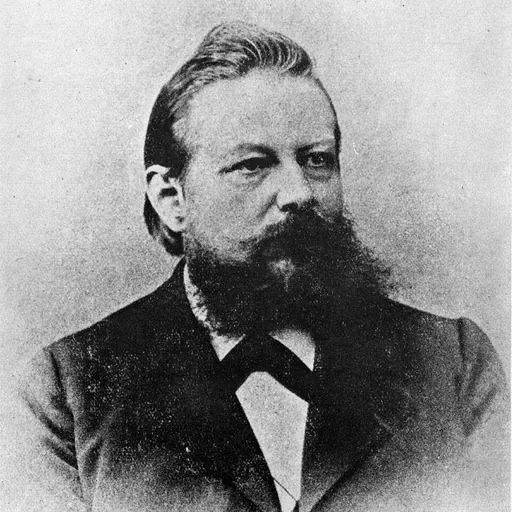
About Wilhelm Windelband
Lived 1848 – 1915 (aged 67). Wilhelm Windelband was a German philosopher, university teacher and historian.
Wilhelm Windelband (; ; 11 May 1848 – 22 October 1915) was a German philosopher of the Baden school.
Early life Windelband was born the son of a Prussian state secretary for the Province of Brandenburg in Potsdam. He studied at the University of Jena in which he attended lectures by Kuno Fischer. He later studied in the university of Berlin and of Göttingen. In 1870 he presented his Dr. phil. dissertation under the direction of Hermann Lotze, which was entitled Die Lehren vom Zufall (The Theories of Chance). In the following year Windelband served as a soldier in the Franco-Prussian War. In 1873 he returned to academia and obtained his Dr. phil. habil. at the University of Leipzig, which was entitled Die Gewissheit der Erkenntnis: eine psychologisch-erkenntnisstheoretische Studie (On the Certainty of Knowledge: A Psychological-Epistemological Study). In 1874 he married Martha Wichgraf, with whom he had four children.
In 1876, Windelband became Professor of Inductive Philosophy at the University of Zurich in Switzerland. In 1877, he returned to Germany, where he became Professor of Philosophy at the University of Freiburg. In 1882 he accepted an offer of a post in the then-German University of Strasbourg, where in 1894/5 and 1897/98 he became its rector.
Philosophical work Windelband is now mainly remembered for the terms nomothetic and idiographic, which he introduced during an address which he gave in 1894 upon his installation as the Rector of the University of Strasbourg, the Third Edition of which was subsequently published as a thirty-six page booklet. The terms nomothetic and idiographic are used in psychology and elsewhere. However, as three authors, Smith (1995), Lamiell (1998) and Robinson (2012), have explained, they are used differently to the ways that Windelband meant.
Windelband was a neo-Kantian who argued against other contemporary neo-Kantians, maintaining that "to understand Kant rightly means to go beyond him". Against his positivist contemporaries, Windelband argued that philosophy should engage in humanistic dialogue with the natural sciences rather than uncritically appropriating its methodologies. His interests in psychology and cultural sciences represented an opposition to psychologism and historicism schools by a critical philosophic system.
Windelband relied in his effort to reach beyond Kant on such philosophers as Georg Wilhelm Friedrich Hegel, Johann Friedrich Herbart, and Hermann Lotze. Heinrich Rickert was closely associated with Windelband. Windelband's disciples were not only noted philosophers, but also sociologists like Max Weber and theologians like Ernst Troeltsch and Albert Schweitzer.
Don’t just read it —
keep it.
Full-length biographies made to live with: read them, listen on the way to work, watch them tonight.
- E-book
- Audio
- Video
Instant download · yours to keep · every purchase keeps this site free
Important facts
People in Wilhelm Windelband's life
Named in this biography and alive at the same time





Related people
Same field, nearest in time


Contemporaries
People whose lives overlapped Wilhelm Windelband's




Frequently asked questions
Who was Wilhelm Windelband?
German philosopher (1848–1915)
When was Wilhelm Windelband born?
Wilhelm Windelband was born on 8 May 1848 in Potsdam.
When did Wilhelm Windelband die?
Wilhelm Windelband died on 22 October 1915 in Heidelberg.
What was Wilhelm Windelband's occupation?
Wilhelm Windelband was a philosopher, university teacher and historian.
What nationality was Wilhelm Windelband?
Wilhelm Windelband was German.
Sources & further reading
· Wikipedia: Wilhelm Windelband
Cite this page
APA: Biography.guide. (2026). Wilhelm Windelband. https://biography.guide/wilhelm-windelband/
MLA: "Wilhelm Windelband." Biography.guide, https://biography.guide/wilhelm-windelband/.
Chicago: "Wilhelm Windelband." Biography.guide. https://biography.guide/wilhelm-windelband/.
Data last updated: 2026-09-23 · Spot an error? Report a correction.
Portrait: Wikimedia Commons · author & licence
Page generated 2026-09-27 05:05 UTC