
About Wilhelm Ternite
Lived 1786 – 1871 (aged 85). Wilhelm Ternite was a German painter, lithographer, history painter and portrait painter.
in a riding habit (c.1810)
Friedrich Wilhelm Ternite (5 September 1786 – 22 October 1871) was a German portrait painter, miniaturist and lithographer. In Berlin, he served as a court painter and inspector of the Royal Art Gallery.
Biography He was born in Neustrelitz. As early as 1803, he took drawing lessons at the Prussian Academy of Arts with Friedrich Georg Weitsch. After 1810, he received financial support from King Friedrich Wilhelm III and became the King's portrait painter.
In the German Campaign of 1813, he was a volunteer army officer and was among the Prussian troops that entered Paris in 1814. On the recommendation of Karl August von Hardenberg, the King commissioned him to head the unit charged with recovering art treasures that had been looted from Germany during the French occupation. He was also part of the group authorized to acquire 158 paintings from the "Giustiniani Collection" at the Louvre. These, together with the recovered works, became the basis for the Royal Art Gallery (now part of the Gemäldegalerie).
With the King's support, Ternite remained in Paris until 1823, continuing his artistic education in the workshops of Jacques-Louis David and Antoine-Jean Gros. He also produced illustrations for Mariä Krönung und die Wunder des heiligen Dominicus by August Wilhelm Schlegel and made several copies of works by Raphael.
Upon returning to Germany, he made the acquaintance of Count Gustav Adolf Wilhelm von Ingenheim, a collector of early Italian art, and accompanied him to Rome. There, he discovered some previously unknown frescoes by Andrea Mantegna. He later visited Naples and made drawings of the ruins at Herculaneum and Pompeii. These were published at the urging of the Archaeologist, Karl August Böttiger, although the interest in Greek and Roman art was diminishing at the time they appeared.
In 1826, he went back to work as a portrait painter for the Royal Family and became a member of the Berlin Art Society. Shortly after, he was appointed "Master of the Royal Works of Art" (inspector of the Royal Collection); a position he held until his retirement in 1864. In 1860, he was awarded the Order of the Red Eagle. He died in 1871, in Potsdam.
Don’t just read it —
keep it.
Full-length biographies made to live with: read them, listen on the way to work, watch them tonight.
- E-book
- Audio
- Video
Instant download · yours to keep · every purchase keeps this site free
Important facts
People in Wilhelm Ternite's life
Named in this biography and alive at the same time

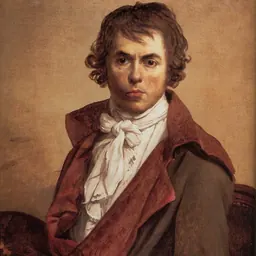
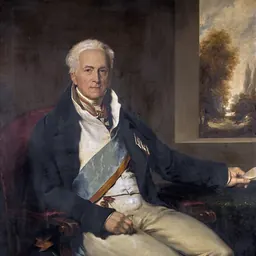

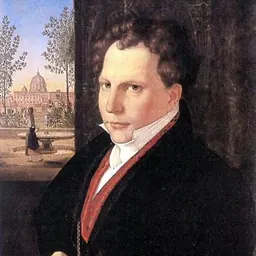
Related people
Same field, nearest in time
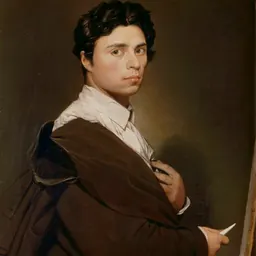



Contemporaries
People whose lives overlapped Wilhelm Ternite's

Frequently asked questions
Who was Wilhelm Ternite?
German painter (1786-1871)
When was Wilhelm Ternite born?
Wilhelm Ternite was born on 5 September 1786 in Neustrelitz.
When did Wilhelm Ternite die?
Wilhelm Ternite died on 22 October 1871 in Potsdam.
What was Wilhelm Ternite's occupation?
Wilhelm Ternite was a painter, lithographer, history painter and portrait painter.
What nationality was Wilhelm Ternite?
Wilhelm Ternite was German.
Sources & further reading
Cite this page
APA: Biography.guide. (2026). Wilhelm Ternite. https://biography.guide/wilhelm-ternite/
MLA: "Wilhelm Ternite." Biography.guide, https://biography.guide/wilhelm-ternite/.
Chicago: "Wilhelm Ternite." Biography.guide. https://biography.guide/wilhelm-ternite/.
Data last updated: 2026-09-20 · Spot an error? Report a correction.
Page generated 2026-09-27 05:20 UTC