
About Wilhelm Müller
Lived 1794 – 1827 (aged 32). Wilhelm Müller was a poet, translator, composer, writer, military personnel and catholic priest.
Johann Ludwig Wilhelm Müller (7 October 1794 – 30 September 1827) was a German lyric poet, best known as the author of Die schöne Müllerin and Winterreise (1823). These would later be the source of inspiration for two song cycles composed by Franz Schubert.
Life
Wilhelm Müller was born on 7 October 1794 in Dessau, as the son of a tailor. In Dessau, he pursued a distinguished academic career. He received his education at a local gymnasium, and would later attend the University of Berlin, where he specialised in philological and historical studies. In 1813-1814 he took part in the national uprising against Napoleon as a volunteer in the Prussian army. He participated in the battles of Lützen, Bautzen, Hanau and Kulm. In 1814 he returned to his studies at Berlin. From 1817 to 1819, he visited southern Germany and Italy, and in 1820 published his impressions of the latter in Rom, Römer und Römerinnen. In 1819, he was appointed teacher of classics in the Gelehrtenschule at Dessau, and in 1820 librarian to the ducal library. He remained there the rest of his life, dying of a heart attack aged only 32. Müller's son, Friedrich Max Müller, was a German-born British orientalist who founded the comparative study of religions; his grandson Sir William Grenfell Max Muller was a British diplomat.
Works
Müller's earliest lyrics are in a volume of poems, Bundesblüten, by several friends, published in 1816. That same year he also published Blumenlese aus den Minnesängern (Flowers harvested from the Minnesingers). The cycle depicts the self-determination of a subject who retains the ability to reflect because he is not engulfed by dreams. The realms of dream, death, and nature do not fulfil their promise, and the traveller ultimately rejects “Schein” (semblance) for “Sein” (actual being), or the imagined future for the real present. “As Dorschel points out, the wanderer actively denies the value of dreaming in ‘Im Dorfe’ (‘Was will ich unter den Schläfern säumen?’ [‘Why should I want to waste my time among those who are asleep?’] [...]), and [...] death eludes him. This is not merely chance, however, for when ‘Der Lindenbaum’ calls him temptingly back with the promise of eternal rest, he actively chooses to keep walking away from its lure. Dorschel aligns the wanderer with Kant's enlightened subject who sets off on an ‘Ausgang [. . .] aus seiner selbstverschuldeten Unmündigkeit’ (‘emergence [...] from his self-imposed immaturity’), avoiding ‘die Wege, / Wo die andren Wandrer gehn’ [‘paths / where other wanderers walk’] (‘Der Wegweiser’ [...]) as he charts his own path.”
Legacy
Müller excelled in popular and political songs that attracted great composers, notably two of Franz Schubert's song cycles, Die schöne Müllerin and Winterreise, which are based on the sets of poems of the same name by Müller. He also influenced Heinrich Heine's lyric development.
Composer Pauline Volkstein (1849–1925) set Müller's text to music in her lieder.
Andrés Neuman wrote a novel, El viajero del siglo (Traveller of the Century, 2009), inspired by the poems of Winter Journey (Wanderlieder von Wilhelm Müller. Die Winterreise. In 12 Liedern), giving life to several of its characters. Neuman had previously translated Müller's Winter Journey poems to the Spanish language.
Don’t just read it —
keep it.
Full-length biographies made to live with: read them, listen on the way to work, watch them tonight.
- E-book
- Audio
- Video
Instant download · yours to keep · every purchase keeps this site free
Important facts
People in Wilhelm Müller's life
Named in this biography and alive at the same time

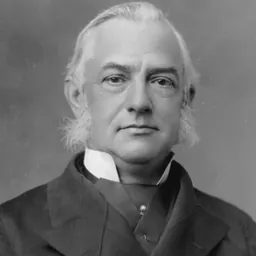
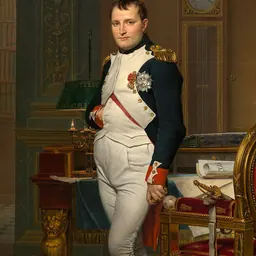

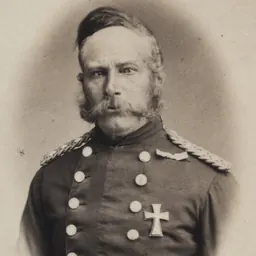
Related people
Same field, nearest in time
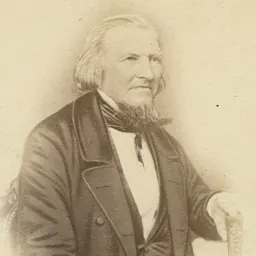

Contemporaries
People whose lives overlapped Wilhelm Müller's




Frequently asked questions
Who was Wilhelm Müller?
German poet (1794-1827)
When was Wilhelm Müller born?
Wilhelm Müller was born on 7 October 1794 in Dessau.
When did Wilhelm Müller die?
Wilhelm Müller died on 30 September 1827 in Dessau.
What was Wilhelm Müller's occupation?
Wilhelm Müller was a poet, translator, composer, writer, military personnel and catholic priest.
What nationality was Wilhelm Müller?
Wilhelm Müller's recorded nationality: Anhalt-Dessau.
Sources & further reading
Cite this page
APA: Biography.guide. (2026). Wilhelm Müller. https://biography.guide/wilhelm-muller-poet/
MLA: "Wilhelm Müller." Biography.guide, https://biography.guide/wilhelm-muller-poet/.
Chicago: "Wilhelm Müller." Biography.guide. https://biography.guide/wilhelm-muller-poet/.
Data last updated: 2026-09-20 · Spot an error? Report a correction.
Page generated 2026-09-27 05:20 UTC