
Wilhelm, German Crown Prince
Prussian Crown Prince
About Wilhelm, German Crown Prince
Lived 1882 – 1951 (aged 69). Wilhelm, German Crown Prince was a German military officer, politician, crown prince and entrepreneur.
Wilhelm, German Crown Prince, Crown Prince of Prussia (Friedrich Wilhelm Victor August Ernst; 6 May 1882 – 20 July 1951), was the eldest child of the last German emperor, Wilhelm II, and his consort Augusta Victoria of Schleswig-Holstein. As Emperor Wilhelm's heir, he was the last German Crown Prince and Crown Prince of Prussia, until the abolition of the monarchy.
Wilhelm became crown prince at the age of six in 1888, when his grandfather Frederick III died and his father became emperor. He was crown prince for 30 years until his father's abdication and the fall of the empire on 9 November 1918. During World War I, he commanded the 5th Army from 1914 to 1916 and was commander of the Army Group German Crown Prince for the remainder of the war. After his return to Germany in 1923, he fought the Weimar Republic and campaigned for the reintroduction of the monarchy in Germany. After his plans to become President had been blocked by his father, Wilhelm supported Adolf Hitler's rise to power, but when Wilhelm realised that Hitler had no intention of restoring the monarchy, their association cooled. Wilhelm became head of the House of Hohenzollern on 4 June 1941 following the death of his father and held the position until his own death on 20 July 1951.
Early life Four generations in the House of Hohenzollern: Emperor Wilhelm I, Crown Prince Frederick, Prince Wilhelm and the newborn Prince Wilhelm in Potsdam in 1882. Wilhelm was born on 6 May 1882 as the eldest son of the then Prince Wilhelm of Prussia, and his first wife, Princess Augusta Victoria of Schleswig-Holstein. He was born in the Marmorpalais of Potsdam in the Province of Brandenburg, where his parents resided until his father acceded to the throne. When he was born, his great-grandfather Wilhelm I was the German Emperor and his grandfather Crown Prince Frederick was the heir apparent, making Wilhelm third in line to the throne.
His birth sparked an argument between his parents and his grandmother Crown Princess Victoria. Before Wilhelm was born, his grandmother had expected to be asked to help find a nurse, but since her son did everything he could to snub her, the future Wilhelm II asked his aunt Princess Helena to help instead. His mother was hurt and his grandmother, Queen Victoria, who was the younger Wilhelm's great-grandmother, was furious.
Prince Wilhelm would have five younger brothers – Prince Eitel Friedrich, Prince Adalbert, Prince August Wilhelm, Prince Oskar and Prince Joachim – and one younger sister: Princess Viktoria Luise. He spent his childhood with his siblings at Marmorpalais and after his father's accession to the throne at the New Palace, also in Potsdam.
In 1888, the Year of the Three Emperors when his great-grandfather and grandfather both died, his father became German Emperor, and six-year-old Wilhelm became the heir apparent to the German and Prussian thrones with the title of crown prince. He spent his school days with his brothers at the Prinzenhaus in Plön in his mother's ancestral Schleswig-Holstein.
Wilhelm was a supporter of association football, then a relatively new sport in the country, donating a cup to the German Football Association in 1908 and thereby initiating the Kronprinzenpokal (now Länderpokal), the oldest cup competition in German football. The German club BFC Preussen was also originally named BFC Friedrich Wilhelm in his honour.
In 1914, the Kaiser ordered the construction of Schloss Cecilienhof in Potsdam for Prince Wilhelm and his family which angered him. The Schloss was loosely inspired by Bidston Court in Birkenhead, England, resembling a Tudor manor. Completed in 1917, it became the main residence for the Crown Prince for a time.
World War I Wilhelm had been active in pushing German expansion, and sought a leading role on the outbreak of war. Despite being only thirty-two and having never commanded a unit larger than a regiment, the German crown prince was named commander of the 5th Army in August 1914, shortly after the outbreak of World War I. However, under the well-established Prussian/German General Staff model then in use, inexperienced nobles who were afforded commands of large army formations were always provided with (and expected to defer to the advice of) experienced chiefs of staff to assist them in their duties. As emperor, Wilhelm's father instructed the crown prince to defer to the advice of his experienced chief of staff Konstantin Schmidt von Knobelsdorf.
In October 1914 Wilhelm gave his first interview to a foreign correspondent and the first statement to the press made by a German noble since the outbreak of war. He denied promoting military solutions to diplomatic problems, and said this in English:
quote|Undoubtedly this is the most stupid, senseless and unnecessary war of modern times. It is a war not wanted by Germany, I can assure you, but it was forced on us, and the fact that we were so effectually prepared to defend ourselves is now being used as an argument to convince the world that we desired conflict.|Crown Prince Wilhelm|Wiegand However, even these sorts of duties were essentially ceremonial with the actual planning of operations involving units under the Crown Prince's formal command being carried out by staff officers. Wilhelm relinquished command of the 5th Army in November of that year, but remained commander of the Army Group German Crown Prince for the rest of the war.
1918–34 After the outbreak of the German Revolution in 1918, both Emperor Wilhelm II and the crown prince signed the document of abdication. On 13 November, the former crown prince fled Germany, crossed into the Netherlands at Oudvroenhoven and was later interned on the island of Wieringen (now part of the mainland), near Den Helder. In the autumn of 1921, Gustav Stresemann visited Wilhelm, and the former crown prince voiced an interest in returning to Germany, even as a private citizen. After Stresemann became chancellor in August 1923, Wilhelm was allowed to return after giving assurances that he would not engage in politics. He chose 9 November 1923 for this, which infuriated his father, who had not been informed about the plans of his son and who felt the historic date to be inappropriate.
In June 1926, a referendum on expropriating the former ruling Princes of Germany without compensation failed and as a consequence, the financial situation of the Hohenzollern family improved considerably. A settlement between the state and the family made Cecilienhof property of the state but granted a right of residence to Wilhelm and his wife Cecilie. This was limited in duration to three generations.
Wilhelm and his wife are buried at Hohenzollern Castle.
Family and children
Wilhelm married his third cousin, Duchess Cecilie of Mecklenburg-Schwerin (20 September 1886 – 6 May 1954) in Berlin on 6 June 1905. After their marriage, the couple lived at the Crown Prince's Palace in Berlin during the winter and at the Marmorpalais in Potsdam, later at Cecilienhof in Potsdam. Cecilie was the daughter of Frederick Francis III, Grand Duke of Mecklenburg-Schwerin (1851–1897) and his wife, Grand Duchess Anastasia Mikhailovna of Russia (1860–1922). Their eldest son, Prince Wilhelm of Prussia, was killed fighting for the German Army in France in 1940. Although the marriage appeared to be perfect and happy to the public, it was deeply strained due to Wilhelm's lifestyle. Throughout his life, he maintained a reputation as a prominent playboy and womanizer, engaging in numerous love affairs with other women. In addition to his high-profile affairs with actresses, singers or high society women, he frequently pursued casual affairs with local women, including during his post-war exile in Wieringen, where he reportedly fathered several illegitimate children. These continuous relationships caused several cracks in the marriage early on, leaving his wife, Duchess Cecilie of Mecklenburg-Schwerin, deeply unhappy.
Their children were: Prince Wilhelm of Prussia (1906–1940), who renounced his succession rights in 1933 in order to marry Dorothea von Salviati, and had issue Louis Ferdinand, Prince of Prussia (1907–1994); married 1938 Grand Duchess Kira Kirillovna of Russia and had issue Prince Hubertus of Prussia (1909–1950); married first to Baroness Maria von Humboldt-Dachroeden, 1941–1943; then in 1943 Princess Magdalena Reuss of Köstritz and had issue Prince Frederick of Prussia (1911–1966); married 1945 Lady Brigid Guinness and had issue: Princess Alexandrine of Prussia, called "Adini" (1915–1980) Princess Cecilie of Prussia (1917–1975); married Clyde Kenneth Harris on 21 June 1949, and had issue
In literature and popular culture Wilhelm's reputation as a military commander was satirised by Neil Munro in his Erchie MacPherson story, "Bad News", first published in the Glasgow Evening News on 8 January 1917.
Honours German honours
Foreign honours
Foreign military appointments During a visit to Russia in January 1903 he was appointed Honorary Colonel of the Little Russian Dragoon Regiment No. 40.
Coat of arms
Don’t just read it —
keep it.
Full-length biographies made to live with: read them, listen on the way to work, watch them tonight.
- E-book
- Audio
- Video
Instant download · yours to keep · every purchase keeps this site free
Important facts
Family & relationships
People in Wilhelm, German Crown Prince's life
Named in this biography and alive at the same time


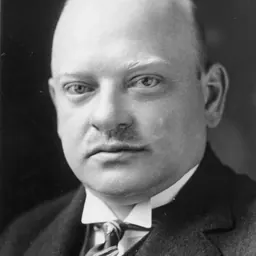


Related people
Same field, nearest in time



Contemporaries
People whose lives overlapped Wilhelm, German Crown Prince's


Frequently asked questions
Who was Wilhelm, German Crown Prince?
Prussian Crown Prince (1882-1951)
When was Wilhelm, German Crown Prince born?
Wilhelm, German Crown Prince was born on 6 May 1882 in Marmorpalais, Potsdam.
When did Wilhelm, German Crown Prince die?
Wilhelm, German Crown Prince died on 20 July 1951 in Hechingen.
What was Wilhelm, German Crown Prince's occupation?
Wilhelm, German Crown Prince was a military officer, politician, crown prince and entrepreneur.
What nationality was Wilhelm, German Crown Prince?
Wilhelm, German Crown Prince was German.
Sources & further reading
· Wikipedia: Wilhelm, German Crown Prince
· DBpedia: Wilhelm, German Crown Prince
Cite this page
APA: Biography.guide. (2026). Wilhelm, German Crown Prince. https://biography.guide/wilhelm-german-crown-prince/
MLA: "Wilhelm, German Crown Prince." Biography.guide, https://biography.guide/wilhelm-german-crown-prince/.
Chicago: "Wilhelm, German Crown Prince." Biography.guide. https://biography.guide/wilhelm-german-crown-prince/.
Data last updated: 2026-09-20 · Spot an error? Report a correction.
Page generated 2026-09-27 05:27 UTC