
About Wilhelm Daser
Lived 1884 – 1968 (aged 83). Wilhelm Daser was a military personnel.
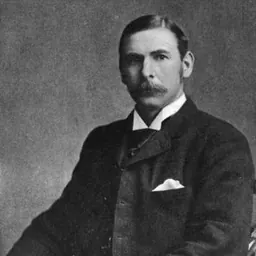
Wilhelm Josef Daser (31 August 1884 in Germersheim – 14 July 1968 in Ingolstadt) was a German military officer who commanded the 70th infantry division of the Wehrmacht during the Battle of the Scheldt and surrendered unconditionally on 6 November 1944 in Middelburg.
Career Promotions Fähnrich (06 Jul 1903); Leutnant (08 Mar 1905); Oberleutnant (28 Oct 1912); Hauptmann (14 Jan 1916); Major (01 Dec 1926); Oberstleutnant (01 Feb 1931); Oberstleutnant a.D. (01 Oct 1933); Oberstleutnant (E) (05 Mar 1935); Oberst (E) (01 Aug 1937); Generalmajor (01 Jul 1942); Generalleutnant (01 Aug 1944)
Postings pre-World War I Entered Army Service (06 Jul 1903);
Fähnrich in the 15th Bavarian Infantry-Regiment (06 Jul 1903-02 Aug 1914);
Detached to the War School in Munich (01 Mar 1904-28 Feb 1905);
Adjutant of District-Command Weilheim (01 Jun 1910-30 Sep 1912).
Postings Weimar Republic/Reichswehr Commander of the III. Battalion of the 18th Bavarian Reserve-Infantry-Regiment and Delegated with the Temporary Leadership of the 18th Bavarian Reserve-Infantry-Regiment (06 Nov 1918-21 Dec 1918);
Transferred back into the 15th Bavarian Infantry-Regiment (21 Dec 1918-18 Apr 1919);
Adjutant of the Volunteer-Detachment Schaaf (GroupHierl) (18 Apr 1919-17 May 1919);
Adjutant of Higher Disbandment Staff 104 (2nd Bavarian Division) (17 May 1919-25 Sep 1919);
Leader of the Mortar-Company of the 48th Reichswehr-Infantry-Regiment (25 Sep 1919-06 Nov 1919);
Leader of the 5th Company of the 48th Reichswehr-Infantry-Regiment (06 Nov 1919-01 Jan 1921);
Leader of the 5th Company of the 20th Infantry-Regiment (01 Jan 1921-01 Oct 1922);
Transferred into the 19th Infantry-Regiment and Adjutant of Infantry-Leader VII (01 Oct 1922-18 Apr 1925);
Transferred to the Mortar-Company of the 19th Infantry-Regiment (18 Apr 1925-01 Jan 1926);
Transferred to the Staff of the II. Battalion of the 20th Infantry-Regiment (01 Jan 1926-01 Feb 1928);
Commander of the Training-Battalion of the 21st Infantry-Regiment (01 Feb 1928-01 Feb 1930);
Commander of the II. Battalion of the 20th Infantry-Regiment (01 Feb 1930-31 Mar 1931). he received a temporary posting at the Replacement Army, where he would periodically reappear. Führer-Reserve OKH (25 Sep 1941-27 Dec 1941) Commander of the 251st Infantry-Replacement-Regiment (27 Dec 1941-15 Jun 1942) Führer-Reserve OKH (15 Jun 1942-20 Jun 1942) ) he received a number of appointments as (Ober)feldkommandeur in the German military administration in occupied France during World War II. Detached to the Staff of the Military Commander France for use as a Field Commandant (20 Jun 1942-01 Aug 1942) Field Commandant 580, Amiens (01 Aug 1942-02 Dec 1942) Field Commandant 894, Marseille (02 Dec 1942-15 Dec 1942) Senior Field Commandant 670, Lille (15 Dec 1942-10 Jun 1943) Field Commandant 454 (10 Jun 1943-22 Dec 1943) he was charged with the defense of Zuid-Beveland and Walcheren after the collapse of the German front in Northern France at the end of August 1944 and the retreat through Belgium in early September 1944. In the course of Operation Infatuate the Inundation of Walcheren took place, and Daser became isolated in Middelburg in the center of Walcheren at the head of 2,000 soldiers. After the Allies established bridgeheads at Vlissingen and across the Sloedam causeway, and cleared the Westkapelle and Domburg Atlantic Wall gun emplacements, it became clear to him that the battle was lost, and he had his willingness to surrender on terms broadcast on the Canadian frequencies. Because a large number of Dutch civilians had fled to Middelburg due to the military inundation of the island, Daser agreed to an unconditional surrender of the city to avoid bloodshed on 6 November 1944.
Prisoner of war Daser was in captivity from 07 Nov 1944 to 19 Dec 1949. At first, he was taken to the special prisoner of war detention center for general officers at Trent Park. In May 1945, that center became overcrowded, and it is suggested he was transferred to the POW Camp Clinton in the U.S. He nevertheless never went to the US, but was transferred to France where he was in Lager 19 at Foucarville near Cherbourg from 4 May 1945 to 7 September 1945. Fifteen further internment camps in Germany and France followed. He stayed at the Zuffenhausen POW camp in Germany for the period 9 March to 26 April 1946 and was released only a few years later (19 Dec 1949). By that time, he was 65 years of age. He spent the final years of his life as a private citizen.
Awards 1914 Eisernes Kreuz, 1. Klasse 1914 Eisernes Kreuz, 2. Klasse Kgl. Bayer. Prinz-Regent-Luitpold Jubiläums-Medaille Kgl. Bayer. Militär-Verdienstorden IV. Klasse mit Schwertern Ritter Kreuz I. Klasse des Kgl. Württembg. Friedrichs-Ordens mit Schwertern Kgl. Bayer. Militär-Verdienstorden IV. Klasse mit Schwertern und mit der Krone Ehrenkreuz für Frontkämpfer Wehrmacht-Dienstauszeichnung IV. bis I. Klasse Spange zum EK I Spange zum EK II
Notes and references
Don’t just read it —
keep it.
Full-length biographies made to live with: read them, listen on the way to work, watch them tonight.
- E-book
- Audio
- Video
Instant download · yours to keep · every purchase keeps this site free
Important facts
Related people
Same field, nearest in time





Contemporaries
People whose lives overlapped Wilhelm Daser's

Frequently asked questions
Who was Wilhelm Daser?
German military officer during World War II
When was Wilhelm Daser born?
Wilhelm Daser was born on 31 August 1884 in Germersheim.
When did Wilhelm Daser die?
Wilhelm Daser died on 14 July 1968 in Ingolstadt.
What was Wilhelm Daser's occupation?
Wilhelm Daser was a military personnel.
Sources & further reading
Cite this page
APA: Biography.guide. (2026). Wilhelm Daser. https://biography.guide/wilhelm-daser/
MLA: "Wilhelm Daser." Biography.guide, https://biography.guide/wilhelm-daser/.
Chicago: "Wilhelm Daser." Biography.guide. https://biography.guide/wilhelm-daser/.
Data last updated: 2026-09-20 · Spot an error? Report a correction.
Page generated 2026-09-27 05:10 UTC