
Wilfrid Kent Hughes
Australian politician
About Wilfrid Kent Hughes
Lived 1895 – 1970 (aged 75). Wilfrid Kent Hughes was an Australian politician, athletics competitor and military officer.
Sir Wilfrid Selwyn "Bill" Kent Hughes (12 June 1895 – 31 July 1970) was an Australian army officer and politician who had a long career in both state and federal politics, most notably as a minister in the Menzies government. He also had a longstanding involvement with the Olympic movement, as both an athlete and organiser.
Kent Hughes was born in Melbourne to an upper middle-class family. He won a Rhodes Scholarship in 1914, but postponed his studies to join the Australian Imperial Force. He entered Christ Church, Oxford, in 1919, and combined his studies with his sporting career, representing Australia in hurdling at the 1920 Summer Olympics. Kent Hughes returned home in 1923 and began working at his father's publishing company. He was elected to the Victorian Legislative Assembly in 1927, representing the Nationalist Party. He joined the new United Australia Party in 1931, and the following year was made a minister in the government of Stanley Argyle. He served as the party's deputy leader from 1935 to 1939.
When the Second World War broke out, Kent Hughes re-enlisted in the army and took part in the Malayan campaign. He was captured by the Japanese at the Battle of Singapore, and spent the next three years as a prisoner-of-war in Singapore, Taiwan, and Manchuria. Kent Hughes retained his seat in parliament during that time, and joined the new Liberal Party upon his return to Australia in 1945. He became Deputy Premier of Victoria in 1948, but resigned the following year to contest the House of Representatives at the 1949 federal election. Robert Menzies added Kent Hughes to his cabinet in 1951, as Minister for the Interior and Minister for Works and Housing.
Kent Hughes was Chairman of the Organising Committee for the 1956 Melbourne Olympics. His chairmanship was widely judged a success, and he left a lasting legacy by engineering the sale of television rights, an Olympic first. Despite his high profile, Menzies removed Kent Hughes from his ministry in early 1956. He spent the rest of his career as a backbencher, dying in office in 1970. Kent Hughes was famous for his stubbornness and abrasive personality, particularly the insults he directed at opponents. He was sympathetic towards fascism early in his career (generally overlooked due to his later status as a war hero), and later became an ardent anti-communist.
Early life and family The second child of seven of English orthopaedic surgeon and publisher Wilfred Kent Hughes and his wife Clementina (née Rankin), through whom he was the first cousin of the academic and lawyer Philip Seaforth James. Kent Hughes was born in East Melbourne and educated at Trinity Grammar and Melbourne Grammar. He was accepted at Christ Church, Oxford as a Rhodes Scholar in 1914 (although he did not commence study at Oxford until 1919 due to his war service). and uncle Frederic Hughes was a Brigadier-General, mayor of St Kilda and Aide-de-camp to the Governor-General, the Earl of Dudley. Aunt Eva Hughes OBE founded the Australian Women's National League, the then largest body of organised women in the country, and Gwendoline Kent Lloyd, who Wilfrid referred to as "the family Communist",
First World War Kent Hughes enlisted in the Australian Imperial Force as a private on 8 August 1914. He served in the 3rd Light Horse Brigade at Gallipoli, where he was wounded, and appointed Deputy Adjutant and Quartermaster General of the Australian Mounted Division. One month later, he was selected by Australia to compete at the 1920 Summer Olympics in Antwerp, Belgium. He finished fourth in his heat of the 110-metre hurdles and failed to progress but won his 400-metre heat before finishing fifth in the semi-final. Kent Hughes did not return to England empty handed, as he later admitted to souveniring an official Olympic flag from the Olympic stadium.
In 1921, Kent Hughes was part of the Oxford Ski Team visit to Europe, during which he became the first Australian to ski competitively overseas.
Following his graduation from Oxford, he married Edith Kerr, a wealthy American heiress to a thread manufacturing empire, on 3 February 1923 in Montclair, New Jersey. He subsequently returned to Melbourne to work as a director in his father's publishing company Ramsay Publishing Pty Ltd while sizing up a career in politics.
When the Nationalists came into power in Victoria in December 1928, Kent Hughes was appointed Cabinet Secretary and Government Whip but resigned his positions in July 1929, ostensibly in protest over a government subsidy to a freezing works company, but more likely in reaction to the ongoing bone headedness of his fellow parliamentarians. Kent Hughes drafted legislation that became the Unemployment Relief (Administration) Bill which, when enacted in January 1933, forced the unemployed to work for the dole, and denied any form of financial assistance to women. Kent Hughes's bill has been described as the harshest piece of legislation in Australia directed towards the unemployed during the Depression.
While he was attacking the Cricket Board of Control, Kent Hughes was simultaneously organising the Australian tour of the Duke of Gloucester and, for his efforts, was appointed a Member of the Royal Victorian Order in 1934.
"Why I Have Become a Fascist"
During the late 1920s and 1930s, Kent Hughes developed a strong sympathy for fascism, encouraged in part by his uncle Ernest, who visited Italy in 1926, and published an enthusiastic report on Mussolini's Italy in a local newspaper on his return.
Kent Hughes was unique among prominent Australians in publicly identifying as a fascist, although he never joined a fascist organisation or acted overtly in a way that could be described as fascist, and there is no evidence to suggest he was an anti-semite. Kent Hughes was very popular with the ex-service community, appearing in the ANZAC Day march in April each year on horseback, in his First World War uniform, and campaigning for improved benefits for ex-servicemen, particularly ex-prisoners of war. Duly elected, he was appointed Minister for the Interior and Minister for Works and Housing (Minister for Works from June 1952) under Menzies. Kent Hughes complained that he was left in charge of only trifling issues.
1956 Olympics Following the successful bid by Melbourne to host the 1956 Summer Olympics, problems had beset the organising of the Games to the extent that International Olympic Committee President Avery Brundage threatened to award the Games to another city. In response, the Melbourne Organising Committee approached Kent Hughes in 1951 to be its chairman, believing his public stature, Olympian background and experience in administration would be great assets.
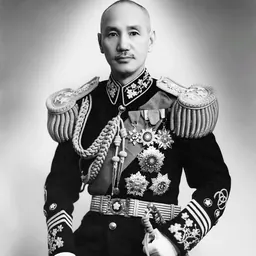
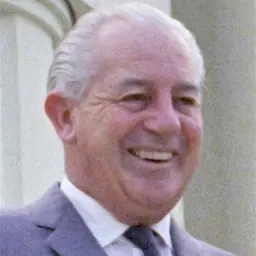
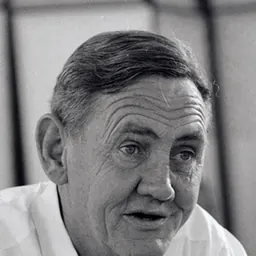
Kent Hughes took to the Chairman role with gusto, although his relationship with Brundage was never cordial. During a visit to Melbourne in 1955 to inspect the preparations, Brundage was less than impressed with the progress achieved under Kent Hughes's chairmanship and condemned Kent Hughes's apparent lack of concern at the looming deadline for the Games. Not one to take criticism lightly, Kent Hughes was quoted as saying that he had enough to worry about without having "Chicago blow-ins come out here and blow their tops over nothing in particular and annoy everyone in general." and Kent Hughes's significance to the modern Olympic movement is such that it has been suggested that an oil portrait of Kent Hughes be commissioned and placed in the Olympic Museum in Lausanne. in which he took an independent line, favouring a policy even more anti-Communist than that of Menzies, higher defence spending, and the reintroduction of conscription. and met several times with its president, Chiang Kai-shek. Following the unexpected death of Prime Minister Harold Holt in 1967, Kent Hughes was one of a number of Liberal politicians who expressed support for Country Party leader (and acting Prime Minister) John McEwen remaining Prime Minister ahead of any of his fellow Liberal Party parliamentarians. As it turned out, Liberal Party member John Gorton was elected as the new Liberal parliamentary leader and Prime Minister.
Kent Hughes remained very popular in his electorate, and served in Parliament until his death in 1970. Survived by his wife and three daughters, he was accorded a State Funeral. The Times obituary highlighted his war service and Olympian status, referring to him as "one of the more colourful Australian parliamentarians".
Don’t just read it —
keep it.
Full-length biographies made to live with: read them, listen on the way to work, watch them tonight.
- E-book
- Audio
- Video
Instant download · yours to keep · every purchase keeps this site free
Important facts
People in Wilfrid Kent Hughes's life
Named in this biography and alive at the same time




Related people
Same field, nearest in time






Contemporaries
People whose lives overlapped Wilfrid Kent Hughes's

Frequently asked questions
Who was Wilfrid Kent Hughes?
Australian politician (1895–1970)
When was Wilfrid Kent Hughes born?
Wilfrid Kent Hughes was born on 12 June 1895 in East Melbourne.
When did Wilfrid Kent Hughes die?
Wilfrid Kent Hughes died on 31 July 1970 in Kew.
What was Wilfrid Kent Hughes's occupation?
Wilfrid Kent Hughes was a politician, athletics competitor and military officer.
What nationality was Wilfrid Kent Hughes?
Wilfrid Kent Hughes was Australian.
Sources & further reading
· Wikipedia: Wilfrid Kent Hughes
· DBpedia: Wilfrid Kent Hughes
Cite this page
APA: Biography.guide. (2026). Wilfrid Kent Hughes. https://biography.guide/wilfrid-kent-hughes/
MLA: "Wilfrid Kent Hughes." Biography.guide, https://biography.guide/wilfrid-kent-hughes/.
Chicago: "Wilfrid Kent Hughes." Biography.guide. https://biography.guide/wilfrid-kent-hughes/.
Data last updated: 2026-09-26 · Spot an error? Report a correction.
Page generated 2026-09-27 05:13 UTC