
About Wilfred Fienburgh
Lived 1919 – 1958 (aged 38). Wilfred Fienburgh was a British politician and novelist.
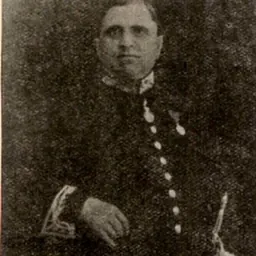
Wilfred Fienburgh MBE (4 November 1919 – 3 February 1958) was a British Labour Party politician.
Early life Though born in Ilford, he was brought up in the Belle Vue area of Bradford, Yorkshire, where he attended primary and secondary school. Between 1935 and 1939 he was a manual labourer and an office boy, but was also unemployed for a while.
Military service In 1940, early in the Second World War, he enlisted in the British Army in the Rifle Brigade and was commissioned as an officer the same year. He was made a Member of the Order of the British Empire (MBE) in 1945 and was demobilised as Major, serving on the General Staff, in 1946. Edward Pearce, writing in The Guardian, described him as a "delightful and amusing Labour politician". Peter Hitchens in his book The Abolition of Britain described him as "one of the most talented men on the party's Left". Fienburgh was allegedly involved in an altercation with Jennie Lee during the Labour Party conference in 1952, according to Lee's biographer Patricia Hollis.
Wilfred Fienburgh represented Islington North until his death in a car crash in 1958, aged 38. At the resulting by-election the seat was retained for Labour by Gerry Reynolds with an increased majority.
Writer Fienburgh wrote several books, including non-fiction works such as Steel is Power – The Case for Nationalisation and 25 Momentous Years: A 25th Anniversary in the History of the Daily Herald. However, his best remembered book is a posthumously published novel, No Love For Johnnie, a cynical portrayal of British politics in the late 1950s that was later adapted as a film starring Peter Finch. The novel seems to give vent to Fienburgh's deep-seated concerns about corruption in politics. According to Michael Rush, in The Selection of Parliamentary Candidates (1969), Fienburgh claimed in 1955 that "the Labour Party is the only party in Britain in which you can buy a seat". One near-contemporary critic, Alan Lovell, writing in the New Left Review in 1961, considered No Love For Johnnie a "bad novel" and wrote that "Fienburgh seems to have had no conception of what idealism means". Derek Jewell, writing in 1967, called it "a bitter study of political life". Geoffrey Wheatcroft in The Observer in 2001 suggested that No Love for Johnnie was the archetype of a genre that he named "the Labour Party novel of disillusionment". In the New Statesman in 2000 Paul Routledge idescribed the novel as being highly prescient about New Labour.
Personal life In 1940 Fienburgh married Joan Valerie Hudson McDowell, daughter of Captain Thomas McDowell of Belfast. The couple had two sons and two daughters. Joan remarried in 1975, and died in 1991.
Don’t just read it —
keep it.
Full-length biographies made to live with: read them, listen on the way to work, watch them tonight.
- E-book
- Audio
- Video
Instant download · yours to keep · every purchase keeps this site free
Important facts
People in Wilfred Fienburgh's life
Named in this biography and alive at the same time





Related people
Same field, nearest in time





Contemporaries
People whose lives overlapped Wilfred Fienburgh's


Frequently asked questions
Who was Wilfred Fienburgh?
British politician (1919-1958)
When was Wilfred Fienburgh born?
Wilfred Fienburgh was born on 4 November 1919 in Ilford.
When did Wilfred Fienburgh die?
Wilfred Fienburgh died on 3 February 1958 in London.
What was Wilfred Fienburgh's occupation?
Wilfred Fienburgh was a politician and novelist.
What nationality was Wilfred Fienburgh?
Wilfred Fienburgh was British.
Sources & further reading
· Wikipedia: Wilfred Fienburgh
Cite this page
APA: Biography.guide. (2026). Wilfred Fienburgh. https://biography.guide/wilfred-fienburgh/
MLA: "Wilfred Fienburgh." Biography.guide, https://biography.guide/wilfred-fienburgh/.
Chicago: "Wilfred Fienburgh." Biography.guide. https://biography.guide/wilfred-fienburgh/.
Data last updated: 2026-09-25 · Spot an error? Report a correction.
Page generated 2026-09-27 05:11 UTC