
About Whitey Witt
Lived 1895 – 1988 (aged 92). Whitey Witt was an American baseball player.
Lawton Walter "Whitey" Witt (born Ladislaw Waldemar Wittkowski; September 28, 1895 – July 14, 1988) was an American professional baseball outfielder. He played all or part of ten seasons in Major League Baseball (MLB) with the Philadelphia Athletics, New York Yankees, and Brooklyn Robins. In his career, he hit .287 (1,195-for-4,171) with 18 home runs and 300 runs batted in. He was the last surviving person to have played on the 1923 New York Yankees championship team, having taken the first at bat at the then-new Yankee Stadium for the Yankees. The Yankees were locked in a tight pennant race with the Browns that year. The person who threw the bottle from the stands was never identified, though the Yankees and Witt came back to win the series (thanks to a key hit by Witt) defeating the Browns by one game for the pennant.
After retiring from baseball following the 1928 season, Witt and his wife returned home to a farmhouse in Alloway Township, New Jersey. He opened a bar, known as Whitey's Irish Bar, in Salem in 1928 and operated it until 1945. After selling the bar and investing the monetary proceeds, he would spend most of his retirement golfing and serve as a member of the American Legion post in Woodstown. He died at his home on July 14, 1988 after suffering a heart attack at his home in Alloway Township at the age of 92.
Early years Witt played local baseball in St. Johnsbury, Vermont during the 1915 season after graduating from the Goddard Seminary, having come to Barre, Vermont, from Winchendon, Massachusetts in 1912. At Goddard he was a four-sport athlete, playing baseball, basketball, ice hockey and football. He served as captain of the baseball team twice and once as the captain of the football team. He also served on the track team.
Witt would begin to attend Bowdoin College as a freshman in September 1915. He left the college to pursue his major league career after October 6.
Professional career
September 1922 bottle throwing incident In mid-September 1922, the Yankees were locked in a pennant race with the St. Louis Browns. On September 16, the two teams began a series at Sportsman's Park, in which 30,000 fans came into the stadium, considered the largest crowd in the history of St. Louis baseball. Much of the crowd were excited during the game and when George Sisler appeared, they got louder. During the game, Bob Shawkey out-pitched Urban Shocker and any time Sisler battered the crowds got loud.
Response to the thrown bottle was immediate. The owner of the Browns, Phil Ball, offered apologies for the actions of the fans against the Yankees outfield, noting that they wanted to win games the right way and not through poor sportsmanship. Ball offered a $500 reward for the capture and conviction of the bottle-thrower, backed up by $50 more from the Pennant Rooters' Club. Early rumors was that the bottle thrower was a 20 or 21-year old male. Joseph Walsh, the deputy United States District Court clerk, announced on September 18 that a 10-year old child had thrown the bottle and disappeared into the crowd.
Witt made his return on the field on the September 18 game between the two teams. With the Browns leading by two runs, Joe Dugan hit a double and Pipp scored him after a ball hit Dixie Davis's glove and an error by Marty McManus. Wally Schang followed with a single past Davis and outracing him to first base. Huggins had Elmer Smith pinch hit for Aaron Ward to which Browns manager Lee Fohl took Davis out for Hub Pruett. In response to the pitcing change, Huggins pulled Smith in favor of Mike McNally, who attempted to sacrifice bunt to advance the runners. However, the bunt attempt failed with Hank Severeid throwing to third base and throwing out Pipp. The Browns followed by walking Everett Scott to load the bases. Fohl replaced Pruett with Urban Shocker, who got Bullet Joe Bush to hit a grounder, cutting Schang down at the plate. Witt, with a large bandage on his head from the bottle incident, hit a ball to center field, scoring McNally and Scott, resulting in a two-run lead for the Yankees. The Yankees would win the game in the next inning after Bush retired Sisler, Williams and Baby Doll Jacobson.
Don’t just read it —
keep it.
Full-length biographies made to live with: read them, listen on the way to work, watch them tonight.
- E-book
- Audio
- Video
Instant download · yours to keep · every purchase keeps this site free
Important facts
People in Whitey Witt's life
Named in this biography and alive at the same time



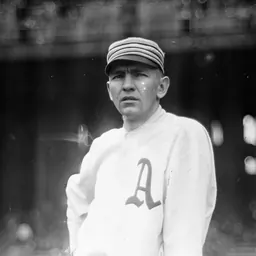
Related people
Same field, nearest in time
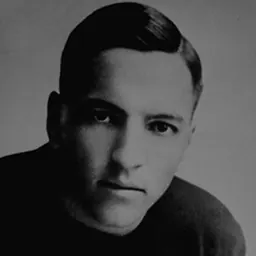
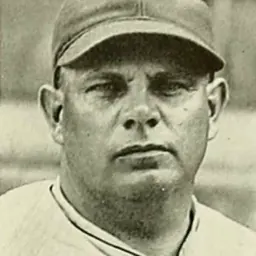

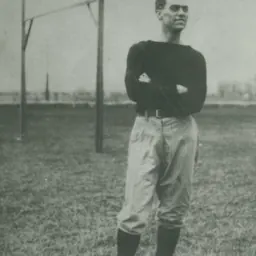

Contemporaries
People whose lives overlapped Whitey Witt's

Frequently asked questions
Who was Whitey Witt?
American baseball player (1895-1988)
When was Whitey Witt born?
Whitey Witt was born on 28 September 1895 in Orange.
When did Whitey Witt die?
Whitey Witt died on 14 July 1988 in Salem County.
What was Whitey Witt's occupation?
Whitey Witt was a baseball player.
What nationality was Whitey Witt?
Whitey Witt was American.
Sources & further reading
Cite this page
APA: Biography.guide. (2026). Whitey Witt. https://biography.guide/whitey-witt/
MLA: "Whitey Witt." Biography.guide, https://biography.guide/whitey-witt/.
Chicago: "Whitey Witt." Biography.guide. https://biography.guide/whitey-witt/.
Data last updated: 2026-09-20 · Spot an error? Report a correction.
Page generated 2026-09-27 04:58 UTC