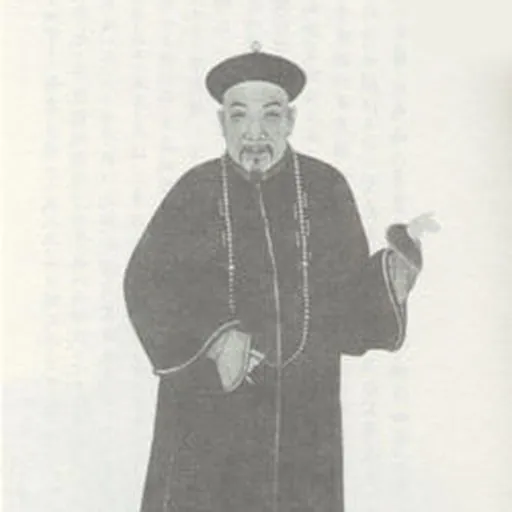
About Weng Fang-kang
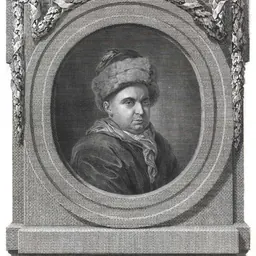
Lived 1733 – 1818 (aged 84–85). Weng Fang-kang was a Chinese calligrapher, poet, epigrapher and writer.
Weng Fanggang (1733 - 1818) was a Chinese calligrapher, literary critic, philosopher, and poet during the Qing dynasty.
A native of Beijing's Daxing District, Weng came to the attention of the Qianlong Emperor who was impressed with Weng's translation of the Peach Blossom Spring (桃花源 Tao Hua Yuan) by Tao Yuanming into the Manchu language. He was employed at court as a junior compiler, and later rose to become a member of the Grand Secretariat. Despite holding government posts in Shandong, Jiangxi and Jiangsu, Weng spend most of his professional life in Beijing, so as to be close to the literati of his day. He was opposed to Wang Yangming's philosophy that man had an innate goodness, as he felt this detracted from the achievements of historical saints and Confucian worthies. His views on poetry led him to create the Jili pai or "School of Musculature", a system of poetic criticism that focused on scholarly contemplation of universal patterns and structures.
Weng was also noted for his calligraphy, which was modelled after that of Ouyang Xun and Yu Shinan. He specialised in lishu script, and was regarded as having the same degree of skill as Liu Yong.
Don’t just read it —
keep it.
Full-length biographies made to live with: read them, listen on the way to work, watch them tonight.
- E-book
- Audio
- Video
Instant download · yours to keep · every purchase keeps this site free
Important facts
more
Sanhanhuazhai, Zhengsan, Tongzhitang, Songzhushuangqingshuwu, Xiaoshiting, Songyangzhenjizhizhai, Peixiashanfang, Sumizhai, Shijingxuan, Xiaopenglaige, Shimolou, Sanwanjuanzhai, Jinguantang, Baosushi, Youlinyanzhai, Youyanzhai, Xiaozhidanianzhishi, Yizhai, Liangxiangzhai, Tanxi, Liangxiangguyuan, Fuchuzhai, Weng FanggangPeople in Weng Fang-kang's life
Named in this biography and alive at the same time

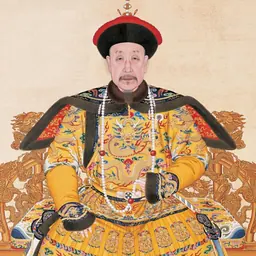
Related people
Same field, nearest in time

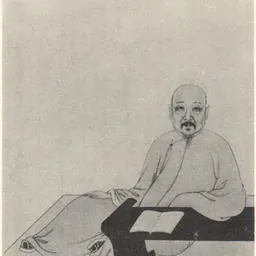


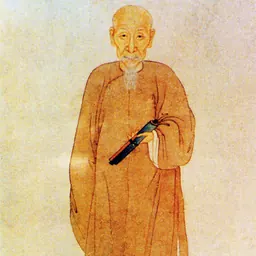
Contemporaries
People whose lives overlapped Weng Fang-kang's




Frequently asked questions
Who was Weng Fang-kang?
Qing dynasty person CBDB = 33848 (1733–1818)
When was Weng Fang-kang born?
Weng Fang-kang was born in 1733.
When did Weng Fang-kang die?
Weng Fang-kang died in 1818.
What was Weng Fang-kang's occupation?
Weng Fang-kang was a calligrapher, poet, epigrapher and writer.
What nationality was Weng Fang-kang?
Weng Fang-kang was Chinese.
Sources & further reading
Cite this page
APA: Biography.guide. (2026). Weng Fang-kang. https://biography.guide/weng-fang-kang/
MLA: "Weng Fang-kang." Biography.guide, https://biography.guide/weng-fang-kang/.
Chicago: "Weng Fang-kang." Biography.guide. https://biography.guide/weng-fang-kang/.
Data last updated: 2026-09-20 · Spot an error? Report a correction.
Portrait: Wikimedia Commons · author & licence
Page generated 2026-09-27 04:57 UTC