
About Crown Prince Sado
Lived 1735 – 1762 (aged 27). Crown Prince Sado was a Korean calligrapher.
Crown Prince Sado (; 13 February 1735 – 12 July 1762), personal name Yi Seon, also known by his temple name King Jangjo, was the second son of King Yeongjo, the 21st monarch of Joseon, and the biological father of King Jeongjo. Due to the prior death of his elder half-brother, Crown Prince Hyojang, he was the probable future monarch. However, at the age of 27, he died, most likely of dehydration and possibly of starvation, after being confined in a rice chest in the heat of summer at the order of his father. Following the establishment of the Korean Empire, he was honored as Emperor Ui.
Biography Onset of mental disorder
Lady Hyegyŏng, Sado's wife, wrote a memoir in 1805 detailing their life together. She records that the prince suffered a serious illness in 1745, during which he often lost consciousness. Although he recovered, the tense relationship between Sado and his father, King Yeongjo, led to him experiencing extreme anxiety whenever in his father's presence. When Sado came of age at 15, his father appointed him regent, giving him the power to make decisions on administrative matters. During his regency, the disputes between the Soron and Noron factions became stronger, much to Yeongjo's disappointment. Lady Hyegyŏng describes the king as perpetually dissatisfied with whichever course of action Sado chose. Moreover, Yeongjo often chastised his son in front of a large crowd, either of palace ladies or eunuchs. As a result, Sado formed a strong bond with his elder sister Princess Hwahyeop, who was similarly disliked by their father. When she passed away in 1752, Sado was reported to have grieved intensely.
In 1752, Sado read a Taoist text called Okchugyeong . Whilst reading, he hallucinated that he saw the Thunder God. Court records also reveal that Yeongjo once scolded Sado by declaring that "the thunder on the previous night was a warning that [Sado] should develop moral virtue". Henceforth, Sado was terrified of thunder and refused to touch any object engraved with the word.
Also around 1752, Sado favored a palace maid named Im Yu-hye (posthumously Concubine Suk), and she later became pregnant. Fearing his father's reprimand, Sado forced her to take abortive medicine, but nevertheless, the child was born safely. Arrangements for the delivery and housing were made by Lady Hyegyŏng.
Severe decline In 1757, Sado's adoptive grandmother (Queen Inwon) and adoptive mother (Queen Jeongseong) died within less than two months of each other. He had been close to both of them and their deaths led to a marked deterioration in his mental health and relationship with his father. As a way of dealing with his frustration and rage, Sado would beat his eunuchs. In the same month as the burial of Queen Jeongseong, Sado walked into his chambers holding the severed head of a eunuch whom he had killed, forcing the palace ladies and his wife to view it. After this, he frequently killed servants to release his emotions, as well as assaulting and raping countless maids. Lady Hyegyŏng reported Sado's issues to his biological mother, Concubine Yeong, but begged her not to speak to anyone about the matter, as she feared for her safety if Sado discovered she had told anyone.
In late 1757, Sado took as his concubine a palace maid named Park Bing-ae (posthumously Concubine Gyeong); she had previously served the late Queen Inwon, so the relationship was considered taboo. When Yeongjo found out, he berated his son and Sado eventually jumped down a well in an attempt to drown himself, but a guard pulled him out. Lady Hyegyŏng had, by this point, managed to have the maid hidden in the home of Sado's younger sister, Princess Hwawan.
By 1758, a previous phobia of Sado's regarding clothing (vestiphobia) became intensely problematic. He used such large amounts of clothing that his stipend as crown prince could not cover the expenses. Lady Hyegyŏng reported being forced to borrow money from her father, as well as having to spend much of her own time making new clothes. Sado's obsessions lengthened the time he required to dress, and the process was sometimes deadly.
On his birthday in 1760, Sado suffered an intense outburst of anger, cursing Concubine Yeong, as well as his children. After this, he demanded that Princess Hwawan use her influence over their father to allow Sado to visit the hot springs at Onyang. He also threatened to "slash Princess Hwawan with [his] sword", an event witnessed by Lady Hyegyŏng and Concubine Yeong.
In 1761, Park Bing-ae, who had given birth to two sons by this time, was beaten by Sado in a fit of rage while he was getting dressed. He left her on the floor, where she died of her injuries. Lady Hyegyŏng prepared her body for the funeral rites, but, on his return, Sado reportedly said nothing about the death.
Although Lady Hyegyŏng claimed he didn't treat her in the same way, she noted he would beat any woman who resisted his sexual overtures and that he "tore their flesh" until they gave in. However, there is one documented incident in which Sado was physically violent toward his wife, throwing a go board at her face and making it necessary for Lady Hyegyŏng to avoid court events to hide the bruises.
Execution In the summer of 1762, rumors that Sado had attempted to enter the main palace to kill King Yeongjo spread around the court. Fearing for the safety of her grandchildren, Concubine Yeong begged Yeongjo to deal with Sado. By court rules, the body of a royal could not be defiled and, under the then-common practice of communal punishment, Sado's wife and children (including the royal family's only direct heir) could also face death if he were executed as a criminal. As a solution, Yeongjo ordered Sado to climb into a wooden rice chest (roughly 1.3 meters square / 4 feet square) on a hot July day in 1762. According to Lady Hyegyŏng's memoirs, Sado begged for his life before getting into the chest, and later attempted to get out.
Lady Hyegyŏng, along with her children, was taken to her father's house on the same day. After two days, King Yeongjo had the chest containing Sado tied with rope, covered with grass, and moved to the main palace. Sado responded from inside the chest until the night of the seventh day; the chest was opened and he was pronounced dead on the eighth day. Yeongjo then restored him to the position of crown prince and gave him the posthumous name Sado .
Conspiracy theories During the 19th century, there were rumors that Crown Prince Sado had not been mentally unstable, but had been framed by political rivals; however, these rumors are contradicted by his wife in the Memoirs of Lady Hyegyŏng. According to historians, there is no evidence that Sado was the victim of a plot.
Burial Crown Prince Sado was initially buried on Baebong Mountain in Yangju (present-day Dongdaemun District, Seoul). His body was moved by King Jeongjo to its current location near Suwon in 1789, and the tomb was named Hyeonryungwon . Five years later, the Hwaseong Fortress was built by Jeongjo in the area, specifically to memorialize and honor his biological father. Lady Hyegyŏng was buried with her husband after her death in 1816.
Sado received a temple name and was posthumously elevated to the status of king and then emperor during Gojong's reign. His tomb was upgraded accordingly and renamed Yungneung .
Taboo and reinstatement Sado was reinstated as crown prince fifteen days after his death, but King Yeongjo banned any mention of his name for the rest of his reign. Because of this decision, Sado's son, Jeongjo, ascended the throne following the passing of Yeongjo as the heir of Sado's long-deceased elder half-brother, Crown Prince Hyojang. Upon becoming king, however, one of Jeongjo's first statements was to declare, "I am the son of Prince Sado." Jeongjo continued to show great filial devotion to his biological father, and enhanced his posthumous name, which is the origin of the latter's alternative title, Crown Prince Jangheon .
Worship In Korean shamanism, Sado is worshiped as a wangshin .
Family Father: King Yeongjo (; 31 October 1694 – 22 April 1776) Grandfather: King Sukjong (; 7 October 1661 – 12 July 1720) Biological grandmother: Concubine Suk , of the Haeju Choe clan (; 17 December 1670 – 9 April 1718) Adoptive grandmother: Queen Inwon , of the Gyeongju Kim clan (; 3 November 1687 – 13 May 1757) Biological mother: Concubine Yeong , of the Jeonui Yi clan (; 5 August 1696 – 12 August 1764) Grandfather: Yi Yu-beon Grandmother: Lady, of the Hanyang Kim clan Adoptive mother: Queen Jeongseong , of the Daegu Seo clan (; 2 January 1693 – 23 March 1757) Stepmother: Queen Jeongsun , of the Gyeongju Kim clan (; 2 December 1745 – 11 February 1805) Consort(s) and their respective issue Queen Heongyeong , of the Pungsan Hong clan (; 6 August 1735 – 1 January 1816) Yi Jeong , Crown Prince Uiso (; 27 September 1750 – 17 April 1752), first son Yi San , King Jeongjo (; 28 October 1752 – 18 August 1800), second son Princess Cheongyeon (; 31 August 1754 – 7 July 1821), first daughter Princess Cheongseon (; 1756 – 17 August 1802), second daughter Concubine Suk , of the Buan Im clan , personal name Yu-hye Yi In , Prince Euneon (; 22 February 1754 – 9 July 1801), third son Yi Jin , Prince Eunsin (; 21 February 1755 – 13 May 1771), fourth son Concubine Gyeong , of the Park clan (?–1761), personal name Bing-ae Princess Cheonggeun (; 1758 – 10 October 1835), third daughter Yi Chan , Prince Eunjeon (; 4 October 1759 – 27 September 1777), fifth son Palace Lady , of the Yi clan , personal name Jeong-ryeol
Ancestry
In popular culture Portrayed by Hwang Hae-nam in the 1956 film The Tragic Prince. Portrayed by Do Kum-bo in the 1963 film A Wife Turned to Stone. Portrayed by Choi Soo-jong in the 1988 MBC TV series 500 Years of Joseon: The Memoirs of Lady Hyegyeong. Portrayed by Jeong Bo-seok in the 1988–1989 KBS2 TV series Oh, Heaven. Portrayed by Im Ho in the 1998 MBC TV series King of the Wind. Portrayed by Lee Chang-hoon in the 2007 MBC TV series Lee San, Wind of the Palace. Portrayed by Jo Han-jun in the 2007 CGV TV series Eight Days, Assassination Attempts against King Jeongjo. Portrayed by Oh Man-seok in the 2011 SBS TV series Warrior Baek Dong-soo. Portrayed in a fictitious manner in the 2012–2014 webcomic Vampire of the East by Joohee Jo and Seunghee Han. Portrayed by Lee Je-hoon in the 2014 SBS TV series Secret Door. Portrayed by Yoo Ah-in in the 2015 film The Throne. Portrayed by Do Sang-woo in the 2021 MBC TV series The Red Sleeve. Portrayed in a fictious manner in the 2022 novel The Red Palace by June Hur.
Don’t just read it —
keep it.
Full-length biographies made to live with: read them, listen on the way to work, watch them tonight.
- E-book
- Audio
- Video
Instant download · yours to keep · every purchase keeps this site free
Important facts
Family & relationships
People in Crown Prince Sado's life
Named in this biography and alive at the same time



Related people
Same field, nearest in time
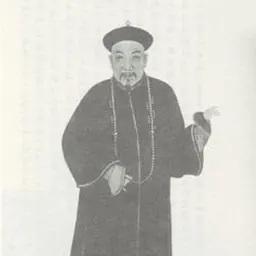

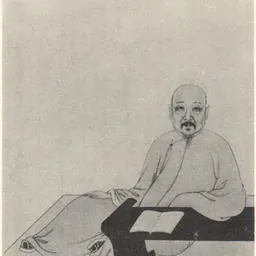

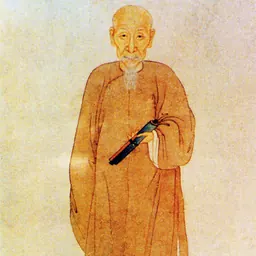
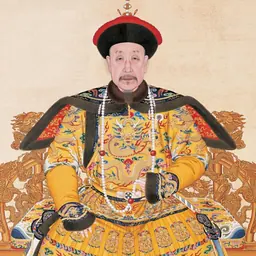
Contemporaries
People whose lives overlapped Crown Prince Sado's




Frequently asked questions
Who was Crown Prince Sado?
Korean prince
When was Crown Prince Sado born?
Crown Prince Sado was born on 21 January 1735 in Changgyeonggung.
When did Crown Prince Sado die?
Crown Prince Sado died on 12 July 1762 in Changgyeonggung.
What was Crown Prince Sado's occupation?
Crown Prince Sado was a calligrapher.
What nationality was Crown Prince Sado?
Crown Prince Sado was Korean.
Sources & further reading
· Wikipedia: Crown Prince Sado
Cite this page
APA: Biography.guide. (2026). Crown Prince Sado. https://biography.guide/crown-prince-sado/
MLA: "Crown Prince Sado." Biography.guide, https://biography.guide/crown-prince-sado/.
Chicago: "Crown Prince Sado." Biography.guide. https://biography.guide/crown-prince-sado/.
Data last updated: 2026-09-20 · Spot an error? Report a correction.
Page generated 2026-09-27 05:28 UTC