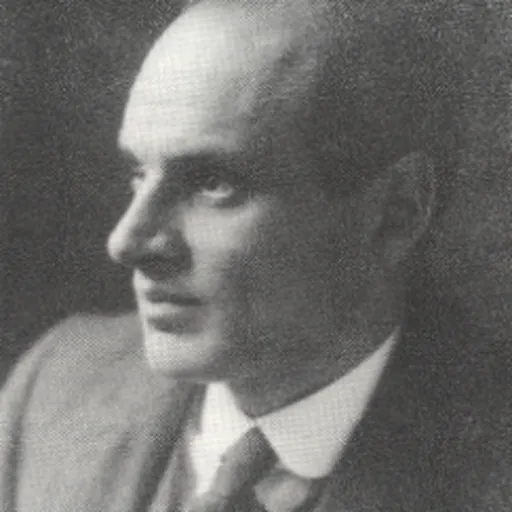
About Wellesley Tudor Pole
Lived 1884 – 1968 (aged 84). Wellesley Tudor Pole was a British military personnel, theologian and writer.
Wellesley Tudor Pole OBE (23 April 1884 – 13 September 1968) was an English Baháʼí, psychic, spiritualist and activist for vegetarianism.
Pole authored many pamphlets and books and was a lifelong pursuer of religious and mystical questions and visions, being particularly involved with the Baháʼí Faith and a quest for the Holy Grail of Arthurian Legend. He founded the Silent Minute campaign which was followed internationally. Late in life he resuscitated the Trust running the Chalice Well.
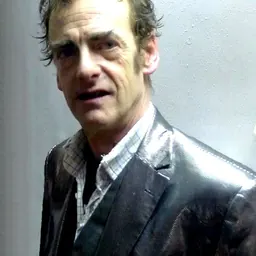
The musician and actor Edward Tudor-Pole is a grandson.
Biography Born and raised Wellesley Tudor Pole was raised with stories of elders and understandings of French kin Edmund de la Pole, 3rd Duke of Suffolk and English and Welsh kin Owen Tudor. Pole was born 23 April 1884, in Weston-super-Mare, He was educated at Blundell's School, where he later wrote of being unprepared for going to boarding school and had a child's visions and awareness of stories of reports of psychics. Over 40 "high status" individuals were at this meeting to discuss the cup and Pole's and assistants experiences. These 40 can be thought of as a spectrum of interests in this milieu inside and outside mainstream Christianity when they met - some of them leaders in that discourse of ideas
Pole began to consult with people about the cup but also to entertain the visionary experiences of others that appeared to link with his own and led to Pole's quest. In mid-December Pole consulted with Annie Besant (president of British Theosophy Society the next year,) as well as the British Museum and South Kensington Museum who connected him with Helena Humphreys who from then was much involved with the quest. She felt it was a cup from the Last Supper and handed toward Peter which was kept by a woman attendant and then felt the cup had migrated to a European Church in between until finally at the ruins of Glastonbury. Goodchild's Paris vision indicated that his 'visitor' "came to you at very great danger to myself to tell you…",
Wilberforce accepted the cup as the Holy Grail.
Though the cup was soon understood by most to be too modern and Wilberforce's enthusiasm for it caused complications with his superiors, Wilberforce continued his associations and investigations of religious connectivity. She attended the Wilberforce meeting and then to the oratory in late September 1907, Buckton went on to buy the Chalice Well in 1913 On his return and amidst crowds now visiting the oratory, Pole later also mentions reading the report of orientalist E. G. Browne meeting Baháʼu'lláh.
Third attempt ends at ʻAbdu'l-Bahá In 1908 Pole left for a third attempt on the quest amidst the visions and prophecies and experiences he had had. This time he was going to start from the southern Mideast to see museums for comparable evidence about the cup but started with wanting to meet ʻAbdu'l-Bahá who by then was in Alexandria, Egypt.
Pole later reported an anecdote from the trip. On the way to meeting ʻAbdu'l-Bahá he had an encounter with a sheikh who thoughtfully observed a problem with imperialism: "A traveller walking through the streets of a town came across a house with its windows broken and its doors askew. Inside the house everything was in turmoil. He went into the house, and finding the owner, said to him, 'Your house requires putting in order, it is full of disorder. May I call my servants and put things straight for you?' The owner accepted the offer, so the traveller then called in his attendants and set the house in order. Having done this, he built a hut in the garden outside the house, and turning to the owner, said 'This is a very nice house; now it has been spring-cleaned it is in beautiful order, and I and my servants will inhabit it; you can go into the hut and live there, but I will take possession of your house and administer it in my own way and for my own ends." which he then shared in 1914. and when Pole adjusted his plans, a bit confused but willing to obey, ʻAbdu'l-Bahá asked him to bring long a package of money for a Persian student in Paris with eye trouble - without address or any specific contact information and Pole feeling the money could have been wired more efficiently than delivered by him. But Pole indeed did find him by chance after several searches failed.
In 1910 resumption of access to the cup started and Pole and the ladies assisting took the cup to the island of Iona to revive the place as a spiritual centre. In June Pole met Robert Felkin who later also joined the Baháʼí Faith as well.
In June Pole could not make meetings of the Vegetarian Society and in August he spoke in Herefordshire on healing the body by spiritual means. About the same time Pole met Neville Meakin who was a senior member of a group spun off from the fragmentation of the Hermetic Order of the Golden Dawn who hoped Pole would become a successor heir. Writer Patrick Benham related Pole learning of ʻAbdu'l-Bahá only in 1910 through Archdeacon Wilberforce. and also had exchanged telegrams with ʻAbdu'l-Bahá while attending a theosophy summer meeting in August. Pole lived with his parents and sister at the residence. Pole presented for ʻAbdu'l-Bahá at the Universal Races Congress in 1911. along with a variety of efforts across time. Early Baháʼí Lady Blomfield's daughters and a couple of others assisted in the comfort of the guests during the visit as well as taking notes and managing appointments.
Pole's biographer Gerry Fenge interprets Pole's prophecy of the "great teacher" as ʻAbdu'l-Bahá though not a woman or with a visible 7 pointed star on his forehead.
In October he had thought out wider ideas of conspiracies that might be in league against him finding Christian manuscripts, the original quest. At least some of this guidance was related circa 1908 in a widely disseminated Some Answered Questions. The first do not need interpretation but depend on having, according to ʻAbdu'l-Bahá in the words of Necati Alkan, "a heart rid of all attachment and there must not exist idle thoughts in the mind." The second can be decoded for the truth, and the third only reflect "the strife and contention" of the experiencer. According to ʻAbdu'l-Bahá, the work of decoding the second type is like, in Necati Alkan's words, "if you add any color to a white cloth, it will accept it; but if you add blue to a yellow cloth, it will become green and the truth is distorted. In order to have the true colour, one needs to remove the added colour." Indeed, sometimes ʻAbdu'l-Bahá notes such experiences can mean the opposite of what they seem. and Ricky Bradshaw, who experienced a deep near death experience, when asked if such an experience was key to gaining enlightenment, said: "Having a near-death experience does not make you enlightened. It is an introduction, perhaps more a hindrance than a help!"
ʻAbdu'l-Bahá returned again visiting the Poles now married, after coming from America, in early January, 1913. He also spoke at more theosophical meetings in Britain. - Mrs. Jane Whyte - also called a theosophist, and available in earlier 1915.
Whatever reprieve he felt was going on in worlds of consciousness, in later 1914 Pole begins to speak of visions of 'Conflict in the Air' but felt it went badly and that he should take a vow of silence and was depressed.
Volunteer In September he started as an officer's candidate in the Royal Marines and was assigned as a 2nd lieutenant in the 3rd company of the Cheshire Regiment. In October Pole also experienced opposition from a business partner in his visibility in reporting his psychic experiences. His friend did get killed as was his aide. Several lines of actions had brought the matter to the fore by mid-February. Word of the rescue of ʻAbdu'l-Bahá spread. The experience has been novelized.
Pole was promoted to Major in November.
Back in the UK New business and interests… and the quest Pole was returned to England in June. After returning home he lost or gave up the family business with some relief the Tablets of the Divine Plan which were about promulgating the religion around the world and in several regions of the United States of America and not the United Kingdom, which was a much more important power in the world at the time, such as those of England, Scotland, Wales, and Ireland as it was then. Pole sent a letter to the convention. That Fall interest in Pole's publishing books about psychic experiences in war was waxing. But the venture of an international journalism and commerce collapsed. That summer Pole's connections led to him being involved in the process of the independence of Egypt. The initial question was whether to directly seek electing the Universal House of Justice which the newly appointed head of the religion, Shoghi Effendi, decided firmly could not happen until there was more work establishing local and national spiritual assemblies first. but this belief also raised questions as Pole soon believed as well: that enemies in the "beyond" could force a discarnate to reincarnate, In 1925 he visited Bath. He set up an import/export business but seemed to succeed more connecting with people in all kinds of walks of life and trying to resolve problems, but was not an economic success. In December Pole spoke to Spiritualist group in London, and to another group the next year in March.
New era of projects and the Silent Minute
In time Pole tried to advance three centres of spiritual importance across Britain and Ireland: Glastonbury (associated with Arthurian legend and early Christianity in Britain) Scottish Iona and an as yet uncertain island of Ireland.
In 1928 Pole undertook going to pilgrimage sites for St. Michael in Europe following interest of Rudolf Steiner connecting Glastonbury and Tintagel. In 1930 Pole was in a business meeting. Some of his Russian contacts themselves developed problems with the Russian clergy from 1930. and again in 1935, and in his own words in 1936 with the struggles of what life was like in Russia instead of the propaganda. That year he also founded the company Wellesley Holdings 1936 for waste conversion which was and sold in the 1940s.
Rejuvenated connection with Baháʼís
In 1938 Pole was included in efforts of incorporation of National Spiritual Assembly of Great Britain, the national institution managing the community, and co-wrote The spiritual front, an issue each one of us must face fairly and squarely with Waldron Smithers. Pole began a consideration of what became called the Silent Minute from 1917 Some of that movement went on to become the Lamplighter movement. None of which was commented on by Baháʼís. and he toured giving talks too.
Pole had been present at the centenary celebrations of Baháʼís in London in 1944 though still stressing his view that it was a movement vs a separate religion following reconnection that Shoghi Effendi advised in 1943 though Pole's connection with two early regional leaders in Zionist growth of Palestine did not bother Shoghi Effendi. while Pole was visible in the fall with the restyled wording of the "Big Ben Minute" for the Silent Minute, and with an offer to seek to repair the Liberty Bell which did not get received well. In 1945 Pole maintained contact with the Baháʼís and who appeared to accept his position of "assist the Cause as a non-member"
Pole was on the when it berthed in America in April 1947 but did not disembark. The paperwork listed him as a first-class passenger and as an industrialist born in Somerset. Also, a passport was not listed. He set up an alternative health care services and pharmacy business in 1948. And second in a statement to the UN in 1947: "…this Faith is now increasingly demonstrating its right to be recognized, not as one more religious system superimposed on the conflicting creeds which for so many generations have divided mankind and darkened its fortunes, but rather as a restatement of the eternal verities underlying all the religions of the past, as a unifying force instilling into the adherents of these religions a new spiritual vigor, infusing them with a new hope and love for mankind, firing them with a new vision of the fundamental unity of their religious doctrines, and unfolding to their eyes the glorious destiny that awaits the human race." Pole further comments that the pictures of Baháʼu'lláh "give a very poor impression of the stature and dignity of this great being" and felt much the same about ʻAbdu'l-Bahá though he carried a picture of him on his person every day. and in diplomatic circles in 1953. In 1954 his son David began to be mentioned, as well as Pole's support for the stances of President Eisenhower, and the work of Pole in the Big Ben Council and its observance the next years. By around then and probably earlier period Pole joined the Fairy Investigation Society, a semi-secret occult group devoted to collecting evidence and information about the existence of fairies, as well as to organize documented instances of fairy sightings. One of Pole's books, The Silent Road was published in 1960.
Meanwhile mention of his beliefs in prayer and war was called to mind in 1962 as well as the comment of a Nazi official. and still trying to make sure Winston Churchill was being remembered for the Silent Minute. In 1966 work relative to the Chalice Well was more in the news. Pole and comments about Pole were in the news in 1968, and 1969. In these last years of his life Pole came to a metaphorical understanding of the cup: "Half a century ago, in the Women's Quarter of Glastonbury, form the depths of the Well of St. Bride, a Cup was brought out into the light of day. This vessel is the symbol of the heavenly and eternal Grail, the Chalice of Christ, the Promise of the Future." after suffering from cancer and often in pain at his home in Hurstpierpoint, Sussex. Pole was cremated and his ashes dispersed at a garden of the Chalice Well in Glastonbury. and in general the theme of Irish Celticism and Pole's work in it has been explored as a de-colonialization theme out of a Catholic/Protestant dynamic which then was influenced by Indian philosophy and Theosophy and origin stories of the Irish peoples though the specific ideas of these varied from Pole's own. Yet about 1940 another Baháʼí, Terah Cowart Smith, was questioned by rabbi Stephen Samuel Wise who felt he knew ʻAbdu'l-Bahá well, asking why in the early days Baháʼís didn't give up such affiliations and that changed. She reviewed the history of religious institutions - "Each dispensation requires a new agency to establish its separate and independent character…. So we wouldn't expect that in the New Baháʼí Era any of the former agencies could serve this major function.… For God's purpose for the time in which we live is the establishment of unity of all the people of the world.… In Baháʼí devotional services the Scriptures of all the World Religions have a part." and have collected Baháʼí mentions of his online.
In succeeding decades Pole's views and writings have appeared and reappeared in newspapers, the social media of the day. In 2009 a series of articles of his work were republished in Canada through his foundation. More materials and references have appeared on the internet.
Among Pole's greater achievements late in life was the rescue of the Chalice Well in Glastonbury near a decade before his passing and through he never lived in the town. Some of them are:
Don’t just read it —
keep it.
Full-length biographies made to live with: read them, listen on the way to work, watch them tonight.
- E-book
- Audio
- Video
Instant download · yours to keep · every purchase keeps this site free
Important facts
People in Wellesley Tudor Pole's life
Named in this biography and alive at the same time



Related people
Same field, nearest in time





Contemporaries
People whose lives overlapped Wellesley Tudor Pole's
Frequently asked questions
Who was Wellesley Tudor Pole?
British theologian (1884-1968)
When was Wellesley Tudor Pole born?
Wellesley Tudor Pole was born on 23 April 1884.
When did Wellesley Tudor Pole die?
Wellesley Tudor Pole died on 13 September 1968.
What was Wellesley Tudor Pole's occupation?
Wellesley Tudor Pole was a military personnel, theologian and writer.
What nationality was Wellesley Tudor Pole?
Wellesley Tudor Pole was British.
Sources & further reading
· Wikipedia: Wellesley Tudor Pole
· DBpedia: Wellesley Tudor Pole
Cite this page
APA: Biography.guide. (2026). Wellesley Tudor Pole. https://biography.guide/wellesley-tudor-pole/
MLA: "Wellesley Tudor Pole." Biography.guide, https://biography.guide/wellesley-tudor-pole/.
Chicago: "Wellesley Tudor Pole." Biography.guide. https://biography.guide/wellesley-tudor-pole/.
Data last updated: 2026-09-20 · Spot an error? Report a correction.
Portrait: Wikimedia Commons · author & licence
Page generated 2026-09-27 04:57 UTC