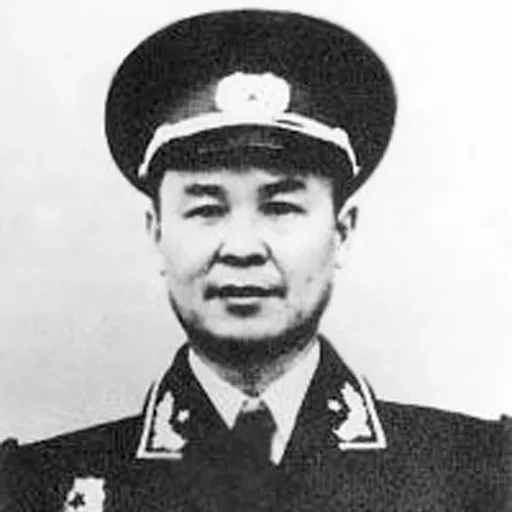
About Wei Guoqing
Lived 1913 – 1989 (aged 75). Wei Guoqing was a Chinese politician.
Wei Guoqing (; Zhuang: Veiz Gozcing; 2 September 1913 – 14 June 1989) was a Chinese government official, military officer and political commissar of Zhuang ethnicity. He served as the Chairman of Guangxi from 1958 to 1975 and on the Chinese Communist Party's Politburo (1973–1982) and as Director of the People's Liberation Army's General Political Department (1977–1982). Wei was one of the few members of the 9th, 10th, 11th and 12th Central Committees (1969–1987) and the 10th through 12th politburos not purged during the Cultural Revolution or Deng Xiaoping's backlash. He was also a Vice Chair of the National People's Congress Standing Committee (1975–1989) and of the Chinese People's Political Consultative Conference (1964–1983).
Biography
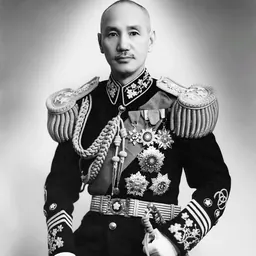
Wei was born in Donglan, Guangxi, to a poor Zhuang minority family. He joined the Chinese Red Army at the age of 16 (1929) and the CCP in 1931. He rose to the rank of battalion commander in the Seventh Army under Deng Xiaoping and was a regimental commander on the Long March. After the Long March he served in the 344th Brigade, and then marched south under Huang Kecheng's 5th Column in January 1940. By 1944, he commanded the 4th Division of the New Fourth Army, and later three columns (the 2nd, 10th and 12th) of the North Jiangsu Army in the Huai-Hai Campaign. In 1948, Wei held off the Nationalist 2nd Army Corps of Qiu Qingquan and 100 tanks of the 5th Corps under the command of Jiang Weiguo (Chiang Wei-kuo, Chiang Kai-shek's son) in a decisive delaying action in the Huai-Hai Campaign. In 1949, Wei was deputy political commissar of General Ye Fei's Tenth Army Group of the Third Field Army.
Vietnam Wei was deeply involved in China's relations with North Vietnam from 1950. In April of that year, Liu Shaoqi sent him to Vietnam as head of the Chinese Military Advisory Group, to advise Ho Chi Minh on fighting the French.
In October 1953, Wei reportedly personally gave Ho Chi Minh a copy of the French Navarre plan.
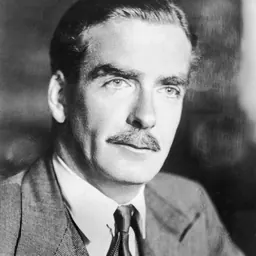
In June 1954, Wei attended the 1954 Geneva Conference on Indochina with Premier Zhou Enlai, USSR Foreign Minister Vyacheslav Molotov, Vietnamese representative Phạm Văn Đồng, US State Department official Bedell Smith and UK Deputy Under Secretary for Foreign Affairs for Administration Anthony Eden. Wei was specifically instructed to discuss military matters with the Vietnamese delegation when Molotov, Smith and Eden were not present.
When formal military ranks were introduced in 1955, Wei Guoqing was made a general, and in 1956 became an Alternate Member of the Central Committee at the Eighth National Party Congress.
Guangxi After returning to China, Wei moved to Nanning, Guangxi, where he was the senior party (1961-Cultural Revolution) and government (1955-Cultural Revolution) official in Guangxi Autonomous Region for an unusually long period. It was from Guangxi and Yunnan that Chinese troops entered Vietnam in 1965–1970.
In his role as the senior-most official in Guangxi, Wei hosted the January 1958 Nanning Conference, attended by Chairman Mao Zedong and most of the very top leadership. While Wei was a junior among the heavyweights, he was present at one of the decisive Great Leap Forward discussions where targets were approved.
General Wei was named 1st Political Commissar of the Guangxi Military District (MD) in January 1964, a post he held until October 1975. He added the leadership of the CCP committee in February 1971.
During the Cultural Revolution, Wei managed to keep control of Guangxi. Throughout the Cultural Revolution in Guangxi, there was a "correct line" represented by Wei Guoqing from beginning to end. The Central Committee of the CPC was fundamentally unable to carry out investigations about Cultural Revolution in Guangxi. Both the Guangxi Provincial Party Committee, the Provincial Military District and the Revolutionary Committees were basically "Pro-Wei" or conservative factions during the whole revolution.
Since 1958, he served as the Chairman of the Guangxi Zhuang Autonomous Region Government, and Secretary of the Secretariat, Second Secretary, and First Secretary of the CPC Guangxi Regional Committee. In January 1958, Wei Guoqing, the highest-ranking official in Guangxi, organized the Nanning Conference, which was attended by Mao Zedong and other top leaders. This conference determined the progress of the Great Leap Forward and approved several inflated targets. These actions lay the groundwork for the Cultural Revolution.
In the early stages of the Cultural Revolution in 1966, Wei Guoqing experienced a period where his powers were weakened and marginalized. In August 1966, the Central Committee decided to remove Wei Guoqing from the First Secretary position and transfer him to serve as the Second Secretary of the Central South Bureau.
In early April 1968, Wei Guoqing, along with the commanders of the Guangzhou and Guangxi Military Regions and others, internally designated the Guangxi 4·22 group as a "Counter-Revolutionary Organization". At the end of April, Wei started suppressing 4·22 and instructed, "They will not shed tears until they see the coffin; regarding the attitude toward counter-revolutionary riots, first is opposition, and second is fearlessness… take the initiative to launch a fierce offensive against class enemies (不见棺材不掉泪,对待反革命暴动的态度,一是反对,二是不怕……主动对阶级敌人发起猛烈的进攻。)". Wei even asked in retort: "Why can't people who have eaten human beings continue to serve as cadres? (为什么吃过人的人不能继续当干部?)". The Center Committee permitted the various massacres involved in Wei Guoqing's use of military force to suppress the "4·22" mass organization.
In 1976, Wei Guoqing served as the First Secretary of the Guangdong Provincial Party Committee and Chairman of the Guangdong Provincial Revolutionary Committee. On November 27, 1977, the Guangxi Provincial Party Committee, led by Wei Guoqing, released through education. Shen Shengquan(沈升权), who had taken the lead in killing and cannibalism. In August 1982, the Liberation Army Daily, which was under Wei's direct jurisdiction, published a polemic viewed as an attack on Deng Xiaoping.
In 1983, the investigation into Cultural Revolution legacy issues identified Wei Guoqing committed errors.
In 1988, Wei Guoqing named as Vice Chairman of the Standing Committee of the 7th National People's Congress (为第七届全国人大常委会副委员长). "Wei Guoqing continued to hold office in the central government until his death in 1989." Wei Guoqing's self-criticism of his leadership in Guangxi was that Wei acknowledged mistakes in leadership direction rather than directly taking responsibility. He resigned from his posts in 1985 and died in Beijing in June 1989.
Don’t just read it —
keep it.
Full-length biographies made to live with: read them, listen on the way to work, watch them tonight.
- E-book
- Audio
- Video
Instant download · yours to keep · every purchase keeps this site free
Important facts
People in Wei Guoqing's life
Named in this biography and alive at the same time


Related people
Same field, nearest in time





Contemporaries
People whose lives overlapped Wei Guoqing's


Frequently asked questions
Who was Wei Guoqing?
Chinese general and government official (1913–1989)
When was Wei Guoqing born?
Wei Guoqing was born on 2 September 1913 in Donglan County.
When did Wei Guoqing die?
Wei Guoqing died on 14 June 1989 in Beijing.
What was Wei Guoqing's occupation?
Wei Guoqing was a politician.
What nationality was Wei Guoqing?
Wei Guoqing was Chinese.
Sources & further reading
Cite this page
APA: Biography.guide. (2026). Wei Guoqing. https://biography.guide/wei-guoqing/
MLA: "Wei Guoqing." Biography.guide, https://biography.guide/wei-guoqing/.
Chicago: "Wei Guoqing." Biography.guide. https://biography.guide/wei-guoqing/.
Data last updated: 2026-09-24 · Spot an error? Report a correction.
Portrait: Wikimedia Commons · author & licence
Page generated 2026-09-27 05:09 UTC