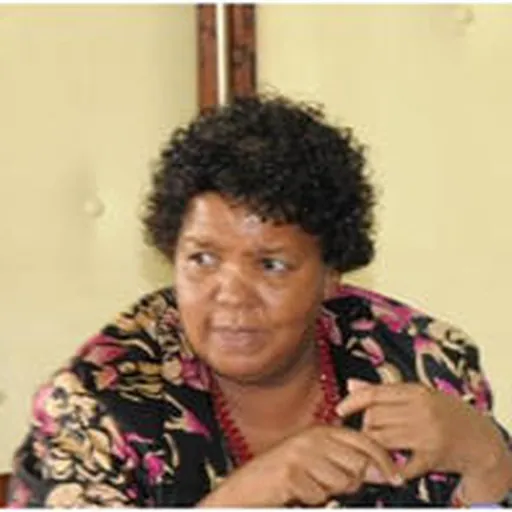
About Wanjiku Kabira
Born 1945. Wanjiku Kabira is a Kenyan professor and writer.
Prof. Wanjikū Mūkabi Kabira (EBS), (CBS). (born 15 November 1948) is an associate professor of literature at the University of Nairobi, Kenya. She has specialized in the fields of Oral literature, African-American literature and Caribbean literature. She has been actively involved in women affairs and in gender issues. Wanjiku has served in various capacities notably as Vice-Chair in the Kenya Constitutional Review Process (2000–2005), Chair Person Women Political Alliance (2002–2011), Director, Collaborative Center for Gender and Development (1995–2009) and Chair, Department of Literature, University of Nairobi. Kabira is the founding Director of the African Women Studies Centre (AWSC) at the University of Nairobi in June 2011. In 2014, she was awarded the Elder of the Order of the Burning Spear (EBS). She has also been granted the higher award of the Order of the Burning Spear (CBS). In 2015, the Ministry of Devolution and Planning honoured her with the Legacy Builders Recognition Award. Kabira was nominated for the 2024 East Africa Women of Excellence Awards. She was also honoured in the United States for her scholarship and influence in women's rights and gender equality.
Early life and education Kabira was born in 1948 in present day Lari Constituency. She went to school at Gìthìrioni Primary School and later to Loreto High School, Limuru and Loreto Convent Msongari for her advanced certificate ("A" levels). She studied Literature, History and Scripture and received the "Best Performing Student" prize in Literature.
Kabira earned her Bachelor of Arts Degree in literature from the University of Nairobi in 1978. She then pursued advanced studies abroad, obtaining a Master of Arts Degree in literature from the University of Wisconsin in the United States in 1980.
Career Kabira is an associate professor of literature at the University of Nairobi, Kenya. She is a Kenyan academic and gender specialist. Her scholarly work focuses on oral literature, African-American Literature, and Caribbean Literature. Kabira has held several leadership roles, including Vice-Chair in the Kenya Constitutional Review Process (2000–2005), Chairperson of the Women Political Alliance(2002–2011), Director of the Collaborative Center for Gender and Development (1995–2009), and Chair in the Department of Literature at the University of Nairobi. She is the founding Director of the African Women Studies Centre at the University of Nairobi, established in June 2011. Kabira ensures that the economic realities of Kenyan women, especially those in rural and informal sectors, influence National policy.
Work Kabìra is an established author of young adult books. She has published on literature, women, and gender issues. One of her most notable books is A Letter to Mariama Ba (2005), which was a response to So Long a Letter, a book written by Mariama Bâ. Her work with women saw the founding of the African Women Studies Centre at the University of Nairobi in June, 2011. She became the Director of the Centre in 2014 and still serves in that capacity. In her work with the Constitution of Kenya Review Commission she wrote a book, A Time for Harvest (2012), which traces women's journey in the struggle for a new constitution in the past 20 years, beginning from 1992 to 2012. She reminds the 16 women Members of Parliament(MP) among 290 MPs that their mere presence in Parliament will be fruitless if it not properly utilized. Other books she has published are Our Mother's Footsteps (1997), Reclaiming My Dreams: Stories of Wanjira wa Rukena (2010) and The Beaten Track and other personal stories: A collection of short stories (2013).
Other published credits of Kabìra include Agikuyu (Heritage Library of African Peoples East Africa). Kabìra also has written many books about women and gender issues, among them: Our Secret Lives; They Have Destroyed the Temple; Celebrating Women's Resistance; The Oral Artist.
Awards and honours Kabira has received notable national honours from the Kenyan government recognizing her contributions to academia, women rights, and public service.
In 2014, she was awarded the Elder of the Order of the Burning Spear (EBS), a state commendation for distinguished service. She has also been granted the higher class of the Order of the Burning Spear (CBS). In 2015, the Ministry of Devolution and Planning honoured her with the Legacy Builders Recognition Award.
Kabira was nominated for the 2024 East Africa Women of Excellence Awards under the women of impact category- a regional recognition of her contributions to gender equity and women's empowerment. She was honoured in the United States for her scholarship and influence in women's rights and gender equality.
Don’t just read it —
keep it.
Full-length biographies made to live with: read them, listen on the way to work, watch them tonight.
- E-book
- Audio
- Video
Instant download · yours to keep · every purchase keeps this site free
Important facts
People in Wanjiku Kabira's life
Named in this biography and alive at the same time

Related people
Same field, nearest in time




Contemporaries
People whose lives overlapped Wanjiku Kabira's


Frequently asked questions
Who is Wanjiku Kabira?
Literature professor
When was Wanjiku Kabira born?
Wanjiku Kabira was born in 1945 in Kiambu.
What is Wanjiku Kabira's occupation?
Wanjiku Kabira is a professor and writer.
What nationality is Wanjiku Kabira?
Wanjiku Kabira is Kenyan.
Sources & further reading
Cite this page
APA: Biography.guide. (2026). Wanjiku Kabira. https://biography.guide/wanjiku-kabira/
MLA: "Wanjiku Kabira." Biography.guide, https://biography.guide/wanjiku-kabira/.
Chicago: "Wanjiku Kabira." Biography.guide. https://biography.guide/wanjiku-kabira/.
Data last updated: 2026-09-23 · Spot an error? Report a correction.
Portrait: Wikimedia Commons · author & licence
Page generated 2026-09-27 05:06 UTC