
About Wang Shitai
Lived 1910 – 2008 (aged 97). Wang Shitai was a Chinese politician.
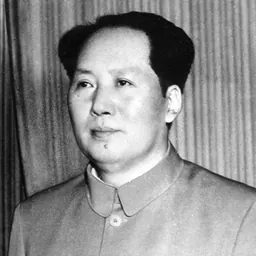
Wang Shitai (March 17, 1910 – March 14, 2008) was a People's Republic of China politician. He was born in Luochuan County, Shaanxi Province. He was governor of Gansu, chairman of the Gansu People's Congress, and twice CPPCC Committee chairman of Gansu. He was a delegate to the 1st National People's Congress (1954–1959), 5th National People's Congress (1978–1983) and 6th National People's Congress (1983–1988).
Biography Born to a peasant family in Shaanxi Province, Wang Shitai joined the Communist Youth League in 1927 and participated in the failed Weihua Uprising against Nationalist forces in 1928.
During the Second Sino-Japanese War, Wang commanded the 8th Route Army's 4th Regiment (1937–1942) in Ningxia, pioneering mobile guerrilla tactics in arid regions. His desert warfare strategies were later cited in Mao Zedong's 1942 treatise On Protracted War as a model of adaptive logistics. Promoted to deputy commander of the Northwest Field Army in 1947, he directed critical supply lines during the Yulin Campaign in 1949, which secured Communist dominance in Shaanxi.
Following the establishment of the People's Republic in 1949, Wang served consecutively as Governor of Gansu Province (1950–1954), Vice Minister of Railways where he supervised the Lanzhou-Xinjiang railway construction (1954–1960), and Director of the State Planning Commission's Northwest Bureau (1960–1966) and a member of the Northwest Military and Political Committee. His administrative career was interrupted in 1967 when he was purged during the Cultural Revolution for alleged associations with Peng Dehuai's faction, leading to six years of political imprisonment.
Rehabilitated in 1978, Wang advised on regional development policies through the Central Advisory Commission until retiring in 1987. His memoir Northwest Dust (1985) provides technical accounts of wartime logistics but avoids commentary on intra-Party conflicts. Historians note this cautious narrative reflects Wang's precarious position between Maoist and Peng Dehuai-aligned factions.
Wang married educator and women's rights advocate Wei Nai in 1940, with their archived correspondence at the Yan'an Revolutionary Museum documenting the personal costs of military-political service. He died in Beijing in 1997, with obituaries emphasizing his “endurance through revolutionary storms.”
Don’t just read it —
keep it.
Full-length biographies made to live with: read them, listen on the way to work, watch them tonight.
- E-book
- Audio
- Video
Instant download · yours to keep · every purchase keeps this site free
Important facts
People in Wang Shitai's life
Named in this biography and alive at the same time

Related people
Same field, nearest in time





Contemporaries
People whose lives overlapped Wang Shitai's





Frequently asked questions
Who was Wang Shitai?
Chinese politician
When was Wang Shitai born?
Wang Shitai was born on 17 March 1910.
When did Wang Shitai die?
Wang Shitai died on 14 March 2008.
What was Wang Shitai's occupation?
Wang Shitai was a politician.
What nationality was Wang Shitai?
Wang Shitai was Chinese.
Sources & further reading
Cite this page
APA: Biography.guide. (2026). Wang Shitai. https://biography.guide/wang-shitai/
MLA: "Wang Shitai." Biography.guide, https://biography.guide/wang-shitai/.
Chicago: "Wang Shitai." Biography.guide. https://biography.guide/wang-shitai/.
Data last updated: 2026-09-20 · Spot an error? Report a correction.
Page generated 2026-09-27 05:23 UTC