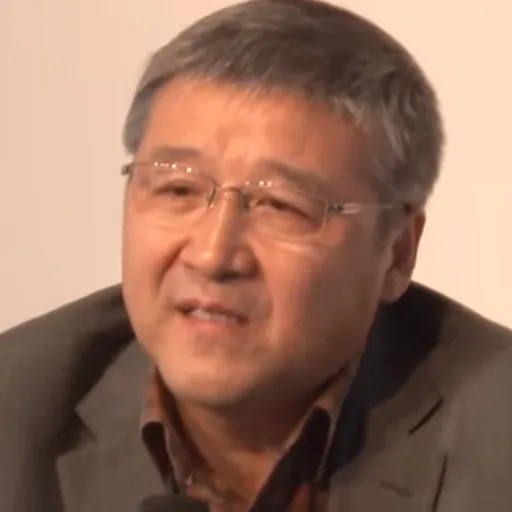
About Wang Hui
Born 1959. Wang Hui is a Chinese philosopher, literary scholar, university teacher and man of letters.
Wang Hui (; Yangzhou, 10 October 1959) is a professor in the Department of Chinese Language and Literature, Tsinghua University, Beijing. Wang is sometimes described as part of the Chinese New Left, although he does not describe himself as such.
Biography Wang Hui was born in Yangzhou, Jiangsu, in 10 October 1959. After finishing high school in Yangzhou, Wang Hui worked for two years as a factory worker before entering college. He completed his undergraduate studies at Yangzhou University (then Yangzhou Normal College), and then graduate studies at Nanjing University and the Chinese Academy of Social Sciences, where he received his Ph.D. in 1988.
Wang Hui was a participant in the 1989 Tiananmen Square protests. He was investigated about his involvement, but nothing significant or serious was found. He was later sent to accumulate experience in Shangluo, Shaanxi, for one year.
Work In 1997, Wang published a series of essays describing the emancipatory potential of Mao-era mass politics. These essays resulted in significant debate between China's liberal intellectuals and left intellectuals.
His researches focus on contemporary Chinese literature and intellectual history. He was the executive editor (with Huang Ping) of the influential magazine Dushu (读书, Reading) from May 1996 to July 2007. The US magazine Foreign Policy named him as one of the top 100 public intellectuals in the world in May 2008.
Wang Hui has been Visiting Professor at Harvard, Edinburgh, Bologna, Stanford, UCLA, Berkeley, and the University of Washington, among others. In March 2010, he appeared as the keynote speaker at the annual meeting for the Association for Asian Studies. Wang Hui has held multiple short-term fellowships at the Swedish Collegium for Advanced Study in Uppsala, Sweden.
Political stance Wang has been called the leader of the Chinese New Left, but he has refused this label:
Chinese intellectuals such as Xu Jilin and Chen Ziming point out the affinity between Wang Hui and Chinese neoconservatism in defense of party-state dictatorship. Scholar Chen Chun wrote in 2022 that Wang Hui has been generally compared with nationalists in Chinese academic circles, especially after 2010, most of Wang Hui's statements could be used to defend the leadership of the Chinese Communist Party.
Wang contends that the Cultural Revolution should not be unconditionally condemned.
In his essay China's Rise: Experiences and Challenges, Wang writes that while many consider China undemocratic, "during the 1950s, 1960s, and 1970s, there existed within the party a self-correction mechanism. Theoretical debate, particularly open theoretical debate, played an important role in the course of the party's and the state's self-adjustment and self-reform."
Allegations of plagiarism
Wang Binbin, a professor of literature from Nanjing University, accused Wang Hui of plagiarism, citing what he deemed to be improper use of footnote protocols and incorrectly cited passages in Wang's doctoral dissertation on Lu Xun 《反抗绝望》 (Against Despair). Wang Binbin's accusation was first published on an academic journal, and reappeared on Southern Weekly on March 25, 2010. Wang Binbin further suggested that Wang Hui, in his The Rise of Modern Chinese Thought, may have used R. G. Collingwood's canonical book, The Idea of History, with or without proper citations.
Apart from Wang Binbin's findings, an analysis of Wang Hui's weak use of footnotes by Xiang Yihua, a researcher with the Zhejiang Academy of Social Sciences, revealed other sections incorporating sources without citation. He also published a review of Wang Hui's essay 《"赛先生"在中国的命运》 (English translation: "The Fate of 'Mr. Science' in China" ), questioning the originality of his research.
Online commentators found some paragraphs in Against Despair to be copied verbatim from other sources. Authors such as M. B. Khrapchenko and F. C. Copleston were used without acknowledgment to either the original works or their translations.
Some scholars are concerned over the plagiarism accusations. Lin Yu-sheng says that some of the plagiarism charges are sustained, which is concurred by Yu Ying-shih. An open letter signed by more than 60 scholars called for the Chinese Academy of Social Sciences and Tsinghua University to investigate the plagiarism case.
Some international scholars and weblog authors have come to Wang's defense, noting that this is mostly a case of sloppy citation practice, not actual plagiarism. A letter signed by 96 scholars, addressed to the authority of Tsinghua University, endorsing Wang Hui's scholarly integrity was made public on 9 July. Most of the passages highlighted by Wang Binbin did actually have citations to the original works, asking readers to "consult" those works. It is argued that there is no attempt by Wang Hui to hide the sources of the sections in question, even if the citations were, at times, nonstandard. and their "Continuity/Discontinuity: China's Place in the Contemporary World" (2011). According to the statement, the 2006 article was censored and republished in a Chinese journal edited by Wang Hui himself in 2015, and the 2011 article was republished in 2014, unauthorized. In the censored republications, passages concerning Tiananmen Square protests of 1989 were deleted.
Works Wang has authored dozens of books, articles, and public statements on the scholarly and socio-political issues of the day. Some of his work has been translated into English and other languages.
Wang Hui's monographs include, in Chinese: From An Asian Perspective: The Narrations of Chinese History (亞洲視野:中國歷史的敘述), 2010; For Alternative Voices (別求新聲), 2009; Depoliticized Politics (去政治化的政治), 2008; The Rise of Modern Chinese Thought (four volumes,《現代中國思想的興起), 2004–2009); and Rekindling Frozen Fire: The Paradox of Modernity (死火重溫), 2000.
His books, translated into English, include: The Rise of Modern Chinese Thought (four volumes), in press; The End of Revolution: China and the Limits of Modernity (Verso, 2010); China's New Order: Society, Politics, and Economy in Transition, translated by Ted Huters and Rebecca Karl (Harvard University Press, 2003); Shisō kūkan toshite no gendai chūgoku (Modern China as a Space for Thinking), translated by Murata Yujiro, Sunayama Yukio, and Onodera Shiro (Tokyo: Iwanami Shoten, 2006); A New Asian Imagination (in Korean; Seoul: Creation and Criticism Press, 2003); and The Politics of Imagining Asia, translated by Theodore Huters, (Harvard University Press, 2011); China from Empire to Nation-State (2014); China's Twentieth Century: Revolution, Retreat and the Road to Equality, edited by Saul Thomas, numerous translators, (First published by Verso, 2016).
Don’t just read it —
keep it.
Full-length biographies made to live with: read them, listen on the way to work, watch them tonight.
- E-book
- Audio
- Video
Instant download · yours to keep · every purchase keeps this site free
Important facts
People in Wang Hui's life
Named in this biography and alive at the same time


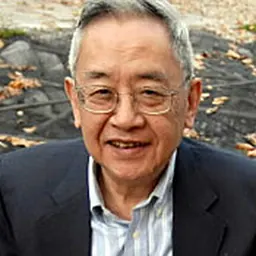


Related people
Same field, nearest in time

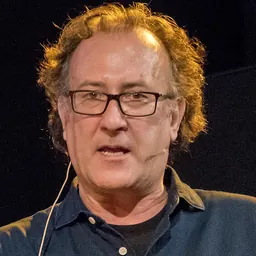
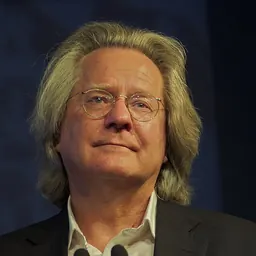

Contemporaries
People whose lives overlapped Wang Hui's



Frequently asked questions
Who is Wang Hui?
Chinese intellectual
When was Wang Hui born?
Wang Hui was born on 10 October 1959 in Yangzhou.
What is Wang Hui's occupation?
Wang Hui is a philosopher, literary scholar, university teacher and man of letters.
What nationality is Wang Hui?
Wang Hui is Chinese.
Sources & further reading
· DBpedia: Wang Hui (intellectual)
Cite this page
APA: Biography.guide. (2026). Wang Hui. https://biography.guide/wang-hui-philosopher/
MLA: "Wang Hui." Biography.guide, https://biography.guide/wang-hui-philosopher/.
Chicago: "Wang Hui." Biography.guide. https://biography.guide/wang-hui-philosopher/.
Data last updated: 2026-09-20 · Spot an error? Report a correction.
Portrait: Wikimedia Commons · author & licence
Page generated 2026-09-27 04:58 UTC