
About Yu Ying-shih
Lived 1930 – 2021 (aged 91). Yu Ying-shih was a Taiwanese historian, sinologist and philosopher.
Yu Ying-shih (; 22 January 1930 – 1 August 2021) was a Chinese-born American historian, sinologist, and the Gordon Wu '58 Professor of Chinese Studies, Emeritus, at Princeton University. He was known for his mastery of sources for Chinese history and philosophy, his ability to synthesize them on a wide range of topics, and for his advocacy for a new Confucianism. He was a tenured professor at Harvard University and Yale University before his time at Princeton.
He was the elder brother of philosopher, educator, and university president Paul Yu.
Early life Yu's father, who had studied at Harvard, taught history in Tianjin, and at the start of the second Sino-Japanese War sent him to live with his aunt from 1937 through 1946 in rural Anhui province, where they would be safe from Japanese invasion. Wartime shortages meant that sometimes the family had no money for rice, forcing them to eat potatoes. "I hate potatoes," he later told an interviewer. The situation was too chaotic for him to attend school, so he read whatever material he could find, for instance, his aunt's popular novels.
Yu came to Harvard University in the United States to pursue his PhD in Chinese history.
In 1974, he was elected as a Fellow at Academia Sinica, and has kept this position until his death. When asked later why he had moved to Princeton he said: "They had a really interesting library", probably meaning the East Asian Library and the Gest Collection. He retired from Princeton in 2001.
He died at his home in Princeton, New Jersey during his sleep on 1 August 2021. He was particularly tenacious over the years in presenting the achievements of Chen Yinke (1890–1969), the greatest modern scholar of Tang dynasty China, who was at first supported and then hounded to death by the revolution. Yu was moved to study Chen upon encountering Chen's draft work "On Love in Two Lives" at the Harvard-Yenching Library. ''' Yu contended that Chen's shift from history to poetry had profound moral and political implications.
Yu developed a critical view of the revival of Confucianism in mainland China. He commented "the Chinese Communists are not Confucianists." He held that there were two kinds of Confucianism to be found in China's history: "the Confucianism that had been persecuted, the other is the Confucianism that has persecuted people." He termed the state sponsorship of Confucianism in China today "the kiss of death."
In October 2014 it was reported that Beijing had ordered the banning of works by Yu Yingshi.
Yu gave a televised speech on 22 November 2019 in which he said that some Taiwan media act as the mouthpiece of the PRC in Taiwan.
Prizes and honors Yu Ying-shih was elected to the American Philosophical Society in 2004. On 15 November 2006, he was named the third recipient of the John W. Kluge Prize for lifetime achievement in the study of humanity. He shared the 2006 prize with John Hope Franklin. He is the inaugural winner of the Tang Prize in Sinology, which recognizes scholars conducting "revolutionary research" and is selected by the Academia Sinica. Yu used his Tang Prize winnings of NT$10 million to establish the Yu Ying-shih Fellowship for the Humanities. Asteroid 28966 Yuyingshih, discovered by Bill Yeung in 2001, was named in his honor.
Major works Yu Ying-shih WorldCat. Vol 1 史學、史家與時代 (history, historians and their times) Vol 2 中國思想傳統及其現代變遷 (Traditional Chinese Thought and its present day transformation) Vol 3 儒家倫理與商人精神 (Confucian ethic and the spirit of capitalism) Vol 4 中國知識人之史的考察 (Chinese intellectuals and their historical investigations) Vol 5 現代學人與學術 (Modern scholars and scholarship) Vol 6 民主制度與近代文明 (Democracy and modern civilization) Vol 7 文化評論與中國情懷(上) (Cultural critique Pt I) Vol 8 文化評論與中國情懷(下) (Cultural critiques Pt II) Vol 9 歷史人物考辨 (Historical textual studies) Vol 10 宋明理學與政治文化 (Studies in Song and Ming Lixue and political culture) . Volume 1 (2016). Sixth century B.C.E. to seventeenth century. Volume 2 (2017) Seventeenth century through twentieth century.
Don’t just read it —
keep it.
Full-length biographies made to live with: read them, listen on the way to work, watch them tonight.
- E-book
- Audio
- Video
Instant download · yours to keep · every purchase keeps this site free
Important facts
People in Yu Ying-shih's life
Named in this biography and alive at the same time


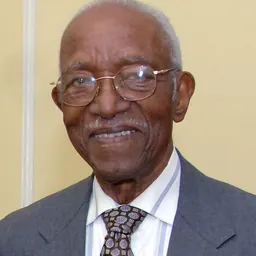
Related people
Same field, nearest in time



Contemporaries
People whose lives overlapped Yu Ying-shih's


Frequently asked questions
Who was Yu Ying-shih?
American China historian (1930-2021)
When was Yu Ying-shih born?
Yu Ying-shih was born on 22 January 1930 in Tianjin.
When did Yu Ying-shih die?
Yu Ying-shih died on 1 August 2021 in Princeton.
What was Yu Ying-shih's occupation?
Yu Ying-shih was a historian, sinologist and philosopher.
What nationality was Yu Ying-shih?
Yu Ying-shih was Taiwanese.
Sources & further reading
Cite this page
APA: Biography.guide. (2026). Yu Ying-shih. https://biography.guide/yu-ying-shih/
MLA: "Yu Ying-shih." Biography.guide, https://biography.guide/yu-ying-shih/.
Chicago: "Yu Ying-shih." Biography.guide. https://biography.guide/yu-ying-shih/.
Data last updated: 2026-09-26 · Spot an error? Report a correction.
Page generated 2026-09-27 05:15 UTC