
About Walter Weidauer
Lived 1899 – 1986 (aged 86). Walter Weidauer was a German politician and resistance fighter.
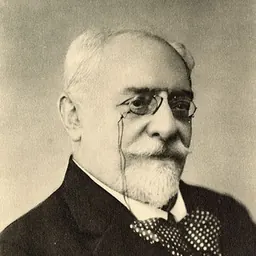
Walter Weidauer (28 July 1899 – 13 March 1986) was a German politician. He was the "lord mayor" of Dresden during the most intensive period of the city's rebuilding, between 1946 and 1958.
Life
Early years Arno Walter Weidauer was born at the tail end of the nineteenth century in Lauter, a small town in the Kingdom of Saxony some 20 km (12 miles) from the German frontier with Bohemia which at that time was still part of the Austro-Hungarian Empire. His father worked from home as a weaver of punnets/baskets. He attended school locally and then between 1914 and 1917, undertook an apprenticeship as a carpenter. In the next election which took place in November of that same year, the share of the votes going to the Communist Party increased a little, to 16.9%, and Weidauer remained a de facto Reichstag member till March 1933. By that time the focus of attention was fixed on the NSDAP (Nazi Party) which had taken power in January 1933 and lost little time in establishing one-Party government in Germany. March 1933 saw the third national Reichstag election in less than a year. In early February the Nazis, now in power, had "unleashed a campaign of violence and terror that dwarfed anything seen so far." Storm troopers began attacking trade union and Communist Party (KPD) offices and the homes of left-wingers, extending their violence to Social Democrats later in the month. When the votes were counted the Communist share of the vote was down to 12.3%, but Weidauer retained his seat under the rules then in force. Despite all their efforts in the run-up to the election the Nazi Party still failed to gain an overall majority of seats in the Reichstag. However, on 23 March 1933 they passed an Enabling Act, which in effect transformed the Hitler government into a legally sanctioned dictatorship. Political parties other than the Nazi Party were banned, and the Communist Party, as could have been predicted from Hitler's rhetoric over the previous decade, was at the top of the Nazi hit-list. March 1933 was Walter Weidauer's last month as a member of the national legislature. Later in 1933 he was detained in the recently opened Sonnenburg concentration camp. while condemning political opponents as reactionaries.
At a City Council meeting on 10 October 1946 Walter Weidauer was elected Lord Mayor (Oberbürgermeister) of Dresden in succession to Gustav Leißner
"Not everything that was destroyed was beautiful. On the contrary, a lot of it should not reappear in its old form. No palaces for the rich and sheds for the poor, but democracy [needs to be] extended to home building.” "Nicht alles war schön, was vernichtet wurde. Im Gegenteil, ein großer Teil darf in seiner alten Form nie wieder erstehen. Keine Paläste für die Reichen und Hütten für die Armen, sondern Demokratie auch im Wohnungsbau" Walter Weidauer (1953)
Despite his own well known reservations about the nature and extent of Dresden's cultural and artistic heritage, Weidauer was the president of the government delegation that arranged for the recovery from the Soviet Union of Dresden's Old Masters' Gallery's artistic treasures (which had been placed in safe storage during World War II, but then confiscated by the Red Army in 1945). In connection with this he traveled to Moscow in August 1955 as part of a high-profile East German government delegation. Sustaining international contacts on behalf of his country's ruling party was important to Weidauer, who also visited West Germany as a representative of the Socialist "New Germany". He also found himself compelled to ideological confrontation of the "toxic role of German imperialism".
Don’t just read it —
keep it.
Full-length biographies made to live with: read them, listen on the way to work, watch them tonight.
- E-book
- Audio
- Video
Instant download · yours to keep · every purchase keeps this site free
Important facts
Related people
Same field, nearest in time






Contemporaries
People whose lives overlapped Walter Weidauer's



Frequently asked questions
Who was Walter Weidauer?
German politician (1899–1986)
When was Walter Weidauer born?
Walter Weidauer was born on 28 July 1899 in Lauter.
When did Walter Weidauer die?
Walter Weidauer died on 13 March 1986 in Dresden.
What was Walter Weidauer's occupation?
Walter Weidauer was a politician and resistance fighter.
What nationality was Walter Weidauer?
Walter Weidauer was German.
Sources & further reading
Cite this page
APA: Biography.guide. (2026). Walter Weidauer. https://biography.guide/walter-weidauer/
MLA: "Walter Weidauer." Biography.guide, https://biography.guide/walter-weidauer/.
Chicago: "Walter Weidauer." Biography.guide. https://biography.guide/walter-weidauer/.
Data last updated: 2026-09-22 · Spot an error? Report a correction.
Page generated 2026-09-27 05:33 UTC