
About Walter Pfrimer
Lived 1881 – 1968 (aged 86). Walter Pfrimer was an Austrian politician and lawyer, known for Heimwehr.
Walter Pfrimer (22 December 1881 – 31 May 1968) was an Austrian lawyer, a nationalist politician and leader of the paramilitary Heimwehr in Styria. He was the leader of a failed putsch in 1931 and, though charged with treason, he was acquitted. His movement lost influence to the Nazi Party and he became an advocate for union with Germany. After the Anschluss took place, he sat as a deputy in the Reichstag from 1938 until May 1945. Interned for a year after the end of the Second World War, he was released and returned to private legal practice.
Early years The son of a wine merchant, Pfrimer studied law at the University of Graz, gaining his doctor of law degree in 1906. As a student, he had been a member of the Burschenschaft and an ardent follower of the German nationalist and antisemitic hard-liner Georg Ritter von Schönerer before settling into a position as a lawyer in Judenburg.
Pfrimer became a leader of the Heimwehr (Home Guard), a nationalist paramilitary group, early in the movement's life and initially won the financial backing of the Alpine Montangesellschaft, the largest heavy industry concern in Austria. His Heimwehr unit was amongst the best armed, having received weapons from both Bavarian Georg Escherich rightist paramilitary leader and the local Landeshauptmann Anton Rintelen. and in 1930 publicly advocated the overthrow of the Austrian government and the establishment of a fascist regime. The two fell out however after Pfrimer, who argued that Jews must be treated as a foreign race, suggested that Steidle was too weak on the issue. Pfrimer took up with Ernst Rüdiger Starhemberg and helped to ensure that the nobleman replaced Steidle as Heimwehr leader in 1930. He was also a staunch opponent of socialism, often leading his men in violent attacks on the Social Democratic Party of Austria, whilst rejecting parliamentary democracy as un-German. He failed to gain support from the other regional leaders and the coup was so poorly organised that it was easily put down by the otherwise weak government of Karl Buresch.
Aftermath Pfrimer was damaged irreparably by the fiasco of the failed putsch. He fled to Yugoslavia before returning to face a treason trial but, in a surprise move, he was acquitted of all charges. His membership of the Nazi Party was made official on 24 February 1933.
Post-war life After the Allies liberated Austria, Pfrimer was taken prisoner by the British forces and held in internment for a year. Following his release, he returned to his legal practice in Judenburg and lived out his days as a private citizen.
Don’t just read it —
keep it.
Full-length biographies made to live with: read them, listen on the way to work, watch them tonight.
- E-book
- Audio
- Video
Instant download · yours to keep · every purchase keeps this site free
Important facts
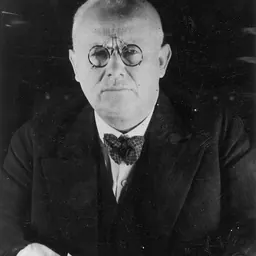
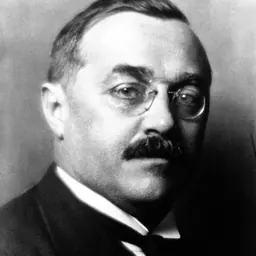
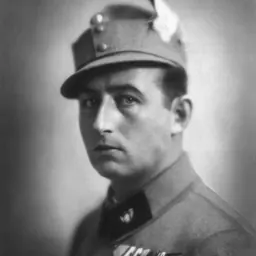
People in Walter Pfrimer's life
Named in this biography and alive at the same time

Related people
Same field, nearest in time





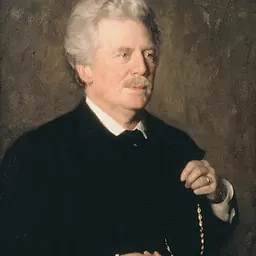
Contemporaries
People whose lives overlapped Walter Pfrimer's


Frequently asked questions
Who was Walter Pfrimer?
Austrian politician (1881-1968)
When was Walter Pfrimer born?
Walter Pfrimer was born on 22 December 1881 in Maribor.
When did Walter Pfrimer die?
Walter Pfrimer died on 31 May 1968 in Judenburg.
What was Walter Pfrimer's occupation?
Walter Pfrimer was a politician and lawyer.
What was Walter Pfrimer known for?
Walter Pfrimer was known for Heimwehr.
What nationality was Walter Pfrimer?
Walter Pfrimer was Austrian.
Sources & further reading
Cite this page
APA: Biography.guide. (2026). Walter Pfrimer. https://biography.guide/walter-pfrimer/
MLA: "Walter Pfrimer." Biography.guide, https://biography.guide/walter-pfrimer/.
Chicago: "Walter Pfrimer." Biography.guide. https://biography.guide/walter-pfrimer/.
Data last updated: 2026-09-22 · Spot an error? Report a correction.
Page generated 2026-09-27 05:30 UTC