
About Walter Hunt
Lived 1796 – 1859 (aged 62). Walter Hunt was an American inventor, designer and mechanic.
Walter Hunt (July 29, 1796 – June 8, 1859) was an American mechanical engineer. Through the course of his work he became known for being a prolific inventor. He first became involved with mechanical innovations in a linseed producing community in New York state that had flax mills. While in New York City to promote his inventions he got involved in inventing the streetcar gong that was used throughout the United States. This then led him to invent other useful items like the safety pin and sewing machine. He invented the precursor to the repeating rifle and fountain pen. About two dozen of his inventions are used today in basically the same form as he had patented them. In spite of his many useful innovative creations he never became wealthy since he sold off most of his patent rights to others at low prices with no future royalties. Others made millions of dollars from his safety pin device.
Early life and education Walter Hunt was born July 29, 1796, in the town of Martinsburg, in Lewis County in the state of New York. He was the first born child of Sherman Hunt and Rachel Hunt. He had twelve siblings. Hunt received his childhood education in a one-room schoolhouse. Hunt was muscular, tall and slender with a ruddy complexion. He married Polly Loucks in 1814 and they had four children. Hunt went to college and earned a master's degree in masonry in 1817 at the age of 21.
Mid life Hunt traveled to New York City in 1826 to get money for one of his inventions. While there he witnessed an accident where a horse-drawn carriage ran over a child. The accident event motivated him to come up with a metal bell that was operated with a hammer that could be controlled by one of driver's feet without letting go of the horse reins. Hunt patented his new innovation on July 30, 1827. He promoted his concept to many prospects and eventually was able to sell his foot operated coach alarm mechanism idea to the stagecoach operators Kipp and Brown. Hunt's innovation was soon adopted by most public horse-drawn vehicles throughout the city.
Inventions
Hunt was a prolific inventor. From 1827 to 1830, while earning a living in the real estate field, he invented a fire engine, an improvement for hard coal-burning stoves, the first home knife sharpener, and a restaurant steam table apparatus. He also invented the precursor of the Winchester repeating rifle and the forerunner of the American fountain pen as used in the twentieth century. Additionally, Hunt invented a flax spinner, an improved oil lamp, artificial stone, the first rotary street sweeping machine, mail sorting machinery, velocipedes, and ice plows. He did not realize the significance of many of his inventions when he produced them and sold off most of his patent rights to others for low prices making little for himself in the long run. In the twentieth century many of his patented devices were widely used everyday common products.
Hunt's sewing machine patent model constructed prior to June 27, 1854.
Sewing machine He developed the first modern feasible operating sewing machine He never initially patented the mechanical device he created that used a lockstitch for sewing. It had a characteristic of an eye-pointed needle and used two threads whereby one thread passed through a twisted loop in the other thread and then both interlocked. The uniqueness of this was that it was the initial time an engineer or technician inventor had not imitated a single stitch done by hand and used two interlocking threads at a seam. He used a technique for sewing which was revolutionary at the time. The eye opening was near the point of the needle and operated on a vibrating arm and a loop was formed under the cloth by this thread through which a shuttle, reeling off another thread, was forced back and forth making an interlocked stitch. Hunt completed his working model before he showed it to anyone.
Hunt sold one-half the patent rights in 1834 to businessman and blacksmith George A. Arrowsmith who never manufactured it to sell. He instead had Hunt's wooden version duplicated in iron by Adoniram, Hunt's brother. Adoniram was a skilled mechanic and duplicated the original wooden version. It performed better because no splinters of wood impeded the passage of the cloth. Arrowsmith had no interest patenting the sewing machine then and had decided to postpone that step for a later time. He gave as reasons for not procuring a patent that 1) he was busy with other businesses then; 2) the expense of getting the appropriate drawings and paperwork together to register a patent was more than he could afford and; 3) the difficulty of introducing the new sewing machine into public use, saying it would have cost two thousand or three thousand dollars to start the sewing machine business. Had he seen the newspaper article titled Sewing by Machinery of December 1835 and January 1836 that was in many nationwide newspapers he may have applied for a patent right away, because it said that a mechanic of Rochester had invented a machine for making clothes which would thereafter take the place of fingers and thimbles.
Hunt did not seek a patent for his sewing machine at the time because he worried it would create unemployment with seamstresses. History records show that his wife and daughter advised him against marketing his sewing apparatus. Hunt's daughter Caroline operated a corset-making shop with twelve seamstress ladies and was watching out for their interest and thousands of other seamstresses. Hunt submitted his initial application for his 1834 sewing machine on April 2, 1853. Records at the Supreme Court show Hunt's invention was made before Howe's machine and the Patent Office identified Hunt's preexistence but it did not issue a patent to him for this. The reason was because he had not filled out the proper paperwork for a patent before Howe's paperwork application and had abandoned the design experiment of the 1830s. Hunt acquired public acknowledgement for his invention, however Howe's official patent remained lawful because of the technicality of the timing of the paperwork. Isaac Singer arranged to give Hunt $50,000 in installments for his sewing machine design in 1858 in order to clear up the patent confusion about sewing machines, but Hunt died before Singer was able to consummate the agreement.
Safety pin Hunt thought little of the safety pin, his best-known invention. He sold his patent of it for $400 to W R Grace and Company, to pay a draftsman he owed $15 to . His invention was an improvement on the current way clothing items were attached together before because of a protective clasp ("D") at the end and a coiled wire design ("B") with a spring tension on the pointed end leg ("A") to keep it in the protective clasp even if the pin device was moved around. The basic design is the same in the twentieth century as when Hunt came up with the device in the nineteenth century and is manufactured inexpensively now. W R Grace and Company made millions of dollars profit off the product.
Other inventions Hunt's paper shirt-collar invention drawing, patent number # 14,019. One of Hunt's popular inventions was a paper shirt collar. This time he sold the patented design and negotiated for royalty payments, but the item only became popular after he died.
Hunt often used the legal services and patent research work of Charles Grafton Page, a certified patent lawyer who had worked at the Patent Office before, when seeking a potential patent for one of his inventions. His inventions covered a wide variety of fields and subjects. About two dozen of Hunt's inventions are still used in the form in which he created them over one hundred years ago.
Some of Hunt's important inventions are shown below with the patent drawings.
Later life and death Hunt created numerous usable everyday inventions in his lifetime, however he never became independently wealthy from them. He died of pneumonia at his place of business in New York City on June 8, 1859. His grave is marked by a small red granite shaft about a hundred feet from Howe's massive bust monument.
Legacy Hunt was inducted into the Inventors Hall of Fame in 2006 for the safety pin invention. Many of Hunt's invention ideas are in actual use today and are basically the same device as when he patented them more than a hundred years ago. Some of those others besides the safety pin and sewing machine are a device which regulates the amount of liquid that comes from a bottle with each tilt, a bottle stopper, springy attachment for adjustments to belts and suspenders, and a nail making machine.
Don’t just read it —
keep it.
Full-length biographies made to live with: read them, listen on the way to work, watch them tonight.
- E-book
- Audio
- Video
Instant download · yours to keep · every purchase keeps this site free
Important facts
People in Walter Hunt's life
Named in this biography and alive at the same time

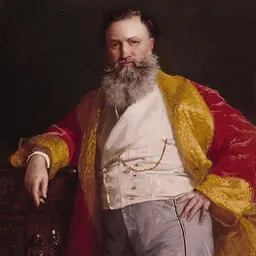
Related people
Same field, nearest in time

Contemporaries
People whose lives overlapped Walter Hunt's






Frequently asked questions
Who was Walter Hunt?
American mechanic and inventor (1796–1859)
When was Walter Hunt born?
Walter Hunt was born on 29 July 1796 in New York.
When did Walter Hunt die?
Walter Hunt died on 8 June 1859 in New York City.
What was Walter Hunt's occupation?
Walter Hunt was an inventor, designer and mechanic.
What nationality was Walter Hunt?
Walter Hunt was American.
Sources & further reading
· DBpedia: Walter Hunt (inventor)
Cite this page
APA: Biography.guide. (2026). Walter Hunt. https://biography.guide/walter-hunt-inventor/
MLA: "Walter Hunt." Biography.guide, https://biography.guide/walter-hunt-inventor/.
Chicago: "Walter Hunt." Biography.guide. https://biography.guide/walter-hunt-inventor/.
Data last updated: 2026-09-20 · Spot an error? Report a correction.
Page generated 2026-09-27 05:23 UTC