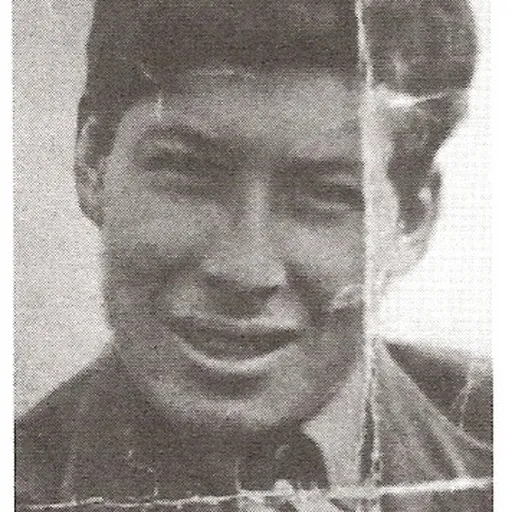
About Walter Harper
Lived 1892 – 1918 (aged 25–26). Walter Harper was an American explorer, guide and mountaineer.
Walter Harper (1893 – October 25, 1918) was a mountain climber and guide of mixed white and Alaska Native ancestry. On Saturday, 7 June 1913, he was the first person to reach the summit of Denali (Mount McKinley), the highest mountain in North America. He was followed by the other members of the small expedition team, guide Harry Karstens, Episcopal archdeacon Hudson Stuck, who had organized the effort, and Episcopal missionary Robert Tatum.
After gaining more formal education, Harper married in 1918 and planned to attend medical school in Philadelphia. He and his wife took the steamer from Skagway to Seattle for their honeymoon before setting off cross-country. The ship ran aground on a reef in a snowstorm, and was broken up in a gale, sinking on October 25. All 268 passengers and 75 crew were lost.
Early life and education The youngest of eight children, Walter Harper was born in 1893 as the son of Arthur Harper, an immigrant from County Antrim, Ireland, and Jennie Seentahna (née Bosco) Harper, of the Koyukon people from the Koyukuk region. They married in 1874 when Harper was 39 and Jennie was 14, at Koyukuk. Harper and his partner Al Mayo founded a trading post in Tanana, near the Athabascan site of Nuklukayet. Harper also did some mining there, after years of experience in California and British Columbia. Mayo married Margaret, a cousin of Jennie. There he met Hudson Stuck, Episcopal archdeacon of the Yukon, who served a large area of the Interior as a missionary. Stuck was impressed by Harper's intelligence, manners, and skills in fishing, tracking, trapping, fire-building, and dog handling. He hired him to work as his interpreter, guide, and dog driver. He also encouraged him to continue with his formal education.
Denali expedition Stuck invited Harper, then 20, to be part of his 1913 expedition to climb Denali. Others in the party were the chief guide and co-director Harry Peter Karstens; Robert Tatum, an Episcopal missionary, who served as cook; and two Gwich'in teenagers, Johnny Fredson and Esaias George, who helped prepare and maintain the base camp. This pair also brought the dog teams down when the terrain became too rough for their use. Harper was the first to gain the summit. The team spent an hour and a half on the summit, during which Tatum planted a flag he had made earlier from handkerchiefs. He compared the view to "looking out of a window of heaven".
After taking readings from their instruments to establish the height of the mountain, the party began the descent. Compared to the 50-day journey up the mountain, it took them just two days to make it back to base camp. The expedition returned to Tanana on June 20, three months and four days after they'd left. He continued his education in Alaska while continuing to work on the frontier, and planned to attend medical school in Philadelphia. On September 1, 1918, he married Frances Wells in Fort Yukon, with Archdeacon Stuck officiating. For their honeymoon, the couple took the from Skagway to Seattle. From there, they would travel to Philadelphia, where Harper had been admitted to medical school, and his wife planned to join the Red Cross. They embarked on October 23 at Skagway, and the four-year-old Scottish steamer left at 10:00 that night.
A day later, as the ship was passing through Lynn Canal en route to Juneau, it encountered a strong gale and heavy snow. Princess Sophia went off course and ran aground on Vanderbilt Reef, the flat, rocky tip of an underwater mountain. Initially the sea was calm, but soon another gale began. The ship asked by radio for help, but neither ships nor small boats could get close enough to rescue the people aboard because of the dangerous conditions. After about 40 hours, Princess Sophia broke apart and sank on October 25, killing all 268 passengers and 75 crew, a total of 343 persons lost, including Walter and Frances.
After the Harpers' bodies were recovered, the couple was buried side by side in Juneau.
Legacy In 1913, Archdeacon Stuck named Harper Glacier after the first man to reach the summit. The glacier runs from Denali Pass on Denali to the Great Icefall before becoming Muldrow Glacier. It was also named for Walter's father Arthur. In 2020, Alaska Senator Click Bishop introduced and saw passed Alaska SB 144, to have June 7 annually designated Walter Harper Day. On July 19, 2022 the Walter Harper Project unveiled a life-sized bronze statue of Walter Harper in downtown Fairbanks, Alaska.
Don’t just read it —
keep it.
Full-length biographies made to live with: read them, listen on the way to work, watch them tonight.
- E-book
- Audio
- Video
Instant download · yours to keep · every purchase keeps this site free
Important facts
People in Walter Harper's life
Named in this biography and alive at the same time


Related people
Same field, nearest in time


Contemporaries
People whose lives overlapped Walter Harper's

Frequently asked questions
Who was Walter Harper?
American mountain climber (1893–1918)
When was Walter Harper born?
Walter Harper was born in 1892 in Tanana.
When did Walter Harper die?
Walter Harper died on 25 October 1918 in Lynn Canal.
What was Walter Harper's occupation?
Walter Harper was an explorer, guide and mountaineer.
What nationality was Walter Harper?
Walter Harper was American.
Sources & further reading
Cite this page
APA: Biography.guide. (2026). Walter Harper. https://biography.guide/walter-harper-explorer/
MLA: "Walter Harper." Biography.guide, https://biography.guide/walter-harper-explorer/.
Chicago: "Walter Harper." Biography.guide. https://biography.guide/walter-harper-explorer/.
Data last updated: 2026-09-22 · Spot an error? Report a correction.
Portrait: Wikimedia Commons · author & licence
Page generated 2026-09-27 05:02 UTC