
About Walchand Hirachand
Lived 1882 – 1953 (aged 70). Walchand Hirachand was an Indian businessperson.
Walchand Hirachand Doshi (23 November 1882 – 8 April 1953) was an Indian industrialist and the founder of the Walchand group. He established India's first modern shipyard, first aircraft factory and first car factory; he also established construction companies, sugarcane plantations, sugar factories, confectioneries, engineering companies and many other businesses.
Early life Walchand Hirachand was born in Solapur, (now in Maharashtra) to Seth Hirachand Nemchand Doshi and his first wife Raju. Walchand born into a Digambar Jain family from Wankaner Gujarat, who had settled in Solapur in the erstwhile Bombay Presidency.
Hirachand was engaged in cotton trading and money lending. Walchand's mother died a few days after his birth. Hirachand then married Sakhubai to whom his half-brothers Gulabchand, Ratanchand and Lalchand were born.
Education Walchand matriculated in 1899 from Solapur Government High School and later attended St. Xaviers College, Mumbai, and earned a BA degree from the University of Mumbai. Later he attended Deccan College in Pune but discontinued his studies to join his family business. In 1930, various merchant bodies of Bombay under the presidency of Walchand passed a resolution for the immediate release of Mahatma Gandhi; but again, in 1931, it was Walchand, who on behalf of the Indian Merchants' Chamber demanded from Gandhi that they were not happy with the Gandhi–Irwin Pact and demanded the protection of Indian industries. Again, in 1933, Walchand sent a deputation on behalf of the Indian Merchants' Chamber to Gandhi to persuade him to call off the Civil Disobedience Movement in the interest of trade and commerce. He was also a signatory to the Bombay Manifesto dated 26 May 1936, which opposed the socialist and Marxist ideas of Jawaharlal Nehru.
Construction business It was in the construction business, first as a railway contractor and then as a contractor to other departments of Government, that Phatak-Walchand private limited (partnership till 1915) made money. Phatak left the firm after it bought a foundry and undertook a mining lease, with the view that it was stretching itself into too many areas. Meanwhile, the firm found it difficult to bag larger contracts due to its small size and the absence of marquee names. It was merged into Tata Construction Company in 1920 to overcome these problems. Some of the major projects executed by the company include the commissioning of the tunnels through the Bhor Ghats for a railway route from Mumbai to Pune and laying of water pipes from Tansa Lake to Mumbai and also the laying of tracks for the Barsi Light Railway. Other major projects executed by the firm include the Kalabag Bridge over Indus and a bridge across the Irrawaddy River in Burma. All these projects were directed by Walchand. In 1929, he became the managing director of the company. In 1935, the company was renamed Premier Construction to reflect the fact that the Tatas had sold their stake in the firm to Walchand. Another construction company he founded was Hindustan Construction Company in 1926, which is today one of the civil and engineering construction giants of India. Walchand made Gulabchand its chairman to look after its day-to-day affairs. Walchandnagar Industries is today a diversified company manufacturing also boilers, turbines and also supplies strategic components to India's defence and aerospace sector. WIL was subject to sanctions by the United States following Pokhran-II for its involvement in India's nuclear and space programs. The sanctions were dropped in 2001.
Another company in sugar and confectionery, the Ravalgaon Sugar Farm, was started by Walchand in 1933 and its Confectionery Division was started in 1942. Today, Ravalgaon Sugar is one of the market leaders in the Indian confectionery market.
Shipping In 1919, after the end of World War I, he along with his friends, Narottam Morarjee, and Kilachand Devchand, bought a steamer, the SS Loyalty from the Scindias of Gwalior; with Narottam Morarjee being major financer. Walchand's underlying assumption was that the post-war years would also spell massive growth for the shipping industry just as the war years had done. However, British companies such as P&O and BI Shipping were strong in the shipping industry and most of the attempts by domestic players till then had failed. Walchand named his company The Scindia Steam Navigation Company Ltd. and competed with the foreign players. It was recognised as the first Swadeshi shipping company in the true sense of the term and was referred to widely in Mahatma Gandhi's columns in Young India and Harijan on Swadeshi, boycott of foreign goods and Non co-operation movement. It barely managed to survive after entering into agreements on routes and fare wars with its foreign competitors. However, Walchand still supported new indigenous shipping ventures, as he believed that a strong domestic shipping industry was the need of the hour. In 1929, he became the Chairman of Scindia Steam and continued in the same position till 1950 when he resigned on grounds of ill health. By 1953, the company had captured 21% of Indian coastal traffic. Sir Lallubhai Samaldas was amongst the later directors of Scindia Steamship. It was named Scindia Shipyard Limited and its first product, the ship Jalusha was launched soon after independence by Jawaharlal Nehru in 1948. However, the shipyard came under government control a few months later (due to the presumed importance of the project to country's security and economic growth) and was fully nationalised in 1961 and was renamed Hindustan Shipyard Limited.
Pipelines In the year 1926, he formed The Indian Hume Pipe Company with licence from Humes of Australia for the manufacture of Reinforced Cement Concrete Pipes. Today the company manufactures various types of concrete pipes and undertakes construction of water supply infrastructure for towns and villages in India.
Insurance To face competition in the shipping business from the British and other foreign businesses, Walchand entered allied businesses such as insurance. In 1937, he presided over the conference of Indian insurance companies held in Calcutta.
Public life Walchand was one of the founding members of the Maharashtra Chamber of Commerce, Industry & Agriculture, and served as its president for eleven consecutive years from 1927 to 1938. Walchand was also the founder of the Indian National Shipowners' Association, which was founded in 1929, and served as its president for 19 consecutive years from 1929 to 1948. He also helped launch the Indian Sugar Mills Association and the Indian Sugar Syndicate. He served as President of Indian Merchants' Chamber for years 1927–28. Also, Walchand founded the Deccan Sugar Factories Association and the Deccan Sugar Technologists Association, and made hs younger brother, Lalchand, its first President, and he was also the force behind institutions like the Association of Indian Automobile Manufacturers and the Automotive Research Association of India.
Death In 1949, he suffered a stroke, and he retired from business in 1950.
Legacy His legacy remains important. By 1947, when India became independent, the Walchand group of companies was one of the ten largest business houses in the country. The first Indian ship SS Loyalty made its maiden international voyage on 5 April 1919 by sailing from Mumbai to London. Walchand Hirachand was personally present on the ship. After India became independent, 5 April has been declared the National Maritime Day to honour that voyage. While Walchand pioneered a role for India in several industries, his dependence on excessive leverage and nationalisation seem to have taken the sheen off his contributions. The car factory, while the first in India, trailed the Birlas' Hindustan Motors in terms of market share. Walchandnagar Industries Limited, located at Walchandnagar, an industrial township near Pune is today a strategic defence and nuclear equipments manufacturing company. Absence of direct male heirs may also have had a role in the nature of the businesses left behind by him. For Walchand, industry was probably not just a place to make money but also to have adventure. For example, a visit to Hollywood inspired him to construct a huge studio now known as Walchand Studio in India for which he was earlier in talks with the famous Bollywood producer-director V. Shantaram without a tangible result. However, for years to come, he would probably be remembered as the man who dared to dream and was able to materialise most of his dreams into reality by his steadfastness and willpower. Walchand Dale Carnegie Finishing School at Bellandur, India Walchand College of Arts and Science, Solapur, established in 1962 Smt. Kasturbai Walchand College, Sangli, named after his wife Seth Hirachand Nemchand Digambar Jain Boarding, Pune, a boarding house founded in 1941 for Jains and named after the father of Walchand Hirachand and his brothers Walchand Public School, Sonipat
Honours and monuments A road in Mumbai is named after him as Walchand Hirachand Marg. A road in Solapur, his hometown is also named after him as Seth Walchand Hirachand Marg. Government of India issued a postage stamp honouring him on 23 November 2004. A hall is named after him as Walchand Hirachand Hall at Indian Merchants' Chamber house at Mumbai in his memory and honour. Walchandnagar, an industrial township near Pune is named after him. Stone Statue of Sri Walchand Hirachand on Group Captain Suranjan Das Road, Bengaluru. thumb
A stone statue has been erected in junction near Eastern naval command and Hindustan shipyard limited in Visakhapatnam to commemorate his contribution towards Indian marine initiatives.
Don’t just read it —
keep it.
Full-length biographies made to live with: read them, listen on the way to work, watch them tonight.
- E-book
- Audio
- Video
Instant download · yours to keep · every purchase keeps this site free
Important facts
People in Walchand Hirachand's life
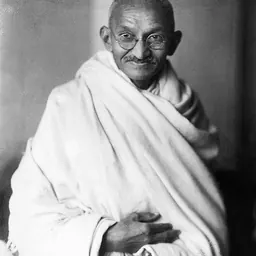
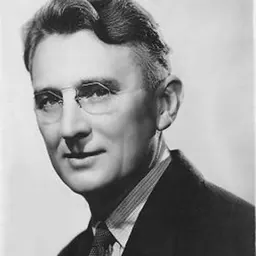
Named in this biography and alive at the same time



Related people
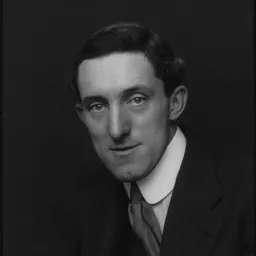
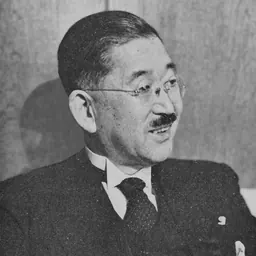
Same field, nearest in time

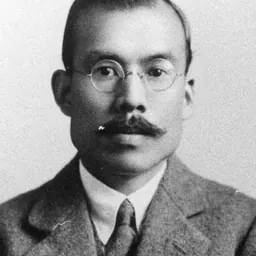

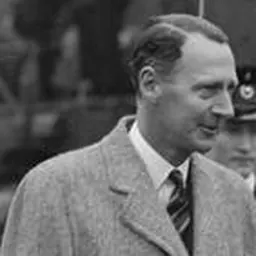
Contemporaries
People whose lives overlapped Walchand Hirachand's

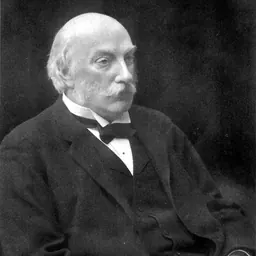



Frequently asked questions
Who was Walchand Hirachand?
Indian industrialist (1882-1953)
When was Walchand Hirachand born?
Walchand Hirachand was born on 23 November 1882 in presidencies and provinces in British India.
When did Walchand Hirachand die?
Walchand Hirachand died on 8 April 1953 in Bombay State, India, Siddhpur.
What was Walchand Hirachand's occupation?
Walchand Hirachand was a businessperson.
What nationality was Walchand Hirachand?
Walchand Hirachand was Indian.
Sources & further reading
· Wikipedia: Walchand Hirachand
Cite this page
APA: Biography.guide. (2026). Walchand Hirachand. https://biography.guide/walchand-hirachand/
MLA: "Walchand Hirachand." Biography.guide, https://biography.guide/walchand-hirachand/.
Chicago: "Walchand Hirachand." Biography.guide. https://biography.guide/walchand-hirachand/.
Data last updated: 2026-09-22 · Spot an error? Report a correction.
Page generated 2026-09-27 05:31 UTC