
Wah Chang
American designer
About Wah Chang
Lived 1917 – 2003 (aged 86). Wah Chang was an American property designer.
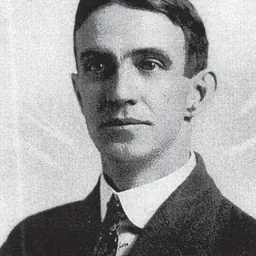
Wah Ming Chang (August 2, 1917 – December 22, 2003) was an American sculptor, animator and artist. Chang is known for his contributions to the development of stop motion animation, as well as sculptures and the props he designed for Star Trek: The Original Series, including the tricorder and communicator.
Early life Chang was born on August 2, 1917, in Honolulu, Hawaii, to artist Fai Sue Chang and her husband. The Chang family moved from Honolulu to San Francisco, California, and about 1920 opened the Ho-Ho Tea Room on Sutter Street, which became a favorite venue for the city's Bohemian artists. Fai Sue Chang was a graduate of Berkeley's California School of Arts and Crafts (today's California College of the Arts), where she specialized in fashion design and etching.
After she died in 1927, her husband persuaded Wah Ming Chang's art teacher and family friend James Blanding Sloan, and his wife Mildred Taylor, to become his son's legal guardians. Sloan exhibited Wah Ming's etchings and watercolors in public exhibitions as early as 1925 to favorable reviews in the San Francisco Bay Area and later in the largest art colony on the Pacific Coast, Carmel-by-the-Sea. The child became part of Sloan's family, traveled in 1926 to Taos, New Mexico, for the on-site study of American Indian culture, and in 1928 displayed his block prints in joint exhibitions with Sloan at the prestigious Philadelphia Print Club and in Pasadena, California.
Career He became a valued assistant in several of Sloan's marionette theatres as well as in productions for the Hollywood Bowl Ballet and the "Cavalcade of Texas." In 1939, he was hired by Walt Disney Productions and became the youngest member of its Effects and Model Department, where he sculpted the maquette of Pinocchio which was used as reference for the film's animation, and articulated deer models for Bambi. After recovering from polio, Chang became acquainted with animator George Pal, working with him on his Puppetoons series of stop-motion animated films for Paramount Pictures and his live-action films such as The Time Machine (1960). In the mid-1940s Chang formed a joint studio business with Sloan, The East-West Film Company, and produced such memorable films as Pick a Bale of Cotton (an interview and performance with the legendary blues and folk singer Lead Belly in 1944) and Frank Tashlin's highly controversial anti-war short, The Way of Peace (1947), created in part with elaborate miniature sets and puppets in stop-motion. A Desilu invoice dated August 22, 1966, shows Chang "reworking phasers" for $520.00. Wah Chang's futuristic communicator influenced the design of clamshell cellular phones. Chang's communicator design has been credited as an inspiration for modern flip-type cell phones and the 1960s Grillo folding telephone. His Balok effigy was used in "The Corbomite Maneuver" Star Trek episode — and at the conclusion of many closing credits sequences of the series.
In 1941, Wah Ming was diagnosed with polio following flu-like symptoms. After an extended stay at the Twin Oaks Sanitarium hospital in San Gabriel, California, and treatments that included confinement in an iron lung, he eventually would walk again, but for the rest of his life never had enough strength in his lungs to be able to blow up a balloon.
While his earlier creative efforts were concerned with special effects and film-related wonders, his more mature artistic creations were delightful bronze sculptures and whimsical statuary. The latter ranged from a life-sized 3.5 foot tall Dennis the Menace, commissioned by creator Hank Ketcham and displayed in Dennis Park in Monterey, California, to the smaller statues such as Girl and Frog, which is owned by a private collector in Los Angeles.
Death Chang died on December 22, 2003, in Carmel Valley at age 86. A public memorial service was held at the Community Church of the Monterey Peninsula in Carmel.
Documentaries Chang produced the educational 1970 short film Dinosaurs, the Terrible Lizards, a stop-motion feature which discussed life in the Mesozoic Era. It would later gain a "Revised Edition" in 1986.
Chang appeared in the documentary The Fantasy Film Worlds of George Pal (1985) produced and directed by Arnold Leibovit.
Chang was featured in the documentary Time Machine: The Journey Back (1993), produced and directed by Clyde Lucas.
Sculptures Chang produced bronze sculptures in collaboration with Henry "Bob" Jones after meeting at Disney.
Publications
Don’t just read it —
keep it.
Full-length biographies made to live with: read them, listen on the way to work, watch them tonight.
- E-book
- Audio
- Video
Instant download · yours to keep · every purchase keeps this site free
Important facts
People in Wah Chang's life
Named in this biography and alive at the same time





Related people
Same field, nearest in time


Contemporaries
People whose lives overlapped Wah Chang's



Frequently asked questions
Who was Wah Chang?
American designer (1917-2003)
When was Wah Chang born?
Wah Chang was born on 2 August 1917 in Honolulu.
When did Wah Chang die?
Wah Chang died on 22 December 2003 in Carmel-by-the-Sea.
What was Wah Chang's occupation?
Wah Chang was a property designer.
What nationality was Wah Chang?
Wah Chang was American.
Sources & further reading
Cite this page
APA: Biography.guide. (2026). Wah Chang. https://biography.guide/wah-chang/
MLA: "Wah Chang." Biography.guide, https://biography.guide/wah-chang/.
Chicago: "Wah Chang." Biography.guide. https://biography.guide/wah-chang/.
Data last updated: 2026-09-20 · Spot an error? Report a correction.
Page generated 2026-09-27 05:29 UTC